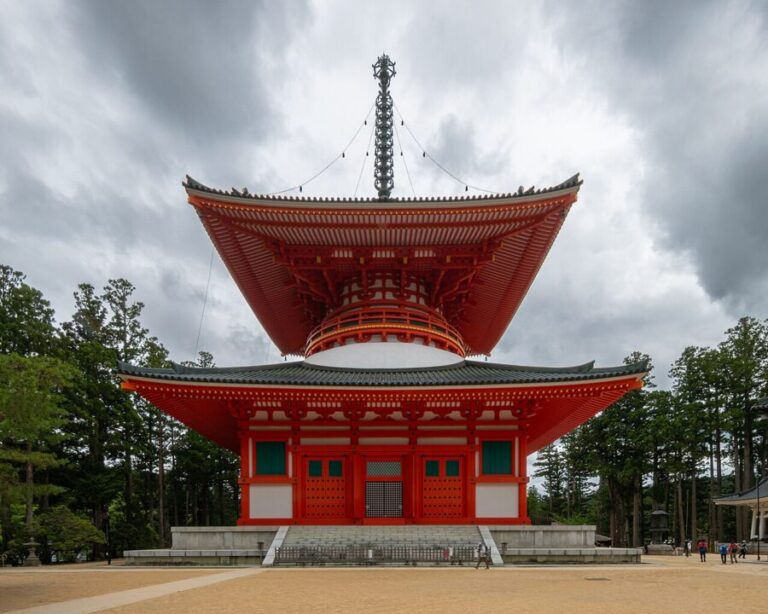
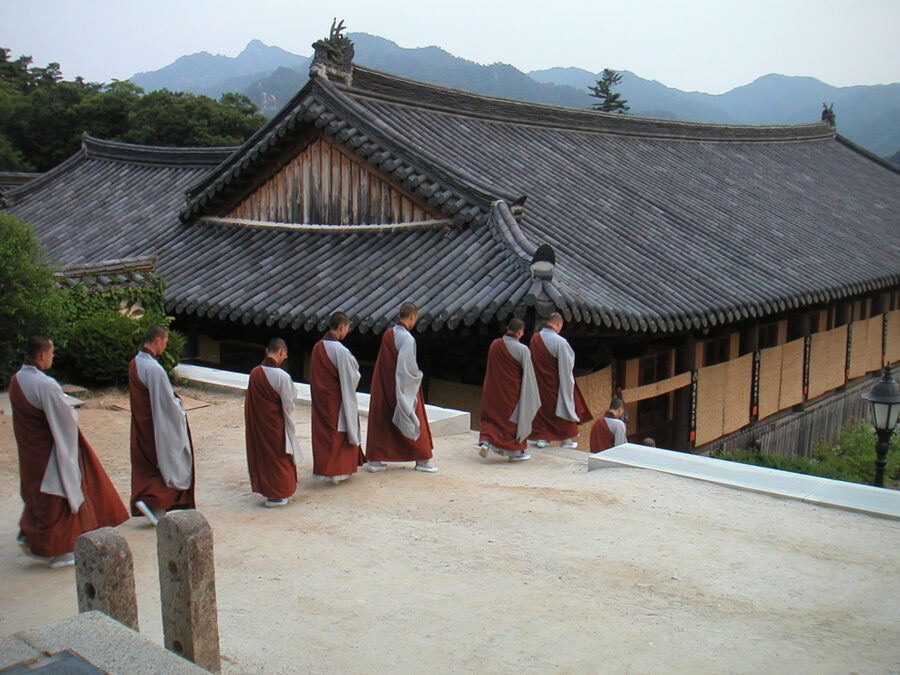
At ten past three in the morning, Haeinsa’s Templestay guests leave their rooms for the main hall. The mountain is black, the stone steps are cold, and in Korean monasteries this is the hour when a monk walks the courtyards striking a wooden moktak to wake the temple. At 3:40 the dawn service begins. If you have spent the night in a Korean monastery, this is the hour you will remember.
Templestay is the program that opens that hour to anyone. You sleep in temple quarters, wear a vest and trousers the temple lends you, eat what the monks eat, and follow a gentler version of their day. You do not have to be Buddhist, and nobody will try to make you one.
Contents8 parts
What Templestay is, and who runs it
Templestay (템플스테이) is run by the Cultural Corps of Korean Buddhism, the body the Jogye Order, Korea’s largest Buddhist order, set up to manage it. It began in 2002, when Korea co-hosted the football World Cup with Japan and temples opened their doors to show visitors Korean Buddhist life. The Corps was launched in July 2004, and in January 2009 the OECD named Templestay one of five successful culture-and-tourism programs worldwide, according to the Corps’ own history. It now counts around six million participants.
The Korean booking site lists about 170 temples and centers. The English site marks 32 of them as ready for foreign guests, with programs, rules and schedules written in English. A few belong to other orders: Guinsa, for example, is the headquarters of the Cheontae Order.
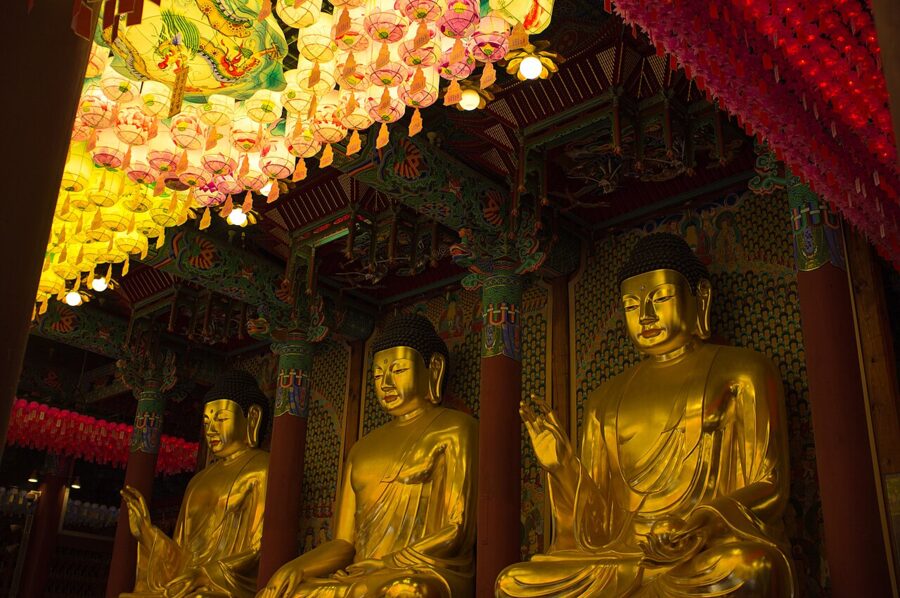
The three kinds of stay
The official site sorts every program into three types, and the type decides how your night feels.
- One-day. Two to four hours, no overnight: a temple tour, a short meditation, tea with a monk, a lantern or bead craft.
- Experience type (체험형). The full overnight, most often on weekends: evening service, 108 prostrations, Seon meditation, tea with a monk and the dawn service.
- Rest type (휴식형). Meals, a short orientation and the services, with the rest of the time yours. Golgulsa takes rest-type guests for up to 29 nights.
For a first stay I would choose the experience type for one night. The rest type is lovely once you know the rhythm, but the structure is what teaches you how a temple day works.
A night in a temple, hour by hour
Every temple publishes its own timetable on the program page, and each one warns that it may change. This is Jogyesa’s regular overnight program in Seoul for 2026; mountain temples follow the same shape with earlier mornings.
| Time | Jogyesa regular overnight, 2026 |
|---|---|
| 1:30 p.m. | Check-in at the information office; change into the uniform |
| 1:40–2:50 p.m. | Orientation, temple etiquette, paper lotus lantern craft |
| 3:00–4:30 p.m. | Meditation and tea with a monk; temple tour |
| 4:30 p.m. | Evening monastic meal |
| 5:55–7:00 p.m. | Dharma instruments, evening service, 108 prostrations (optional) |
| 9 p.m. | Lights out |
| 4:00–5:00 a.m. | Wake-up and dawn service with a monk (optional) |
| 7:30 a.m. | Morning meal |
| 9:30–10 a.m. | Clean the room, check out |
Afternoon: uniform and etiquette
Check-in falls between 1 and 3 p.m. almost everywhere. You get the vest and trousers, a room, and a lesson in the few gestures you will need. The main one is hapjang, palms together with a half-bow, for greeting monks and for entering and leaving a hall. Walking, you keep your hands folded in front of you, the posture called chasu.
The temple tour that follows turns a cluster of painted buildings into a map you can find your way around at 4 a.m. Pay attention to where the main hall is.
Evening: the four instruments and yebul
Dinner comes early, between 4:30 and 6 p.m. Then comes the part I would not miss. Before the evening service, monks play the four dharma instruments in the bell pavilion: the great drum, the bronze bell, a wooden fish and a cloud-shaped gong. Each is traditionally said to call to a different order of beings.
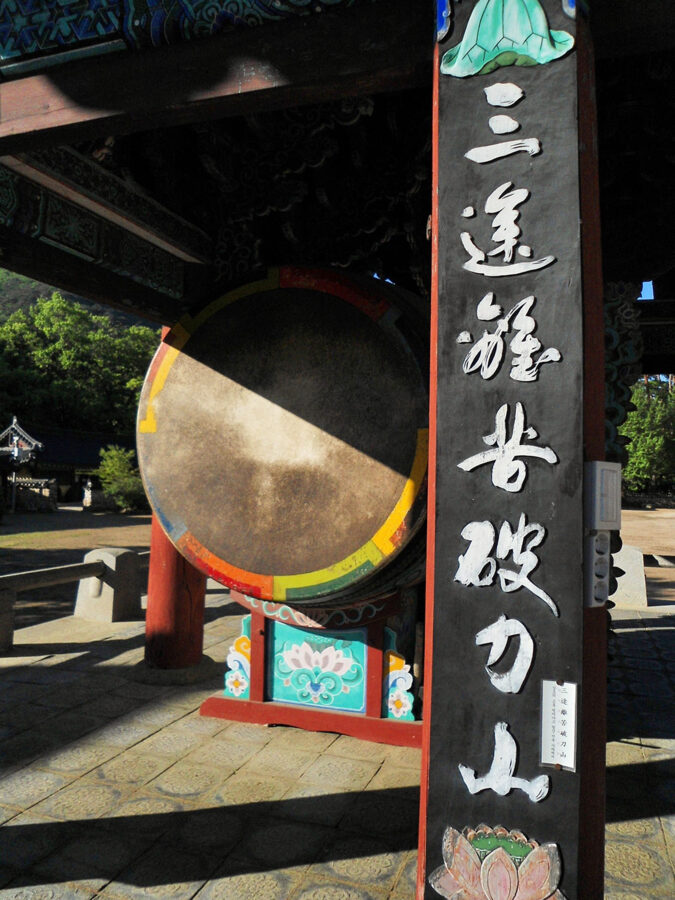
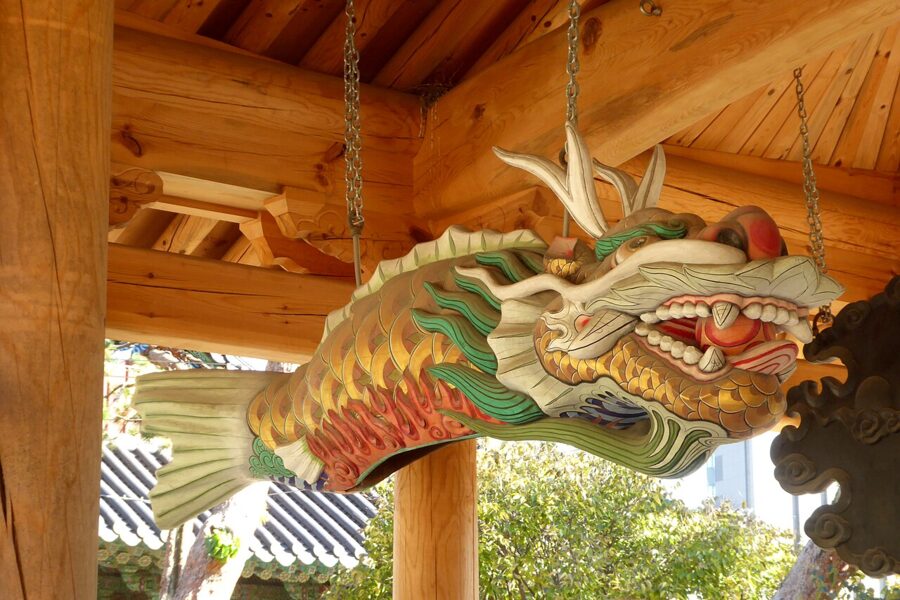
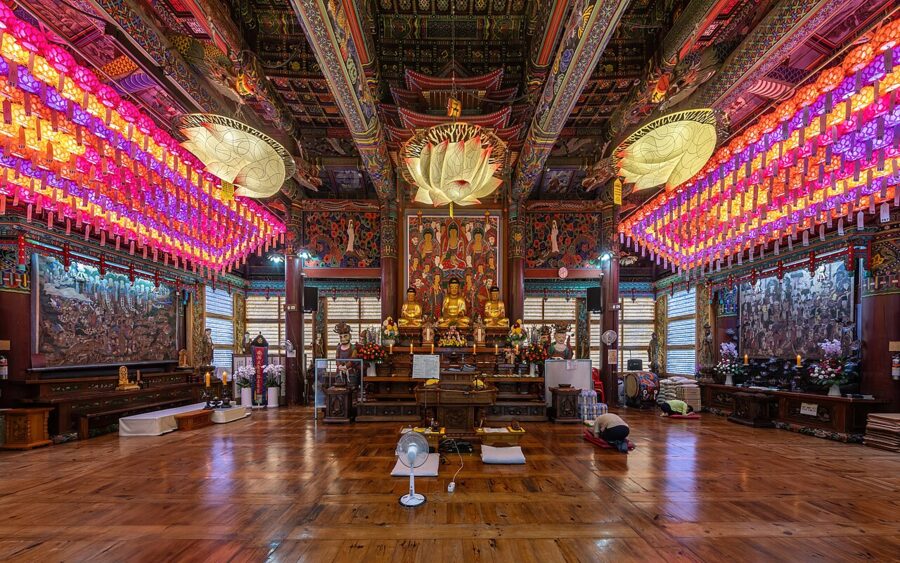
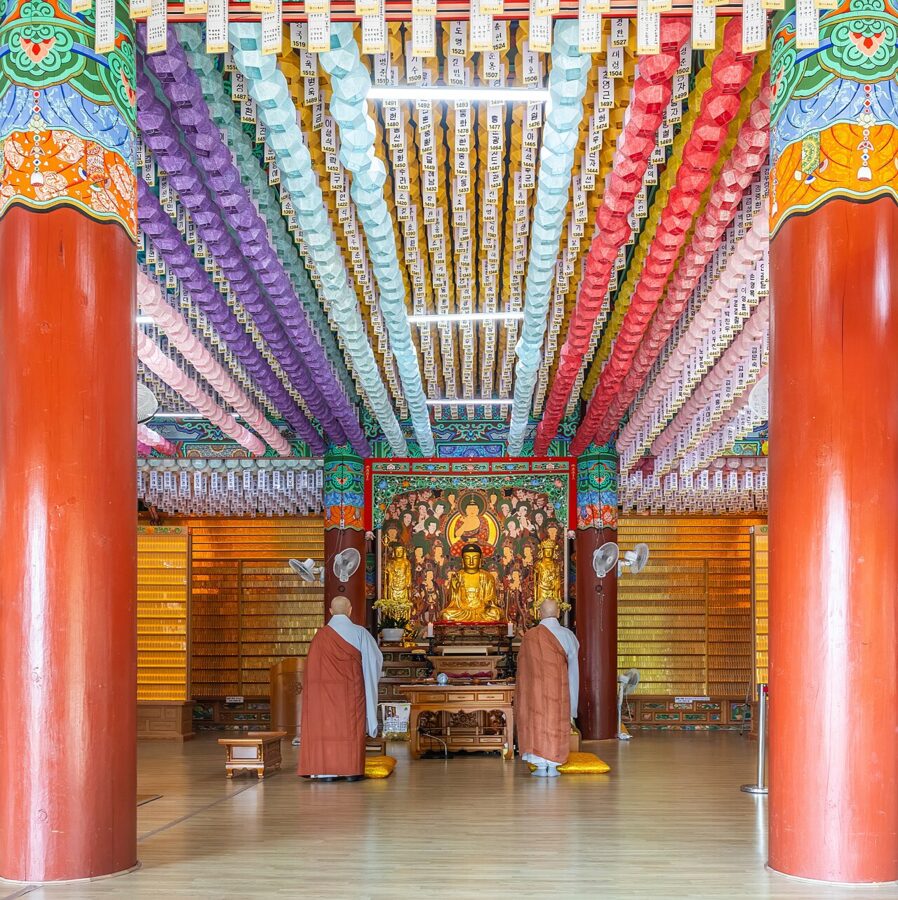
Yebul (예불) is the service itself, held at dawn and dusk in the main hall. The monks chant and bow, taking refuge in the Buddha, the teaching and the community of monks and nuns. You bow where the others bow, or simply stand; nobody expects you to know the words.
Barugongyang, the formal monastic meal
Barugongyang (발우공양) is the way monks eat in the meal hall: in silence, from a nested set of wooden bowls, taking only what you will finish. At the end you rinse each bowl with water and a piece of pickled radish and drink the rinse, so nothing is wasted. The official site calls it a practice of equality, cleanliness and thrift.
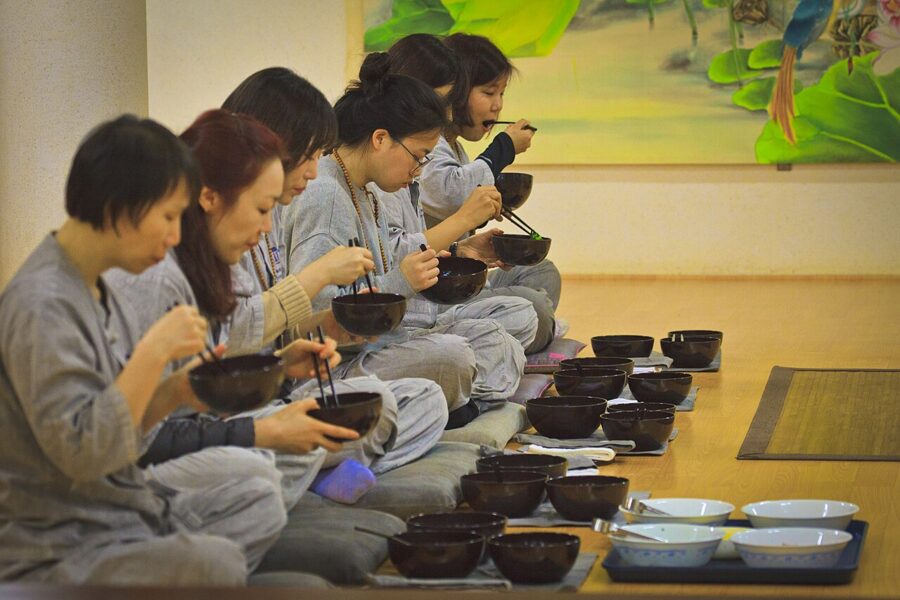
Not every program includes it. Many serve ordinary vegetarian temple meals in the dining hall instead. If the formal meal matters to you, look for “monastic meal” or “barugongyang” in the schedule before booking.
The 108 prostrations
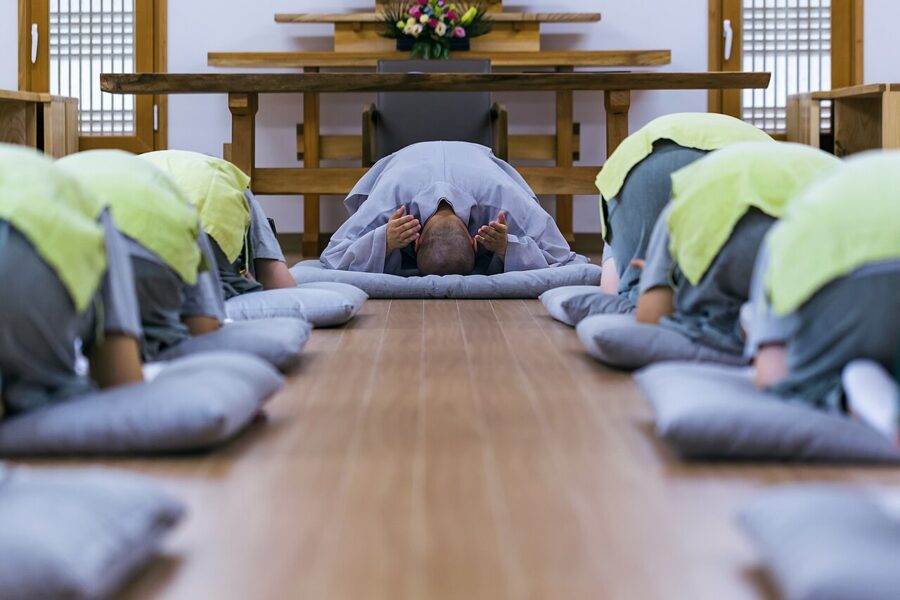
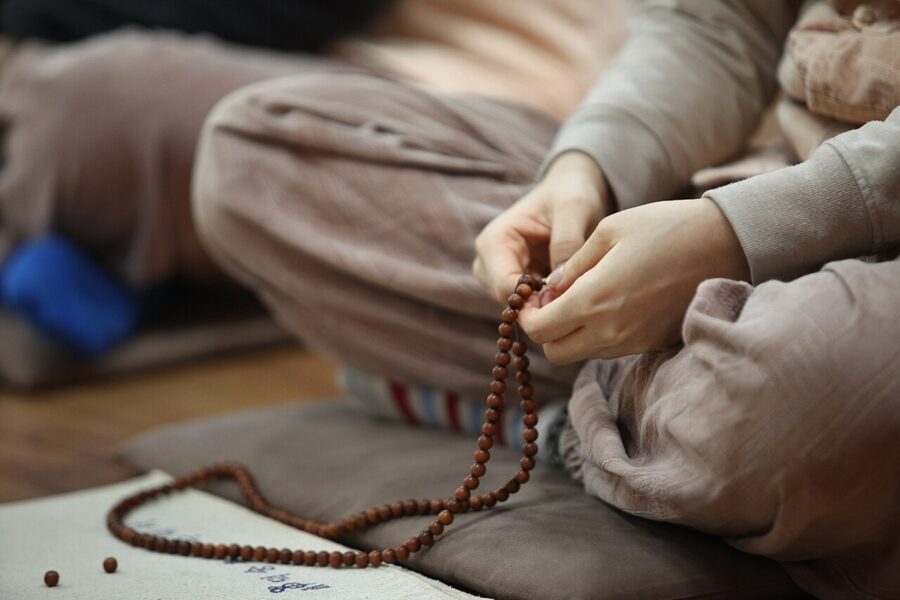
Each full prostration goes from standing to knees and forehead and back up. One hundred and eight of them take half an hour or more and leave most first-timers with shaking thighs. The number stands for the 108 afflictions of the mind, and each bow is a small act of repentance for one of them.
Many temples pair the bows with stringing prayer beads, one bead per bow, so you go home with a string you made. The official Korean FAQ is clear that every activity is voluntary: if bowing sits badly with your own faith, sit quietly at the side.
The 3 a.m. or 4 a.m. dawn service
Lights go out at 9 p.m. because of the morning. The dawn service starts at 3:40 a.m. at Haeinsa, around 4:20 at Bongeunsa and Jogyesa, and as late as 5:15 at Hwagyesa or 5:30 at Golgulsa. Most temples list it as optional, and at some, such as Beopjusa, you go on your own rather than with the group.
Go anyway. The hall is lit by candles and a few lamps, the bell carries down the valley, and for twenty minutes the only sounds are chanting and the moktak. No day program can give you that.
Seon meditation and tea with a monk
Seon (선) is the Korean form of what Japan calls Zen. Programs teach a seated posture and breathing, sometimes a walking meditation on a forest path. The International Seon Center in Seoul goes further, into ganhwa Seon, holding a single question such as “What is this?”
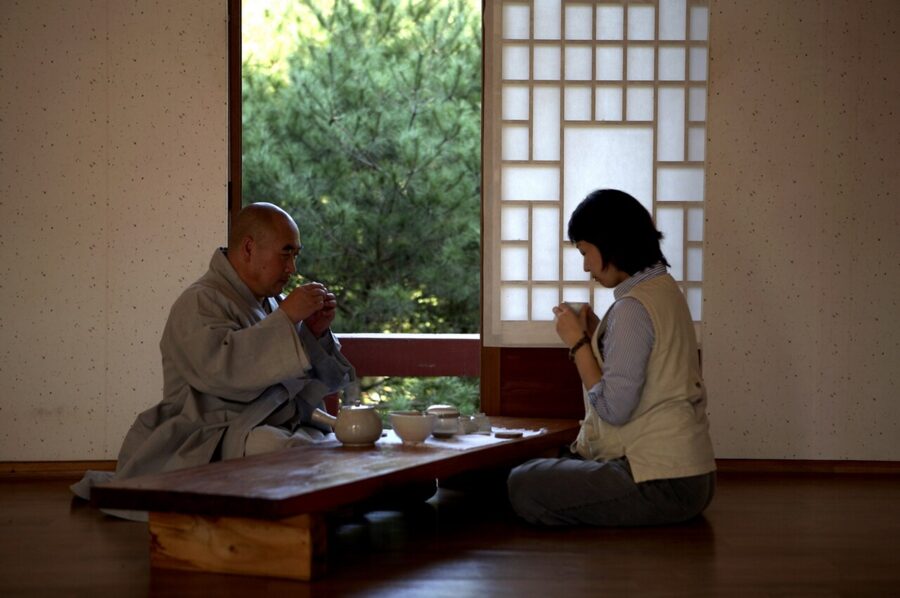
Tea with a monk, chadam (차담), usually comes the next morning. A monk pours green tea at a low table and answers questions, about Buddhism or about whatever is weighing on you. I think it is the best hour of the program; arrive with one real question.
The lotus lantern
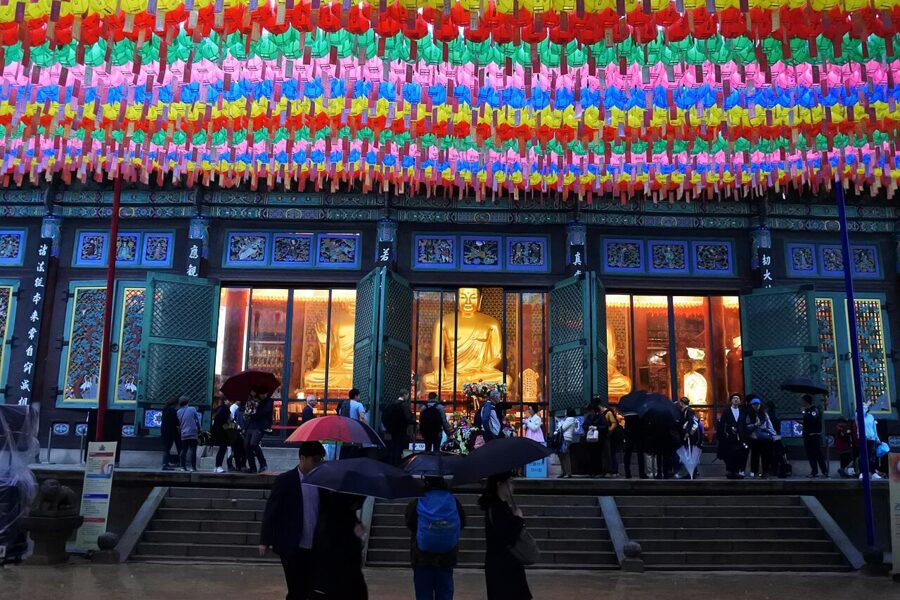
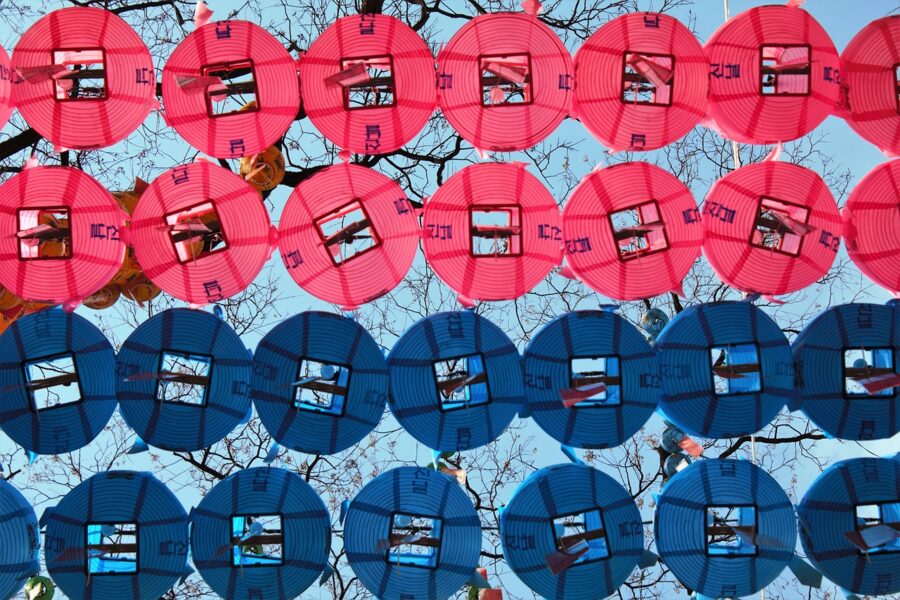
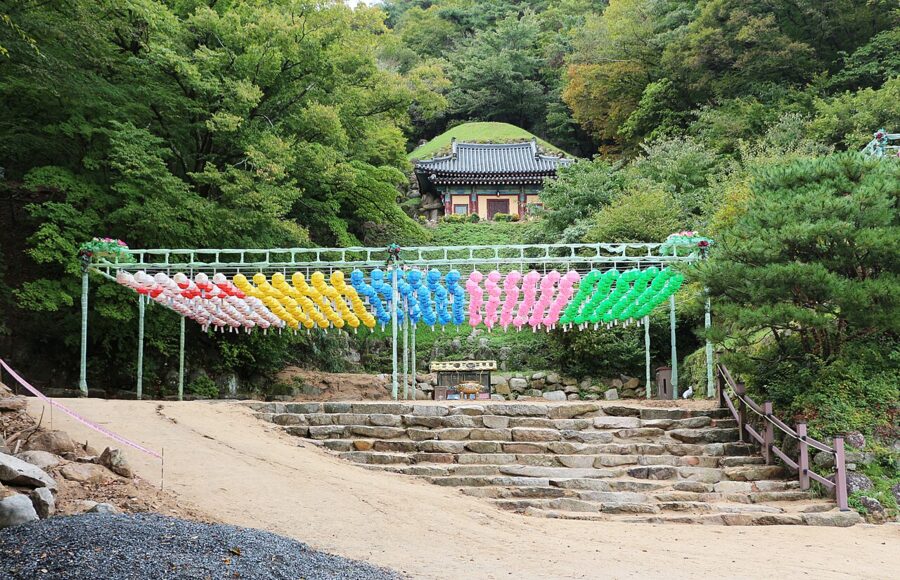
In the lantern craft you glue petals of thin colored hanji paper onto a frame until it becomes a lotus, the flower that grows clean out of mud. Lanterns like these fill temple courtyards before Buddha’s Birthday, the eighth day of the fourth lunar month.
Booking and prices as of November 2026
You book on the official Templestay site: pick a temple, open a program, choose a date the calendar shows as open, and pay. Jogyesa asks for card payment in the online booking and cancels unpaid reservations automatically. Booking closes one to five days before the start, depending on the temple.
Prices are set by each temple, per person. These are adult prices from the official program pages in November 2026.
| Temple | Program | Adult price |
|---|---|---|
| Jogyesa, Seoul | Regular overnight | ₩80,000 (about US$57) |
| Jogyesa, Seoul | Daily tour and lantern, 10 a.m. | ₩10,000 |
| Bongeunsa, Seoul | Weekend overnight, Sat–Sun | ₩120,000 (about US$86) |
| Bongeunsa, Seoul | Thursday tour and tea | ₩30,000 (about US$21) |
| Geumsunsa, Seoul | Rest type, one night | ₩80,000 |
| Golgulsa, Gyeongju | Seonmudo overnight | ₩120,000 |
| Bulguksa, Gyeongju | “Journey into Mind,” one night | ₩120,000 |
| Haeinsa, Hapcheon | Weekday rest, four-bunk room | ₩70,000 (about US$50) |
| Haeinsa, Hapcheon | Weekend program, single room | ₩130,000 (about US$93) |
| Beomeosa, Busan | Weekend experience type | ₩100,000 (about US$71) |
Most overnights with meals cost ₩70,000 to ₩130,000, and most day programs ₩10,000 to ₩50,000 (about US$36). The Corps also runs discounts for foreigners: in September 2026 a special Templestay for foreigners cost ₩30,000 a night, after a similar offer from August to October 2025. Watch the Event Templestay tab from late summer.
Cancellations
Refund rules are on each program page. Jogyesa refunds in full up to seven days before and nothing after; Bongeunsa refunds in full 14 days out and 70% at seven days; Haeinsa refunds in full up to three days before. Bongeunsa warns that no-shows may be barred from its programs.
The Templestay Information Center
To ask in person, go to the Templestay Information Center at 56 Ujeongguk-ro, across from Jogyesa, five minutes from Jonggak Station exit 2 or Anguk Station exit 6. The official hours are 9 a.m. to 6 p.m. daily, closed on New Year’s Day, Seollal and Chuseok. It was shut for repairs through 2025 and the Corps’ notices show it open in 2026, but check before going just for it.
What to wear and bring
The temple lends the uniform and the bedding. Most supply soap and toothpaste, some a hair dryer, almost none a towel or shampoo; the Lotus Lantern International Meditation Center says it has no soap or shampoo at all.
- A T-shirt for under the vest. Sleeveless tops are refused at Haeinsa, Jikjisa and others.
- Socks. Bongeunsa, Magoksa and Woljeongsa all state that bare feet are not allowed in the halls.
- Closed shoes you can slip off at the hall door. Flip-flops and slippers are discouraged almost everywhere.
- Towel, toiletries and a water bottle. Several temples ask for your own tumbler.
- A warm layer. Mountain temples are cold before dawn except in high summer; Jogyesa suggests thermal underwear in fall and winter.
Leave perfume, heavy makeup and revealing clothes at home. Bongeunsa asks for modest, clean clothes and minimal scent, and that is the standard everywhere.
The rules
The rules are few and come down to quiet and respect. All but the last are taken from temple program pages and the official FAQ; the last is plain courtesy.
- No alcohol, smoking, meat or loud talk on the grounds. Couples keep affection for later.
- Enter a hall by the side doors. The central door and the space before the altar are for the monks.
- Give a half-bow with palms together as you enter and leave a hall.
- Walk behind anyone bowing or praying, never in front.
- Be on time for every session.
- Ask before photographing monks or the inside of a hall.
Rooms are shared and separated by sex at almost every temple; Jogyesa even puts couples in separate rooms. Some temples rent private rooms for an extra charge, the English FAQ says. For solo travelers, the Korean FAQ notes that rooms lock, outsiders are kept out after 10 p.m., and staff live on site.
Temples that take foreign guests
Start from the English temple list. These are the ones I would look at first, by region.
Seoul: Jogyesa, Bongeunsa and the hill temples
Jogyesa (조계사), in Jongno near Insadong, is the head temple of the Jogye Order and the easiest Templestay in Korea to reach. It runs a daily one-day program, a tea-ceremony day and two overnights. Nights here come with city traffic, but the dawn service is the same one sung in the mountains.
Bongeunsa (봉은사), opposite COEX in Gangnam, was founded in 794, according to the temple. Its overnight runs Saturday to Sunday. On weekdays it offers tour and tea on Thursday afternoons, a Sunday-evening session with the four instruments for ₩5,000 (about US$4), and “Bong-Pass,” an open day in the Templestay hall on Tuesdays. Bongeunsa Station, Line 9, exit 1, is 100 meters away.
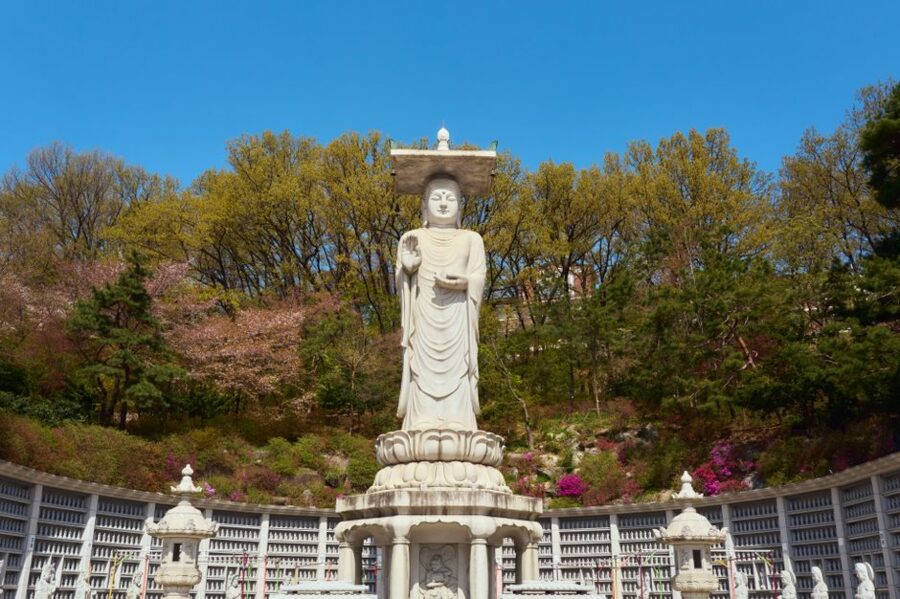
Both temples are also favorite photo locations; see hiring a photographer in Seoul.
For a mountain night inside the city, Geumsunsa (금선사) on Bukhansan offers a rest stay for ₩80,000 and answers on WhatsApp. Myogaksa runs a 10 a.m. to 2 p.m. day program with 108 prostrations for ₩50,000. Hwagyesa has a long tradition of teaching foreigners, and the International Seon Center in Yangcheon-gu suits anyone who came for meditation rather than ritual.
Near Gyeongju: Golgulsa and Bulguksa
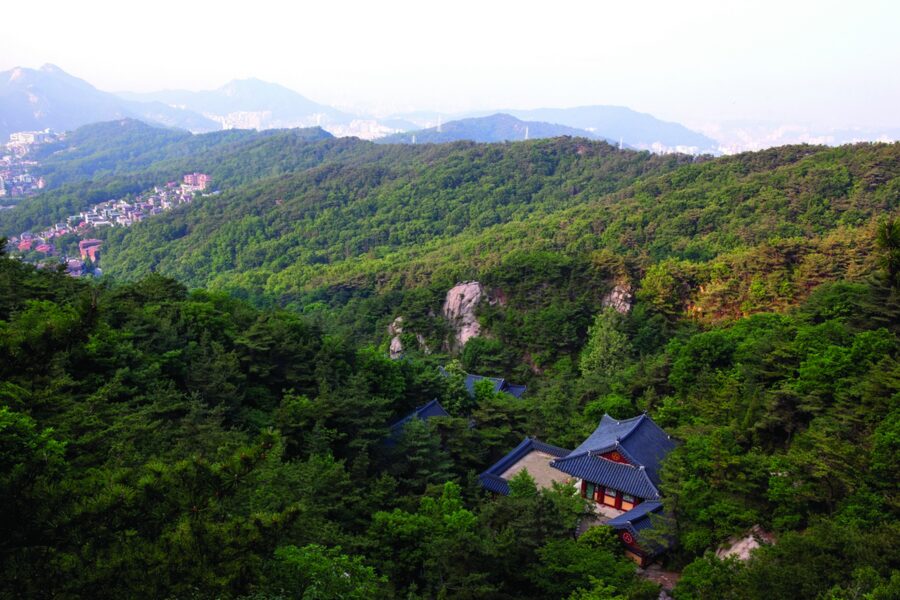
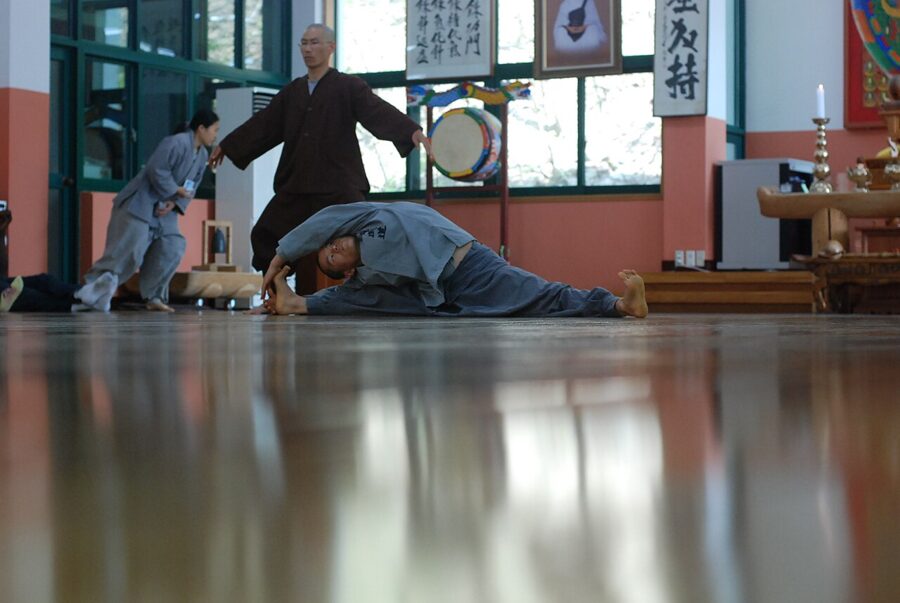
Golgulsa (골굴사), on Hamwolsan east of Gyeongju, is built into a cliff of caves below a Buddha carved in the rock. Its program centers on Seonmudo, a Buddhist martial art and moving meditation, with a public demonstration at 3 p.m. (not Mondays or Tuesdays) and optional archery for ₩20,000 (about US$14). It runs Templestay every day of the year, and the dawn service is a civilized 5:30 a.m.
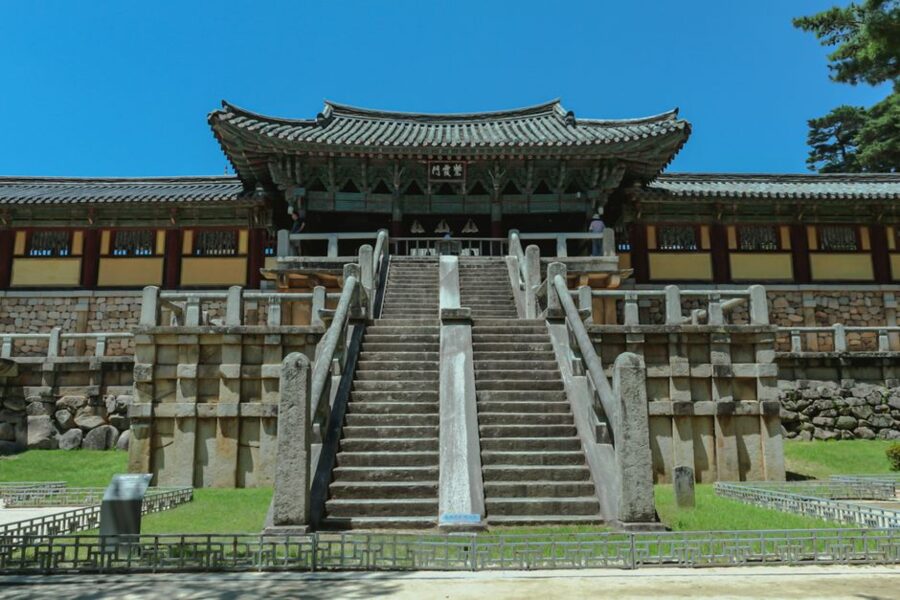
Bulguksa (불국사), the great eighth-century Silla temple, was inscribed with Seokguram Grotto as a UNESCO World Heritage Site in 1995. Because of that status, guests sleep in a Templestay house about five minutes’ drive away and ride temple vans in. Evenings bring 108 prostrations and a walk around the pagodas; mornings, Seon meditation at 6 and a forest walk to Seokguram.
Haeinsa, the temple of the woodblocks
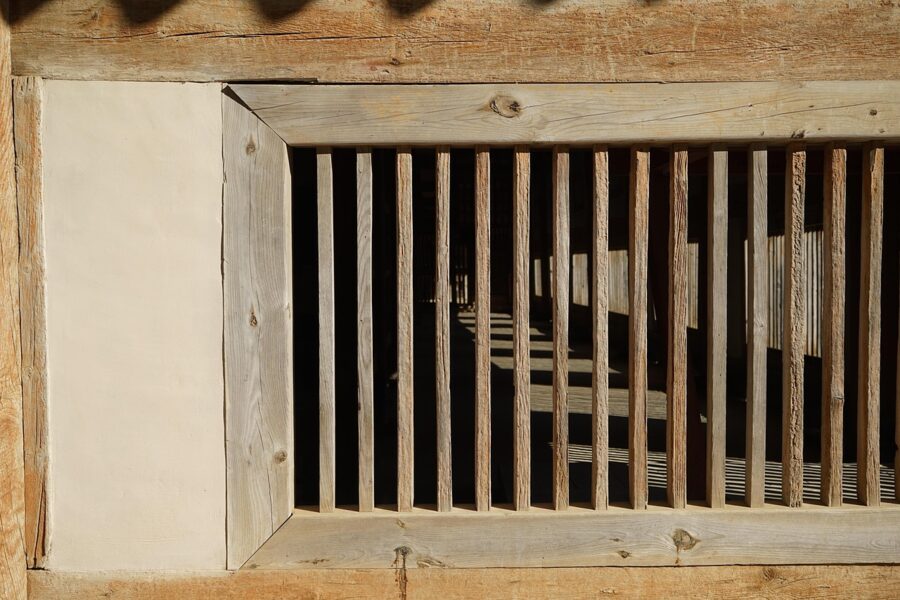
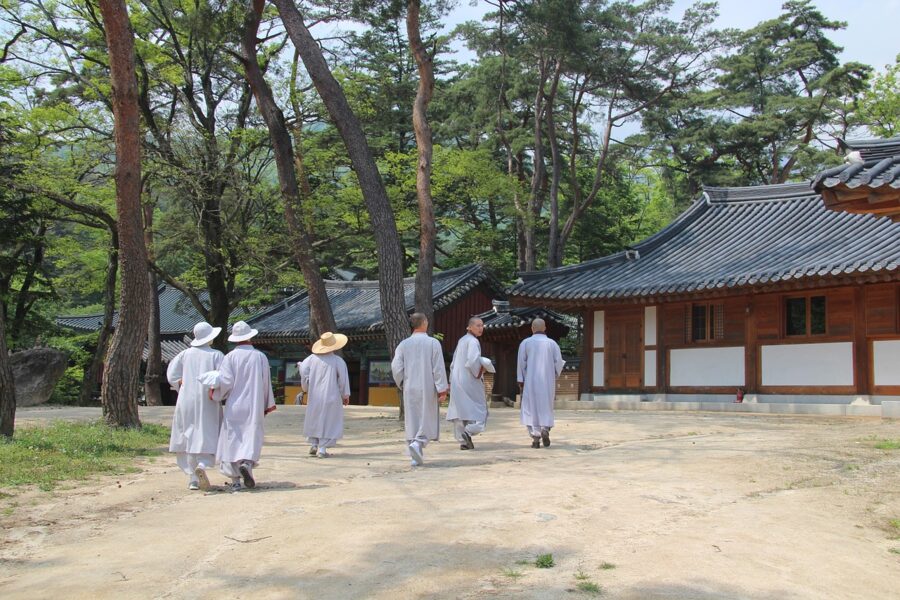
Haeinsa (해인사), on Gayasan, was founded in 802 according to the temple and keeps the Tripitaka Koreana, the Buddhist canon carved on more than 80,000 woodblocks between 1237 and 1248. Their storage halls, the Janggyeong Panjeon, have been World Heritage since 1995. The Templestay keeps monastic hours: the 3:10 a.m. walk to the main hall is part of both programs.
The weekday program is a quiet retreat with optional woodblock printing or bead-making for ₩10,000. The weekend “Tripitaka Koreana Pilgrimage” builds woodblock printing into the afternoon. Haeinsa also prices twin and single rooms separately, for anyone who would rather not share.
Busan: Beomeosa, and a note on Haedong Yonggungsa
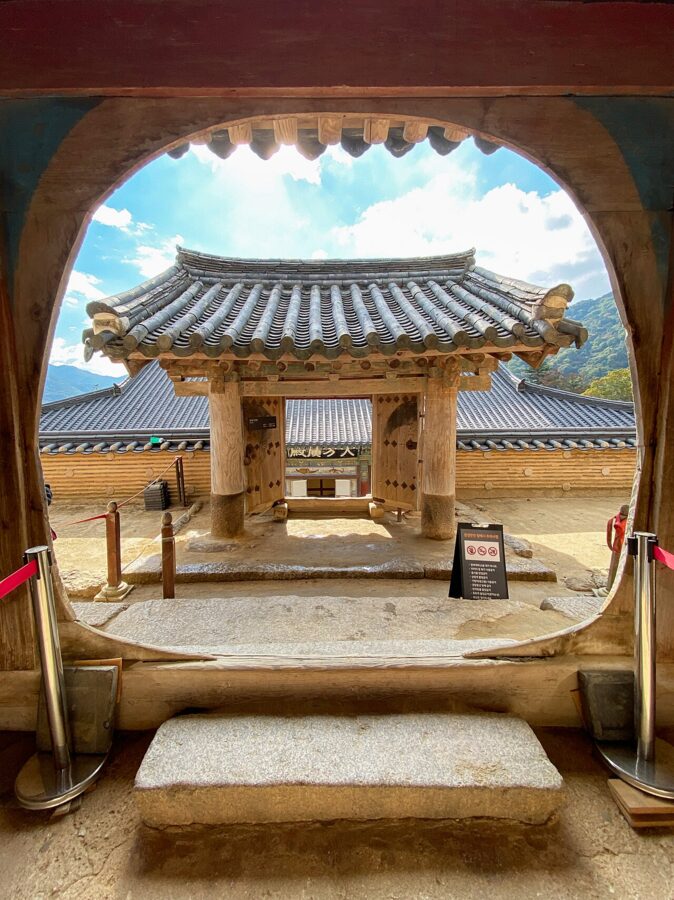
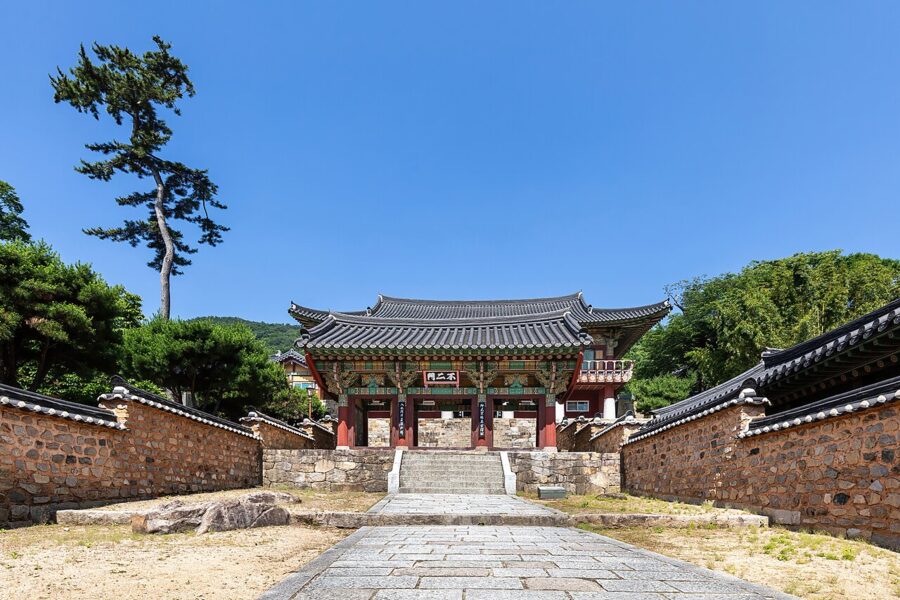
Beomeosa (범어사), on Geumjeongsan in northern Busan, was founded in 678 by the monk Uisang, according to the temple; its main hall dates from 1614. It calls itself a Seon temple and leans on meditation. The weekend program runs from 1 p.m. check-in through a forest walk, meditation and bead-stringing to a 4:30 a.m. service, and guests can visit the temple museum after check-out.
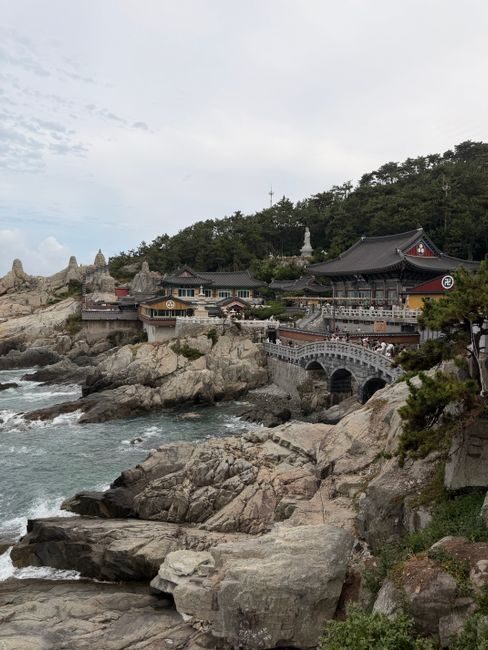
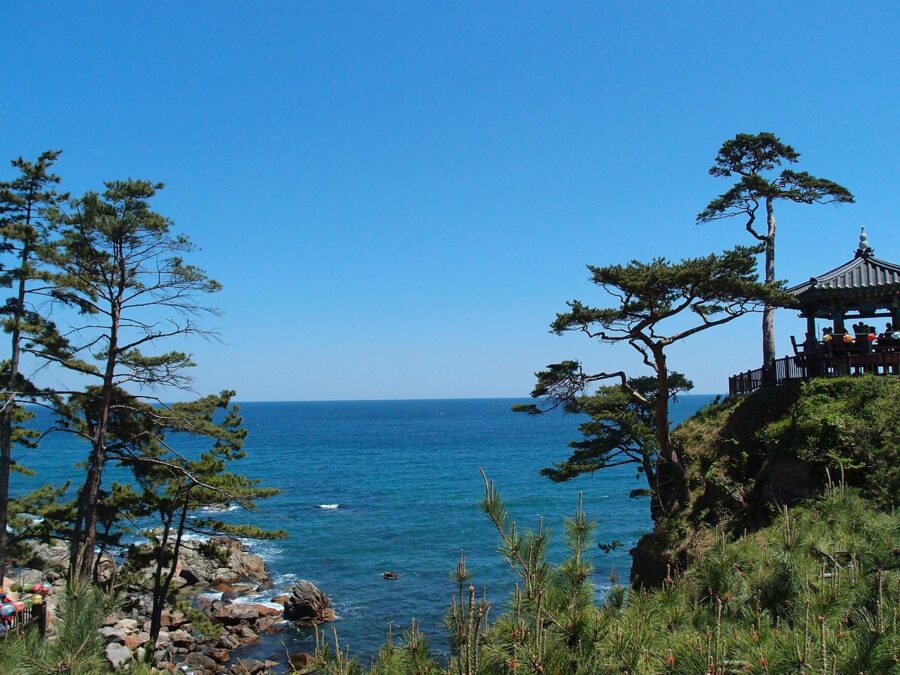
Haedong Yonggungsa (해동 용궁사), on the sea rocks at Gijang, is Busan’s most photographed temple, but it is on neither the English nor the Korean Templestay list as of November 2026. See it at sunrise and sleep at Beomeosa. For its dress code and the dawn light there, see a private photo session in Busan.
Further afield
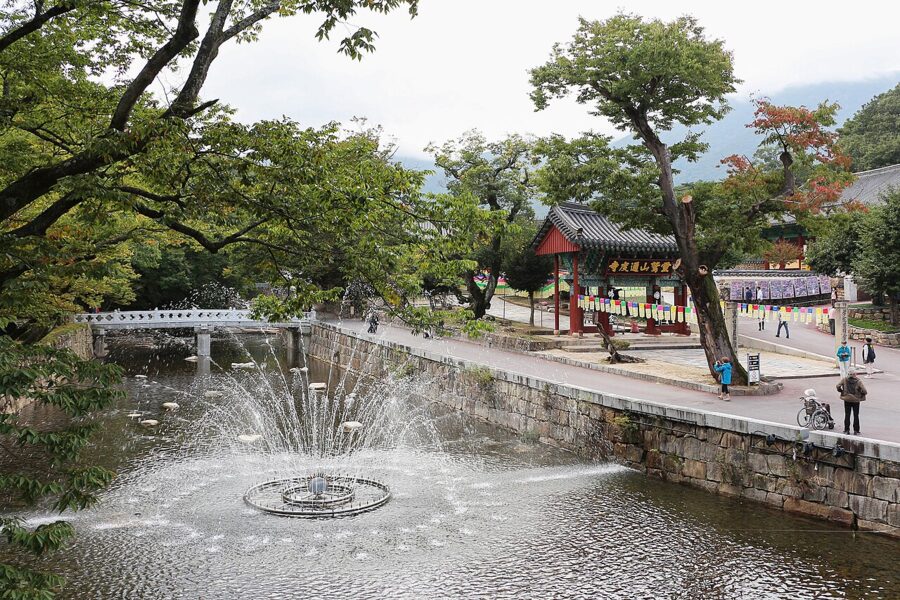
Three temples in the Sansa group of mountain monasteries, inscribed by UNESCO in 2018, take foreign guests. Tongdosa, near Yangsan, has no Buddha statue in its main hall: according to the temple, relics of the Buddha brought from China in 646 are enshrined behind it. Magoksa in Gongju adds an optional morning hike to Gunwangdae, and Beopjusa sends rest-type guests up “King Sejo’s road” after breakfast.
In Gangwon Province, Woljeongsa on Odaesan leaves the morning free for its fir forest trail, and Naksansa, above the sea at Yangyang, has a half-price December 2026 program at ₩60,000 (about US$43). For something longer, the Lotus Lantern International Meditation Center on Ganghwa Island, in Incheon, holds a monthly three-night meditation intensive for ₩210,000 (about US$150). For the rest of that city, see a private photo session in Incheon.
How to choose one
Start with the one thing you want most. For the dawn service in a real mountain monastery, book the experience type at Haeinsa, Beomeosa or a Sansa temple. For quiet, take a rest stay with a forest trail, at Woljeongsa or Geumsunsa. For Seonmudo, go to Golgulsa; for meditation, the International Seon Center or the Lotus Lantern center.
Then count the travel. A Seoul temple costs you an afternoon and a morning; Haeinsa or Golgulsa takes most of two days, since mountain temples usually mean a train or intercity bus and then a local bus or taxi. I would rather spend one unhurried night in the mountains than squeeze in two city ones.
Weekends at the famous temples fill first, so book early for a Saturday. If you walked the Camino de Santiago and liked the shared rooms and early starts, you will settle in quickly.
Templestay and the Japanese shukubo
Japan’s temple lodgings, shukubō, are the nearest thing to Templestay, and the best known are on Koyasan, where dozens of temples take overnight guests through the Koyasan Shukubo Association. From outside the two look alike: a temple bed, vegetarian food, an early service. Inside, they work differently.
| Korean Templestay | Japanese shukubo (Koyasan) | |
|---|---|---|
| What it is | A structured program with a timetable | Lodging run by a temple, with optional practice |
| Booking | Through the Cultural Corps of Korean Buddhism | Through the Koyasan Shukubo Association or the temple |
| Clothes | Temple vest and trousers for the whole stay | Your own, usually with a yukata in the room |
| Rooms | Shared, separated by sex; private at some temples | Usually a room of your own, booked like an inn room |
| Food | Temple vegetarian food, sometimes formal barugongyang | Shōjin ryōri, Buddhist vegetarian cuisine |
| Morning service | Around 3:40 to 5:30 a.m. | Otsutome, around 6 a.m. at some temples |
| Practice | 108 prostrations, Seon meditation, tea with a monk | Sutra copying; ajikan meditation at a few temples |
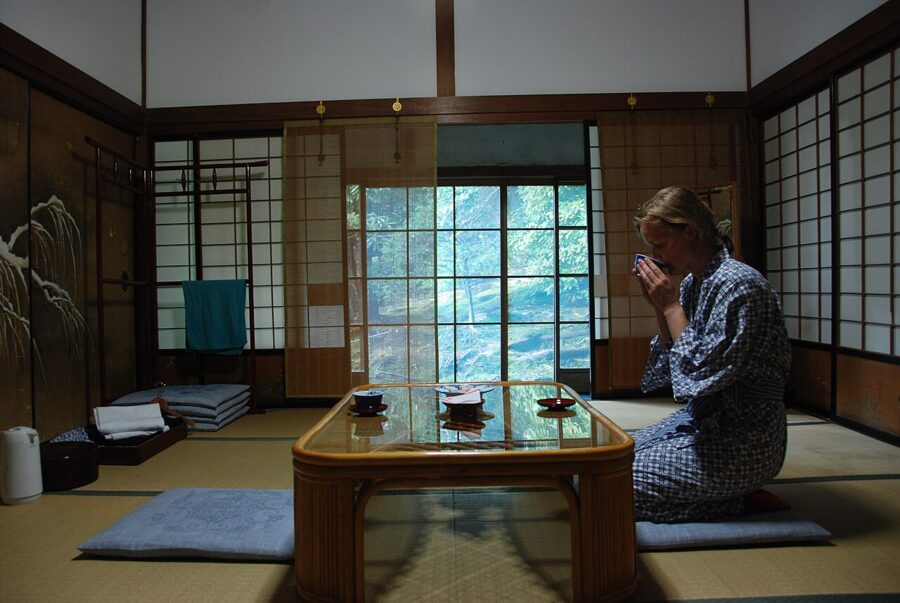
The real difference is who sets the pace. At a shukubo you are a guest, and the Koyasan association says overnight guests at the morning service “may also participate or watch.” At a Templestay you are, for one night, a junior member of the community: you dress like the others, keep the schedule and bow when the bell rings.
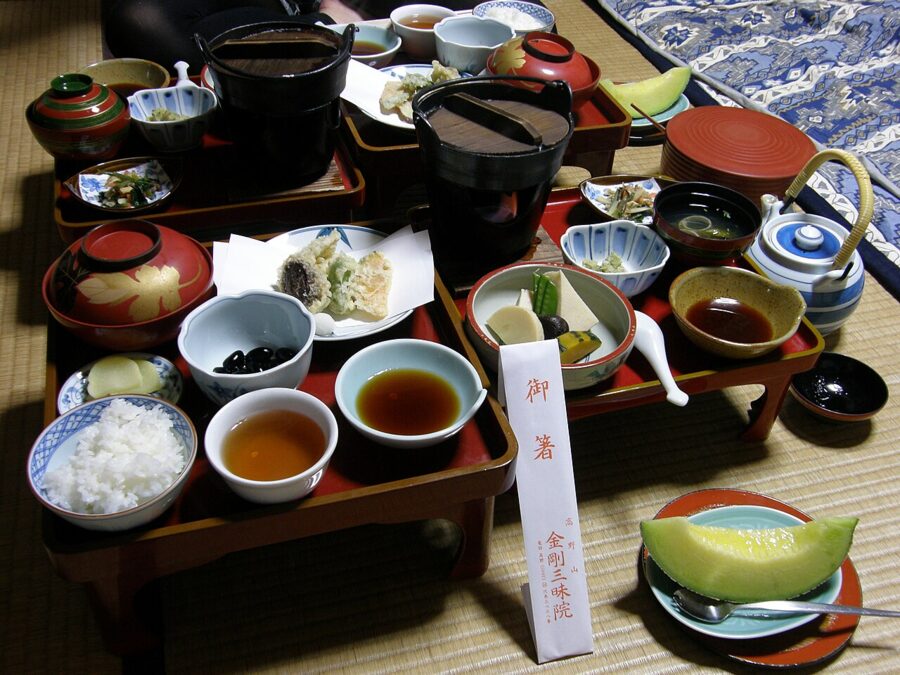
Neither is better. A shukubo suits someone who wants to sleep in a sacred place and watch its ritual from a respectful distance. A Templestay suits someone ready to take part, bows and all, and to be told when to go to bed.
Either way, the alarm will go off before you are ready. At Haeinsa it is ten past three, the moktak is moving around the courtyard, and the walk up to the main hall is dark. Take socks and the warm layer, and get up when it calls.