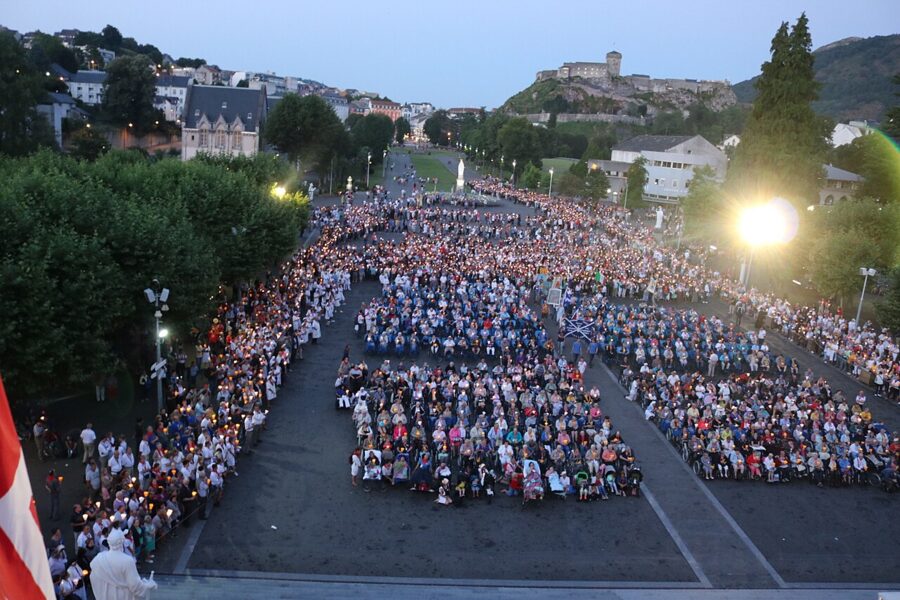
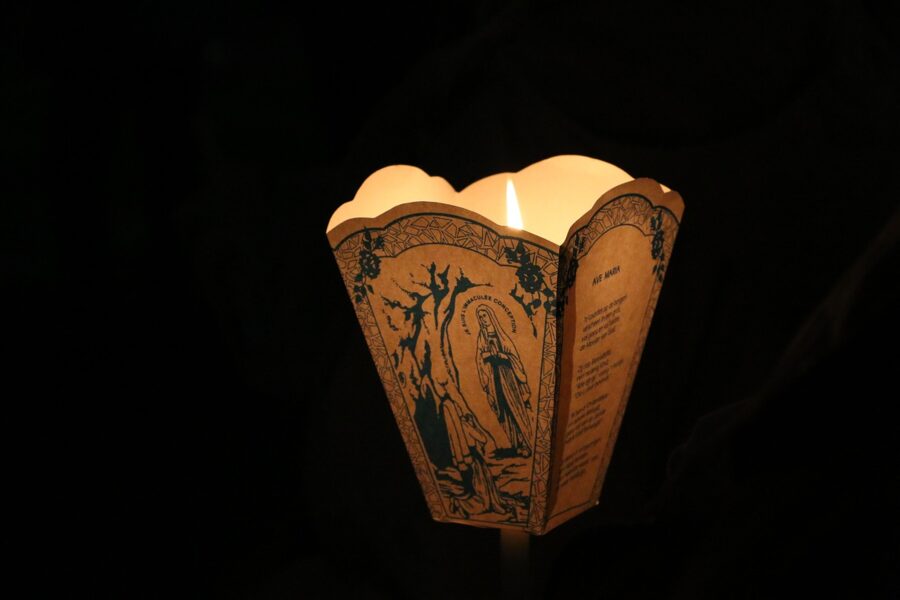
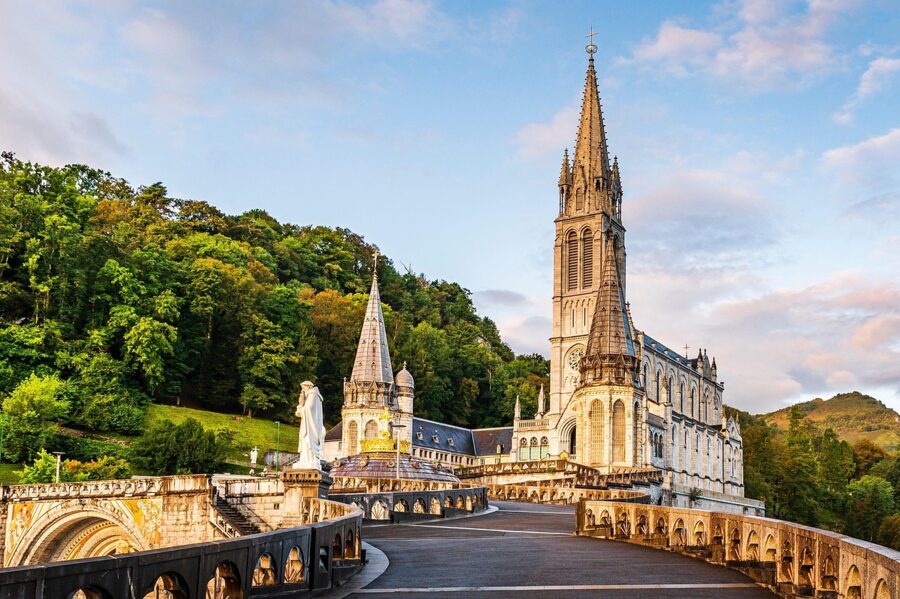
At 9 p.m., every evening from April into early November, the candles are lit on the esplanade at Lourdes. Several thousand of them, most in paper shades, move slowly behind a statue of the Virgin while the rosary is prayed and the crowd sings the “Ave Maria of Lourdes,” first sung here by a pilgrimage from the Vendée in 1873. The line of light comes to rest in front of the Rosary Basilica.
The procession is one hour of a long day. Lourdes is a small town in the foothills of the Pyrenees that rebuilt itself around a rock face where, in 1858, a fourteen-year-old miller’s daughter said a young lady in white appeared to her eighteen times. The Catholic Church believes that lady was the Virgin Mary. The town hall counts Lourdes as the fourth most visited Catholic pilgrimage site in the world, after the Vatican, Guadalupe and Aparecida.
Hours below are the Sanctuary’s own, as published in November 2026, two months after Pope Leo XIV spent two days here. Summer and winter programs differ, so I give both.
Contents11 parts
- What Bernadette saw, and what the Church decided
- The Grotto of Massabielle
- Drinking and washing: the baths and the water gesture
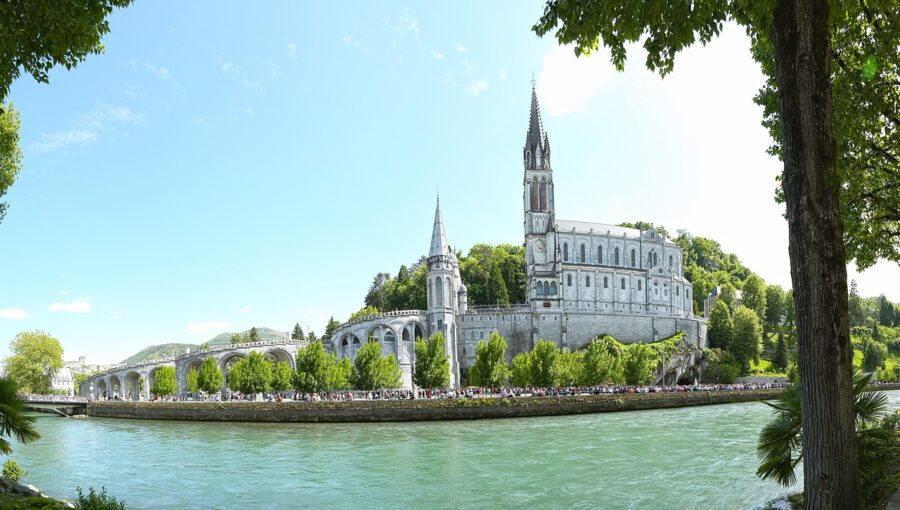
- Four churches on one rock
- The processions, as they run in 2026
- The sick and the hospitaliers
- Healing, and how the Church counts it
- Bernadette's Lourdes: the mill, the Cachot and the castle
- When to go
- Getting there
- One day or two in Lourdes
What Bernadette saw, and what the Church decided
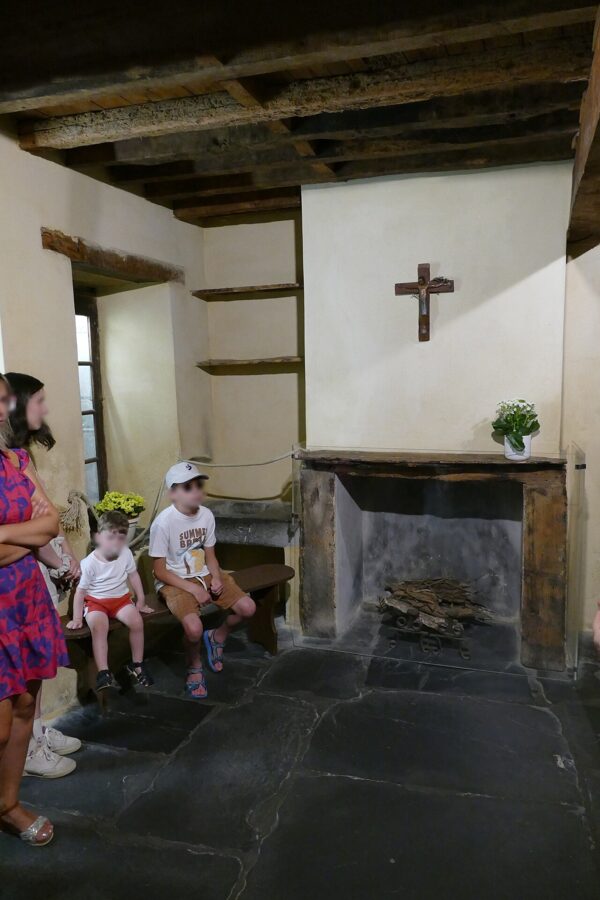
Bernadette Soubirous was born on January 7, 1844, at the Boly Mill, eldest child of the miller François Soubirous and Louise Casterot. Accidents and lost work pushed the family into poverty, and by the winter of 1857 they lived in the Cachot, a single room of 16 square meters that had been the town jail until 1824. At fourteen Bernadette was asthmatic, about 1.4 meters tall and unable to read.
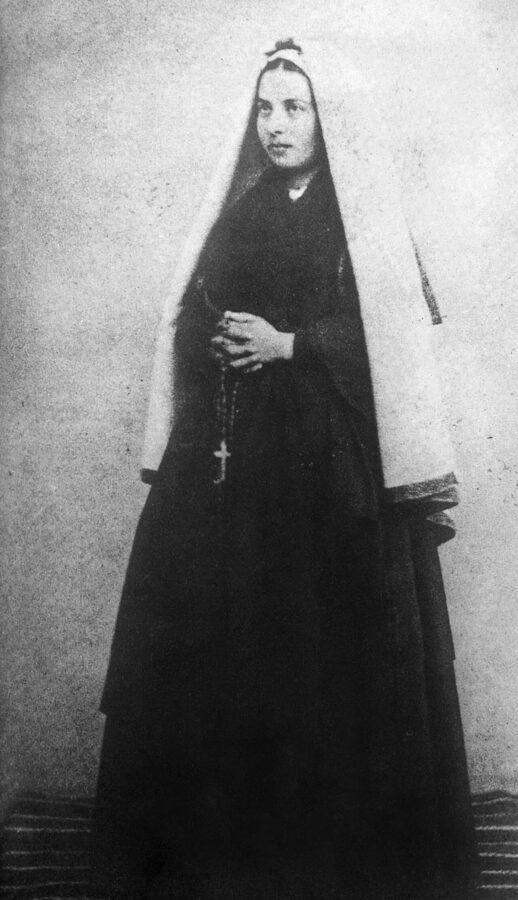
On February 11, 1858, she went with her sister and a friend to gather dead wood at Massabielle, a rock face on the bank of the Gave. She heard a sound like a gust of wind and saw, in a hollow of the rock, a young lady in white with a blue sash and a yellow rose on each foot. They prayed the rosary together, and then the lady was gone. Bernadette kept returning, and by March 4 about 8,000 people came with her.
The lady first spoke at the third visit and asked her to come for a fortnight. At the ninth, on February 25, she told her to drink at the spring and wash there; Bernadette scraped at the mud until water came, and that spring still flows. A week later came a message for the clergy: people should come in procession, and a chapel should be built.
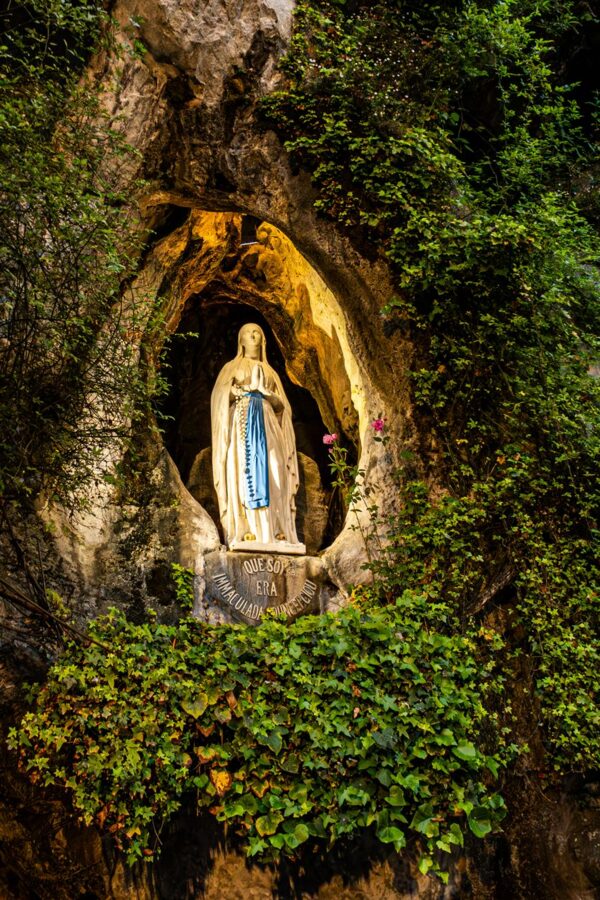
That priest, Father Dominique Peyramale, wanted a name. On March 25 Bernadette ran to him repeating the words in the local dialect, Que soy era Immaculada Concepciou: “I am the Immaculate Conception.” Pius IX had declared that dogma four years earlier, and the Church has always given weight to an unschooled girl carrying a phrase she did not understand. The last apparition, on July 16, she saw from across the river, the grotto having been fenced off.
Bishop Bertrand-Sévère Laurence of Tarbes opened a commission of inquiry that July, which questioned witnesses and consulted doctors, chemists and geologists. On January 18, 1862, he declared that the Virgin Mary had appeared to her, and recognized seven cures as miraculous. History adds what belief does not need: a police commissioner interrogated her, a judge threatened prison, and she would only call what she saw aquero, “that thing.”
She accepted no money. In 1866 she joined the Sisters of Nevers at their mother house, became Sister Marie-Bernard, never saw the grotto again, and died there on April 16, 1879, aged 35. She was canonized in 1933, and the Sanctuary’s life of Bernadette stresses why: for how she lived, not for what she saw. Our Lady of Lourdes, a question often asked, is not a separate figure but one of the titles of the Virgin Mary, with its feast on February 11.
The Grotto of Massabielle
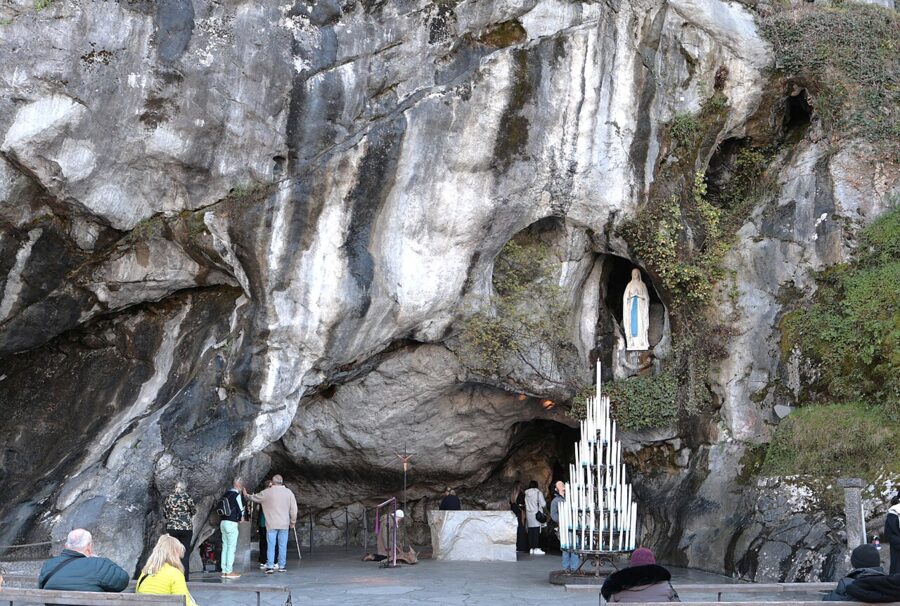
The grotto is smaller than most people expect: a shallow hollow under the Upper Basilica, with the statue in the niche, an altar and rows of benches. From April to November it is open from 6 a.m. to 1 a.m.; from November to April, 7 a.m. to 10 p.m.; on December 7, 8 and 31 and February 10 and 11, 6 a.m. to 11 p.m. (as of 2026). A slow line files along the back wall, where people lay a hand on the rock and look through glass at the spring.
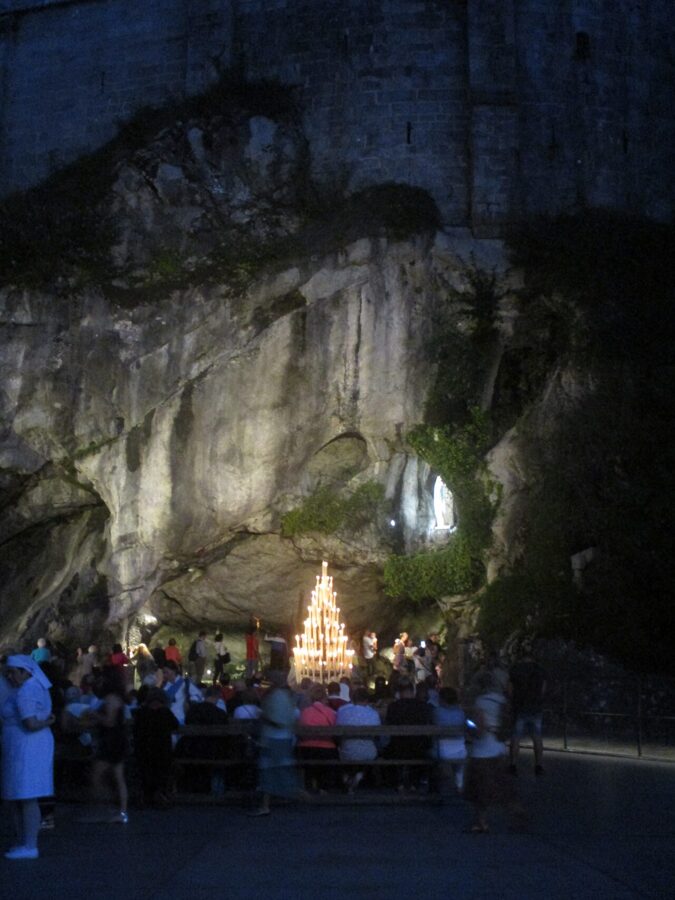
Mass is said here daily at 10 a.m. in French and the rosary at 3 p.m., and the Sanctuary’s rules single out noise near the grotto. Crutches left by people who said they were healed hung from the rock until 2002. After floods in 2012 and 2013, the surroundings were rebuilt and the candle stands moved across the river to the Chapels of Light, where you can light a candle during grotto hours. Bernadette brought her first candle on February 19, 1858.
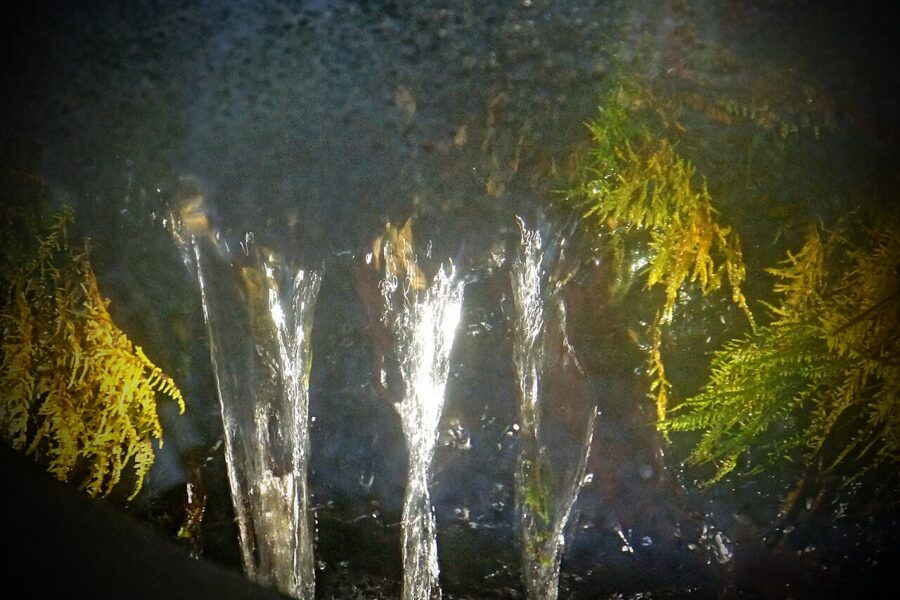
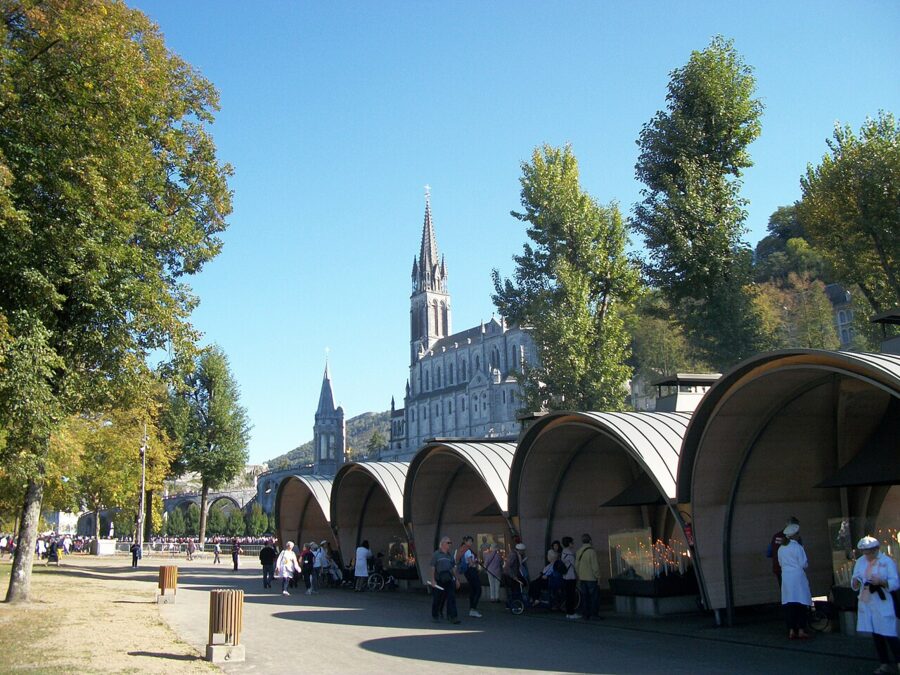
I would come twice: at opening, before the groups, and late at night, when the only sound is the river.
Drinking and washing: the baths and the water gesture
The baths (piscines), near the grotto, are where people are immersed in the spring water, helped by volunteers of the Hospitalité Notre-Dame de Lourdes. The water gesture is simpler: a volunteer guides you as you drink and wash your face. Both are free, with no booking for individuals (as of 2026).
| April to November | November to April | |
|---|---|---|
| Baths | 9 a.m. to noon, 2 to 4:30 p.m. | 10 to 11:30 a.m., 2 to 3:30 p.m. (no Sunday mornings) |
| Water gesture | 9 a.m. to noon, 2 to 4:30 p.m. | 10 to 11:30 a.m., 2 to 3:30 p.m. |
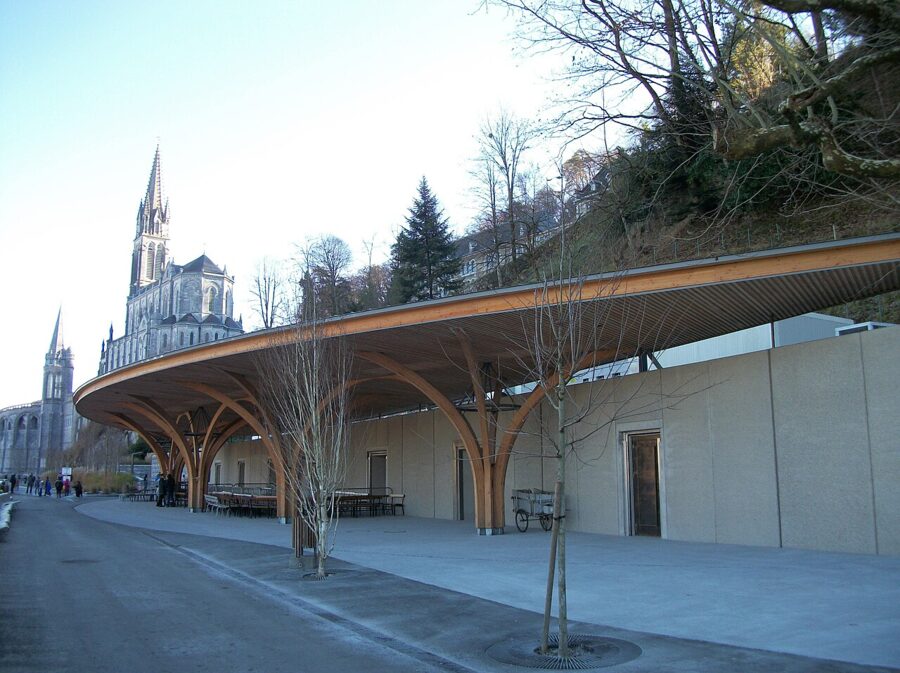
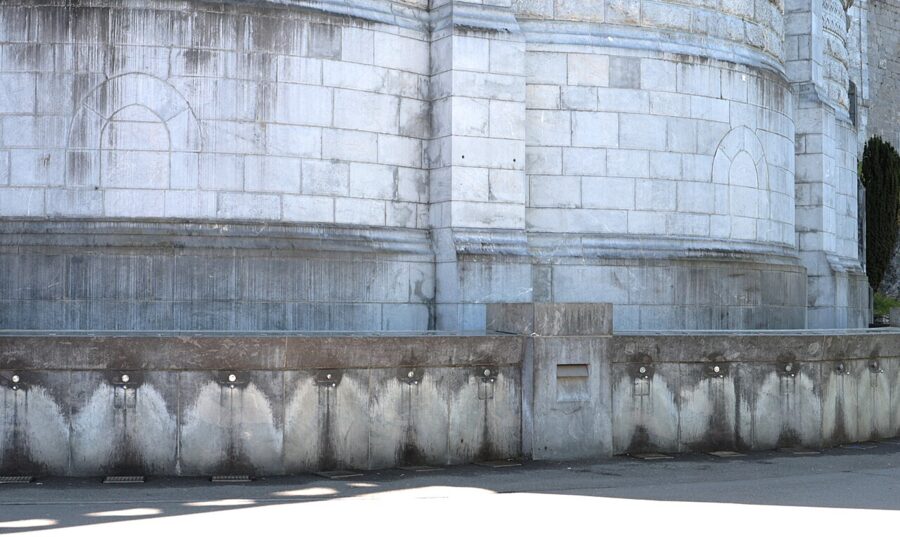
You can also drink and wash alone at the eighteen fountains beside the grotto, one per apparition, and fill a bottle at the taps by the arches. The Sanctuary is plain about the water: it is free, cannot be sold, has no special properties on analysis, and is not holy water unless a priest blesses it, which any priest here will do if asked.
Four churches on one rock
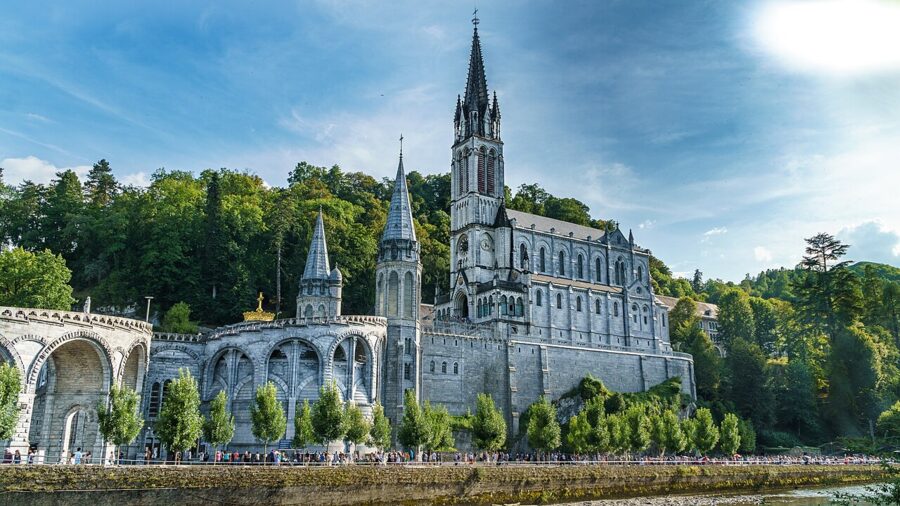
The lady asked for a chapel, and Lourdes built upward: three churches stacked against the rock over the grotto, and a fourth underground across the esplanade.
The Crypt and the Upper Basilica
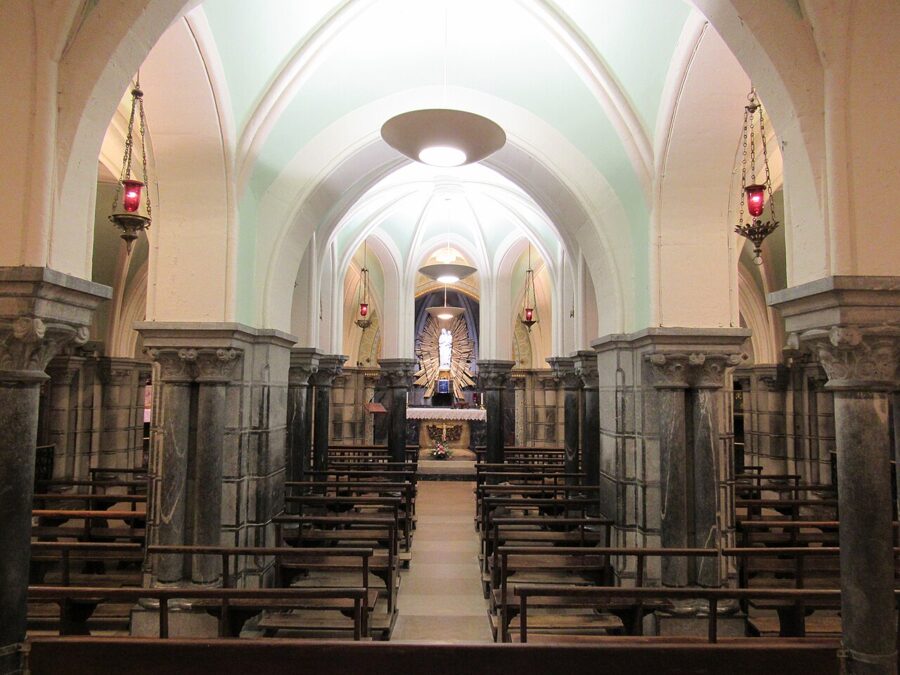
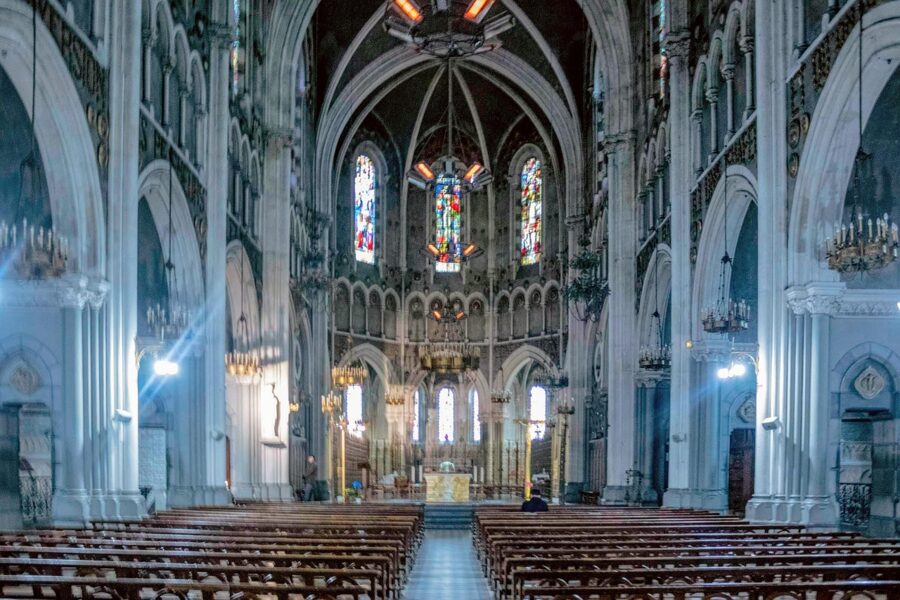
The Crypt, cut into the rock, was the first church finished, in 1866, and Bernadette’s father worked on it. Low and dim, it is kept for Eucharistic adoration (noon to 5 p.m. on the winter schedule). Above it, the Upper Basilica, or Basilica of the Immaculate Conception, is the chapel the lady asked for: built from 1866 to 1871 to plans by Hippolyte Durand, consecrated in 1876, 51 meters long and Gothic. Its windows tell Mary’s story up to the apparitions, and Bishop Laurence’s 1862 declaration is carved in marble on the right-hand aisle.
The Rosary Basilica
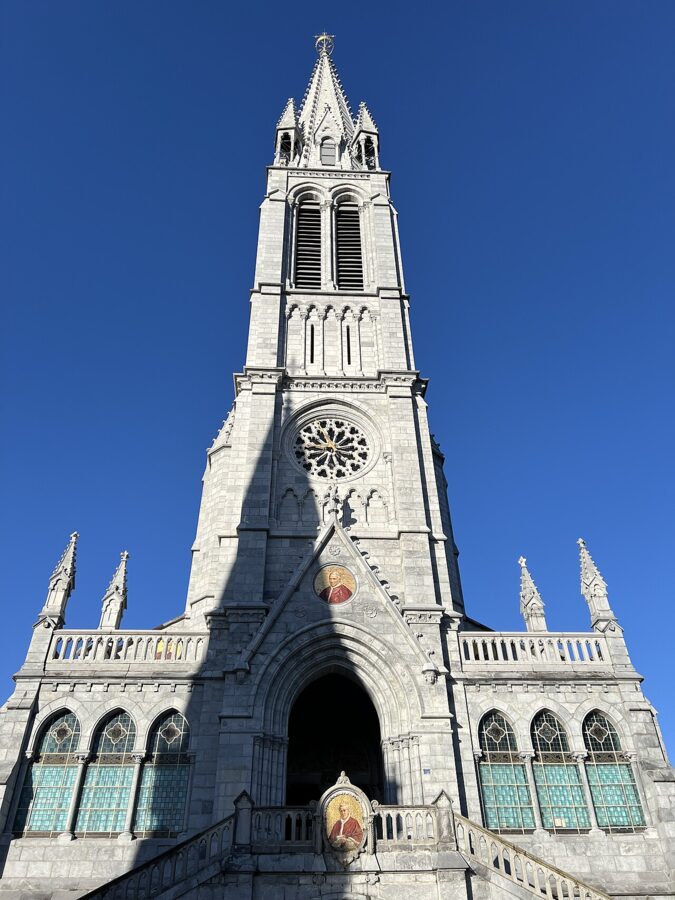
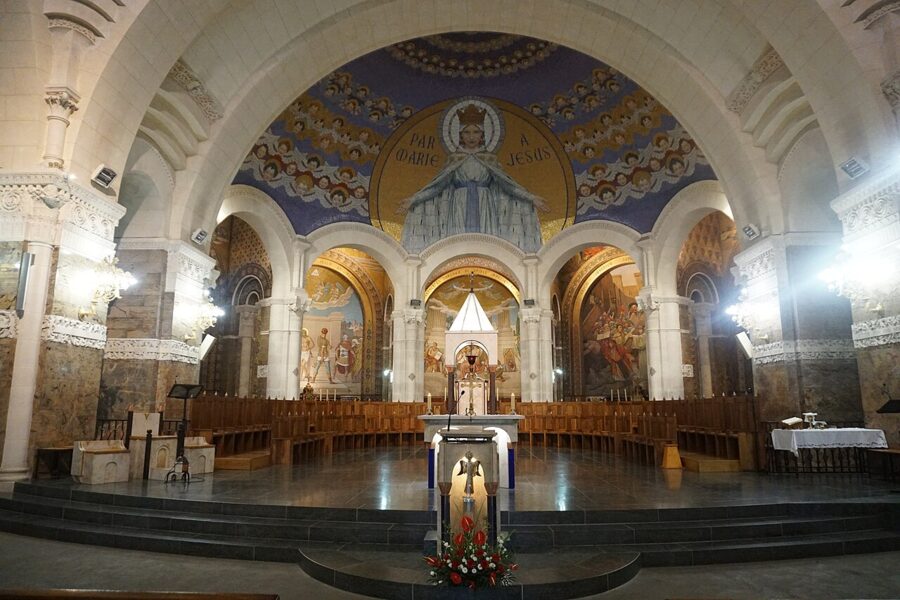
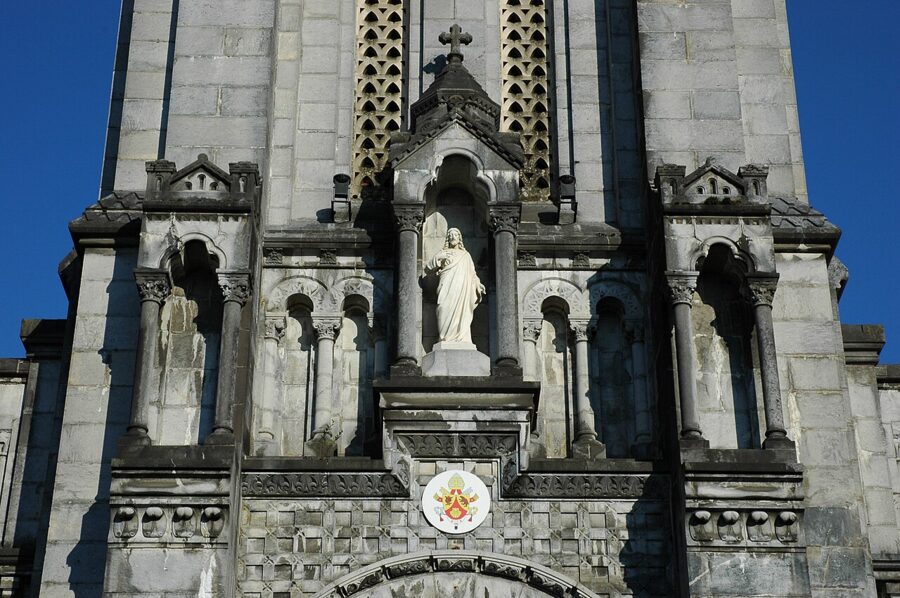
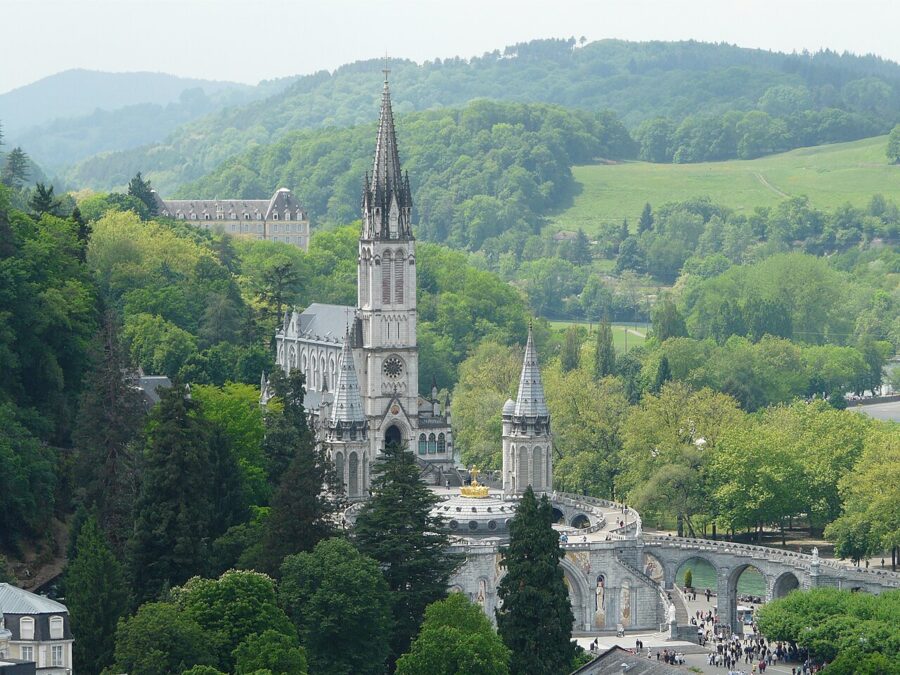
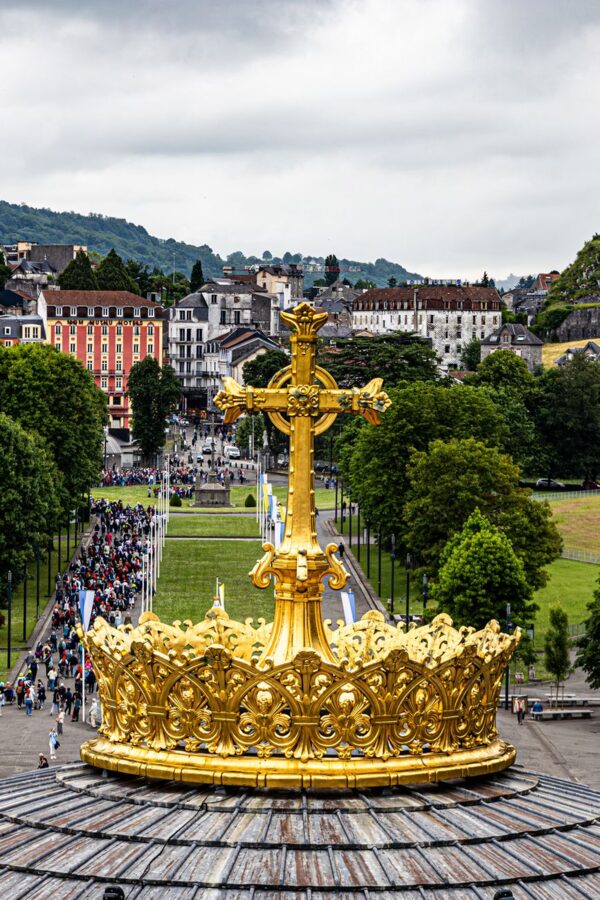
The Upper Basilica was too small almost at once, so a second church went up below it from 1883: the Rosary Basilica, domed and Romano-Byzantine, consecrated in 1901 and made a minor basilica in 1926, holding about 1,500. Fifteen side chapels ring it, one for each traditional mystery of the rosary, each with a mosaic; only five were finished at the consecration.
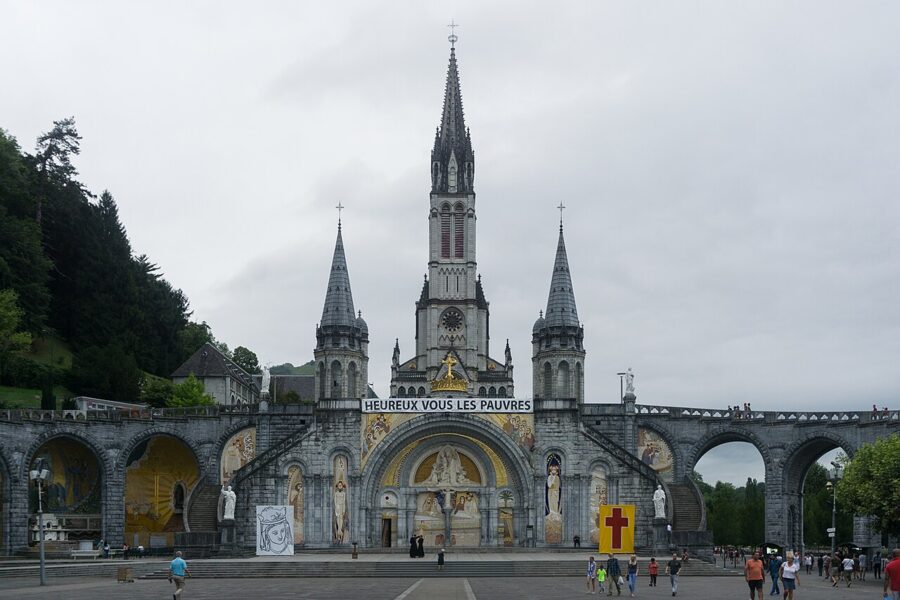
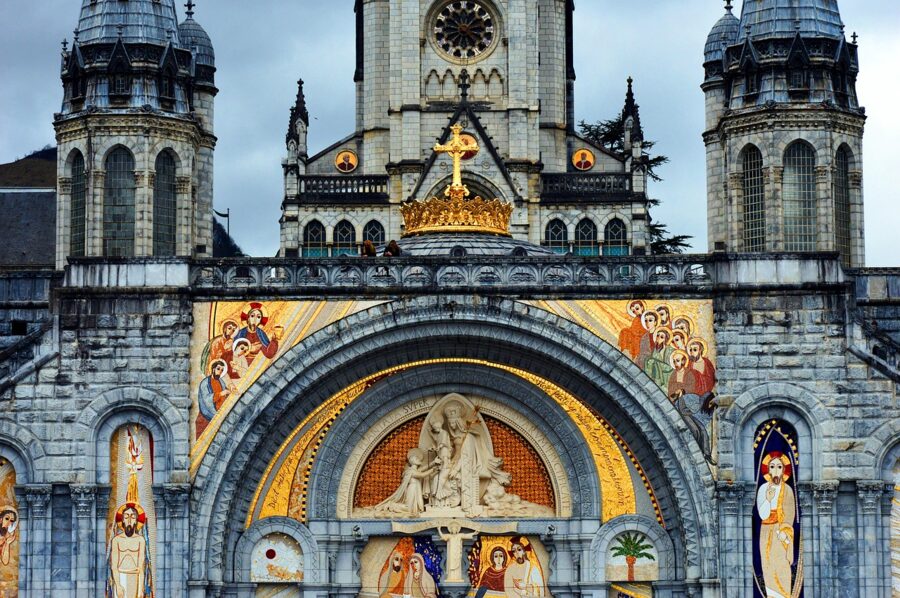
The facade carries a harder story. For the 2008 anniversary the Sanctuary added mosaics from the workshop of the Jesuit artist Marko Rupnik, later accused of sexually abusing adults and sanctioned by the Holy See. In July 2024 they stopped being lit during processions, and from March 31, 2025, Bishop Jean-Marc Micas had the entrance doors bearing them covered, so that people who could not bring themselves to pass under the mosaics could enter. A working group is advising on what comes next; the latest statement dates from that spring.
St. Pius X and Sainte-Bernadette
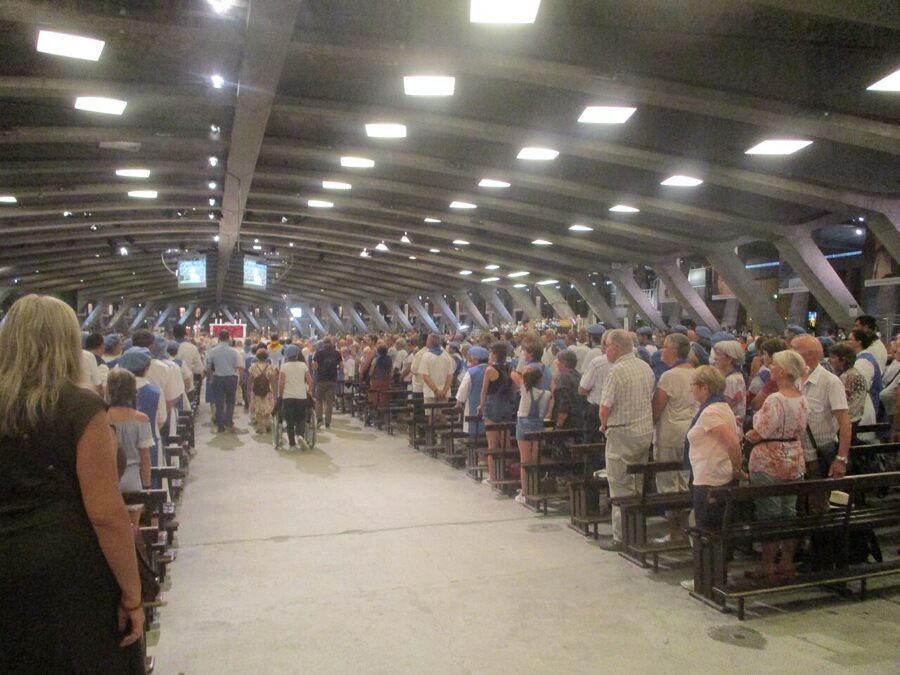
The fourth church is under your feet. The Basilica of St. Pius X, built for the 1958 centenary to a design by Pierre Vago, is a concrete oval almost entirely underground, its low roof on 58 pillars, with room for 25,000. Cardinal Angelo Roncalli dedicated it months before he became Pope John XXIII. An International Mass is said here at 9:30 a.m. every Sunday and Wednesday from April to November, the one service I would plan a day around.
Across the river, the church of Sainte-Bernadette (1988) stands where she was at the last apparition.
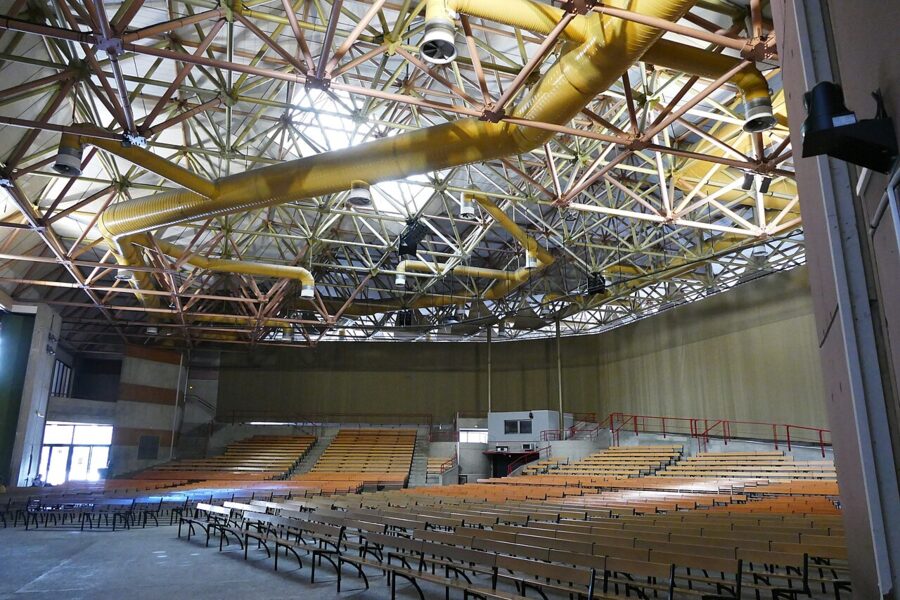
The processions, as they run in 2026
| Procession | When | Where |
|---|---|---|
| Marian torchlight procession | Daily at 9 p.m., April to early November; also December 7 and 8, February 10 and 11; 8:30 p.m. from the parish church on February 18 | Ends on the esplanade before the Rosary Basilica |
| Torchlight rosary (winter) | Daily at 8:30 p.m., November to April; Friday to Sunday only, January 4 to February 6 | The grotto |
| Eucharistic procession | Daily at 5 p.m., April to early November | From the Prairie to St. Pius X |
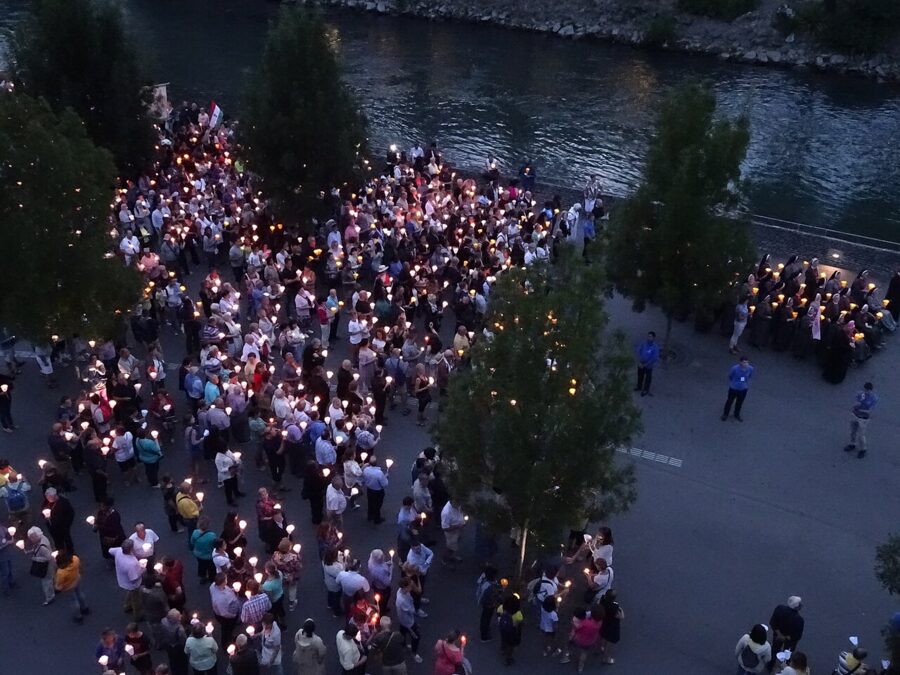
The torchlight procession follows a statue of the Virgin through the Sanctuary, with the sick and disabled at the front, accompanied by volunteers. Allow an hour, and arrive early in summer to walk near the front. Sources give two beginnings: the Sanctuary credits the Capuchin Father Marie-Antoine with handing out candles one evening in 1863, but dates the first Marian torchlight procession to August 28, 1872.
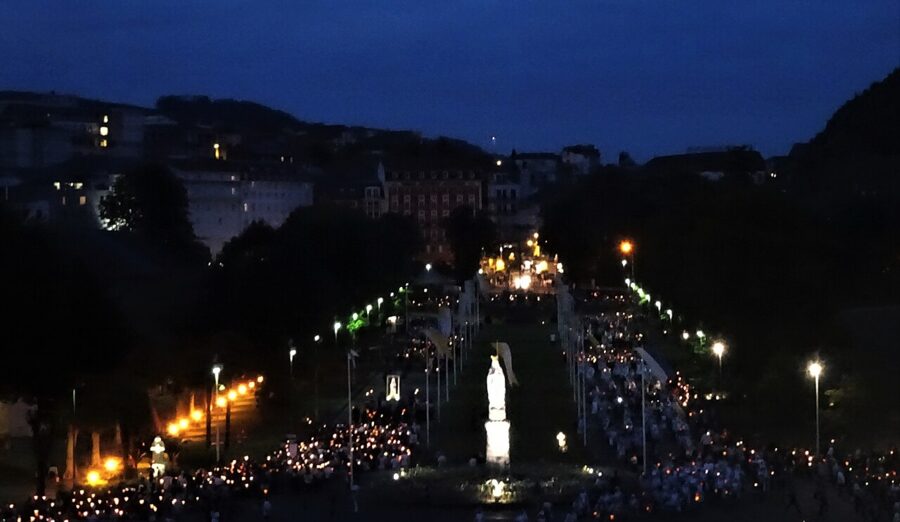
Since September 9, 2026, the procession has been on France’s inventory of intangible cultural heritage, a step toward a possible UNESCO bid. Eighteen days later Pope Leo XIV led it himself, as John Paul II and Benedict XVI had.
In the Eucharistic procession a priest carries the consecrated Host in a monstrance from the Podium on the Prairie into St. Pius X, where the sick are blessed. The Sanctuary’s English page gives its season as March 25 to November 1. If you cannot walk it, take a seat in the basilica early; some days it becomes adoration there instead.
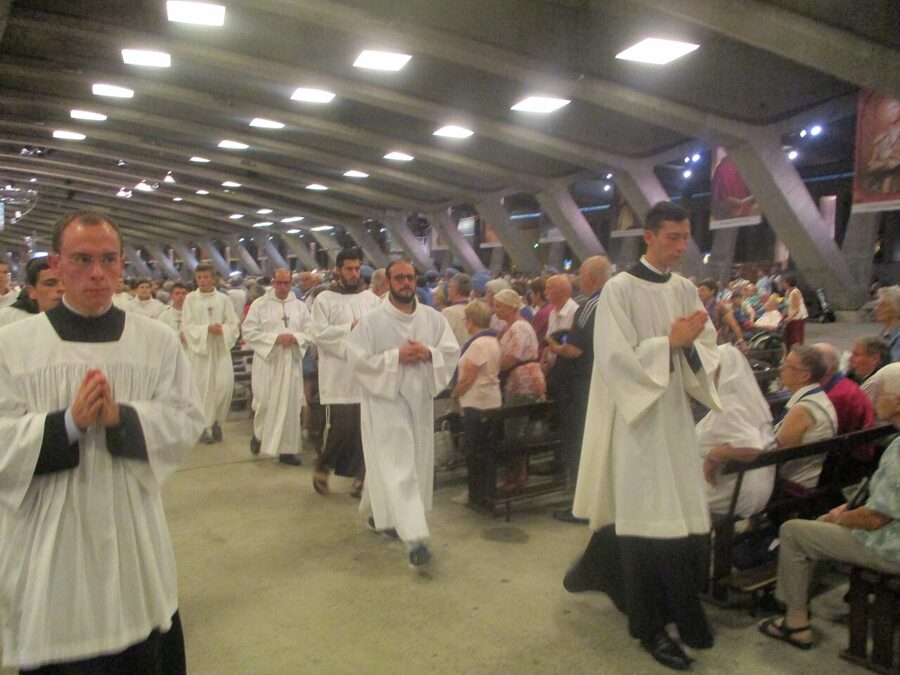
The sick and the hospitaliers
The first thing many people notice is the wheelchairs. The sick go to the front of every procession, and in September 2026 Pope Leo XIV told them they were not a burden but the beating heart of humanity. Much of the care comes from the Hospitalité Notre-Dame de Lourdes, founded in 1885, whose volunteers come from all over the world for set periods each year, alongside diocesan hospitalities that travel with their own pilgrimages. The Sanctuary explains both on its page on Christian hospitality.
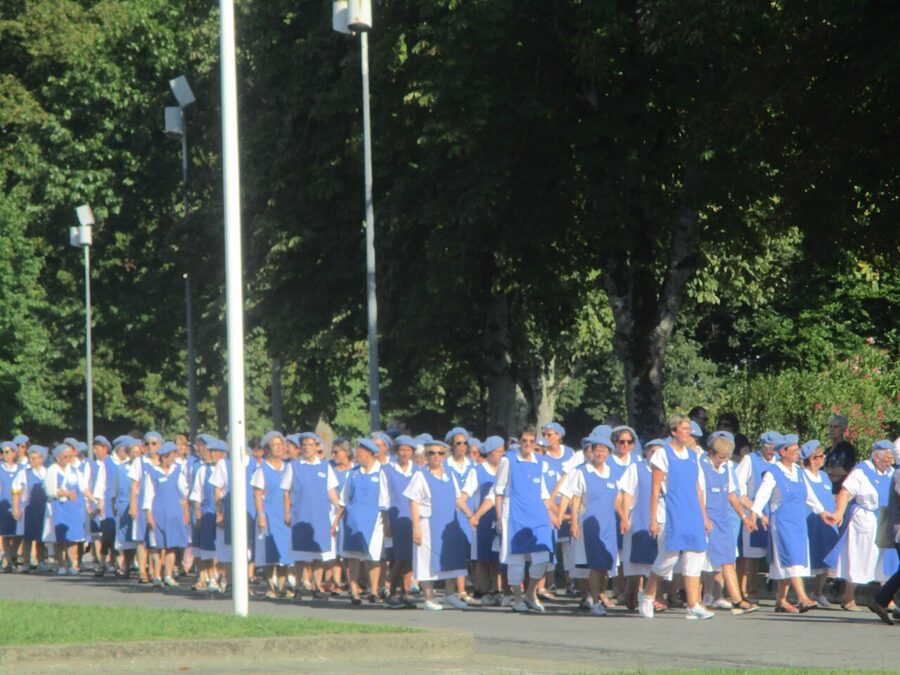
Disabled visitors coming alone or with family can use the welcome service run by the OCH foundation: daily from April to November except Sunday and Monday mornings, 9:30 a.m. to noon and 2 to 6 p.m.; in winter Monday, Tuesday, Thursday and Friday until 5 p.m.
Healing, and how the Church counts it
More than 7,000 cures have been reported since 1858, and as of November 2026 the Church has recognized 72 as miraculous, most after contact with the water. More than 80 percent were women, 56 were French, and the youngest was two years old.
Doctors come first. A cure is declared to the Lourdes Medical Bureau, founded in 1883 and led since 2009 by Dr. Alessandro de Franciscis, whose case meetings are open to any doctor in Lourdes, of any faith. Cases it finds unexplained go to the International Medical Committee, about thirty specialists who vote on whether a cure is unexpected, complete, lasting and unexplained by current medical knowledge. Only then may the bishop of the healed person’s home diocese proclaim a miracle.
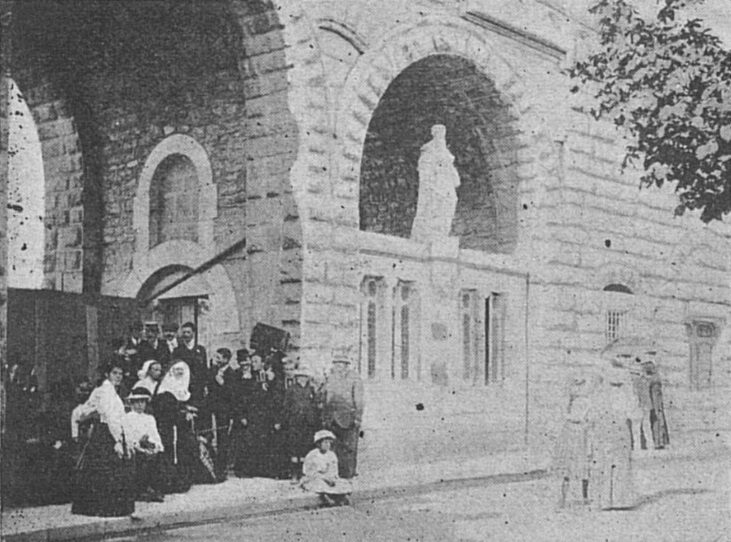
It can take a century. John Traynor, a Liverpool sailor badly wounded at Gallipoli, was cured in 1923 and proclaimed the 71st miracle in December 2024. Antonia Raco, an Italian with primary lateral sclerosis, said she could walk again after a bath in 2009, and became the 72nd on April 16, 2025. Believers see God’s hand; the doctors, by design, say only “unexplained.”
Bernadette’s Lourdes: the mill, the Cachot and the castle
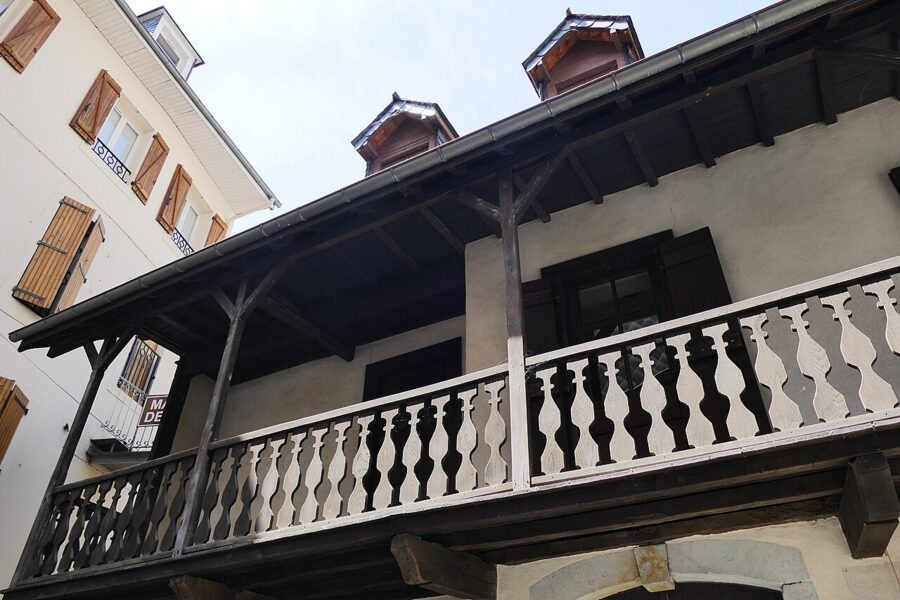
Across the Gave, the old town holds the places Bernadette knew, linked by the Chemin de Bernadette, a free route marked by brass studs bearing her image; allow at least ninety minutes. It passes the Boly Mill, the Cachot, the hospice where she went to school and made her first communion on June 3, 1858, the old presbytery where she took the lady’s messages to Peyramale, and the parish church. That church replaced the one she knew, which burned in 1904, but kept her baptismal font and holds Peyramale’s tomb.
The Sanctuary’s guided Footsteps of Bernadette walk leaves the Information Center at 2 p.m. and takes two hours; from November to April it runs Friday to Sunday. Its French and English pages disagree about summer Sundays, so check at the Information Center.
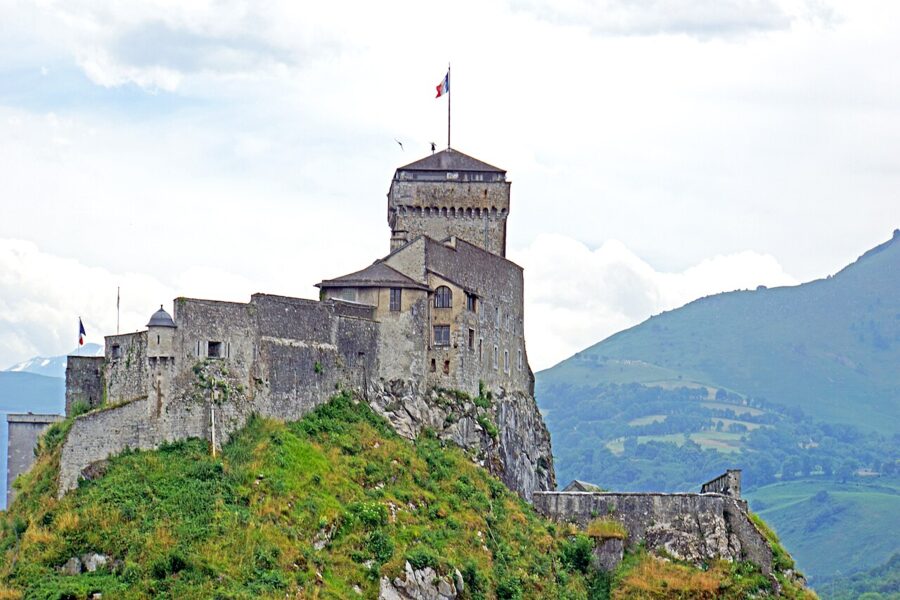
Lourdes was a fortress town long before it was a shrine. The château fort, by turns a counts’ residence, royal prison and stronghold, houses the Pyrenean Museum, founded in 1921. Entry starts at €8 (about US$9) at 2027 rates; in late 2026 it opened Tuesday to Sunday, 9:30 a.m. to noon and 2 to 4:30 p.m. Its ramparts give the best view of the basilicas.
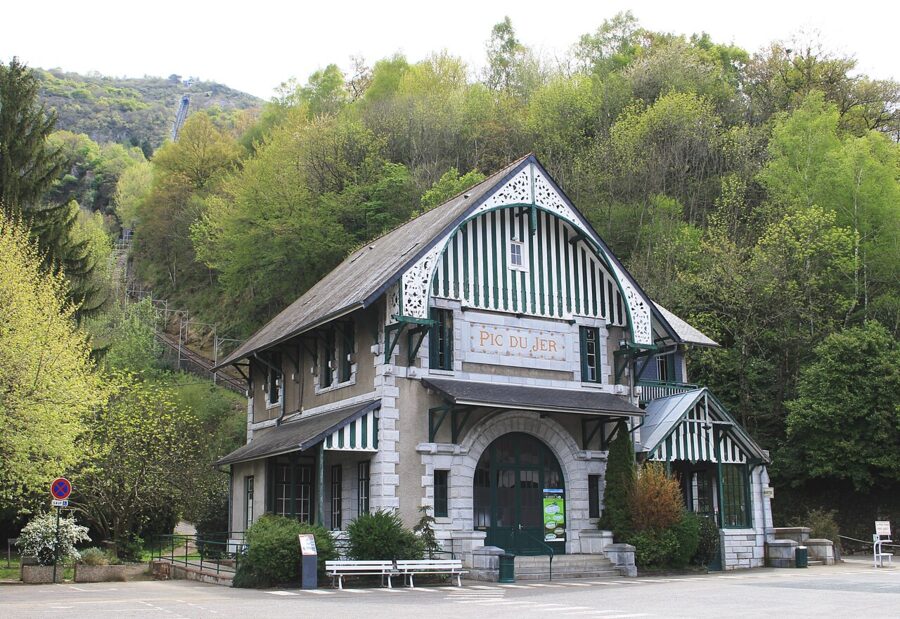
The Pic du Jer funicular, opened in 1900, climbs 438 meters in ten minutes; for its 2027 season, March 27 to November 7, an adult return is €14.50 (about US$17).
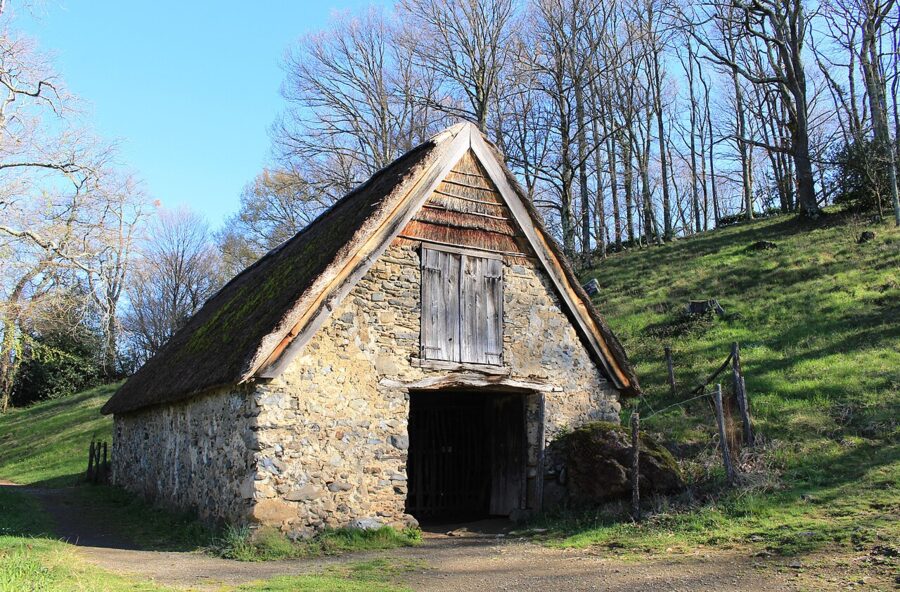
Bernadette’s other place is Bartrès, an hour and a quarter’s walk across the fields or ten minutes by car. She was nursed there as a baby by Marie Laguës and minded sheep there in the months before the apparitions, and the church still keeps the practice strokes she made when learning to write.
When to go
The pilgrimage season runs from April to October, with the full program from Easter to early November; in season the Sanctuary has counted around 20,000 people a day at the grotto. Big gatherings fill the town for the International Military Pilgrimage in May, the French National Pilgrimage around August 15 and the Dominicans’ Rosary Pilgrimage in early October. February 11, the feast of Our Lady of Lourdes and the World Day of the Sick, brings a torchlight procession even in winter. Other dates to know are February 18 (St. Bernadette), March 25 (the day the lady gave her name), July 16 (the last apparition) and December 8.
I would choose late April, May away from the military weekend, or late September. Winter is near-empty but has shorter bath hours. If you know the stillness of Koyasan or Meteora, expect the opposite: Lourdes is built for crowds, and the quiet comes early or late. The Sanctuary’s rules ban beachwear, smoking, eating in the grounds, noise near the grotto, and bikes or scooters, and ask that photos respect people; ask before photographing the sick.
Getting there
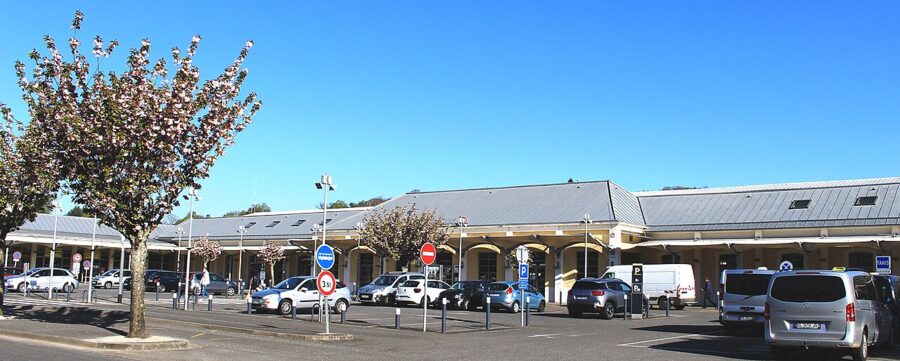
The station opened in 1866 and the train is still the easiest way in: TGVs from Paris-Montparnasse take about 4 hours 45 minutes to 5 hours 30, and the Intercités night train from Paris-Austerlitz arrives early morning (tourist office travel options). Tarbes-Lourdes-Pyrénées airport, fifteen minutes away, has flights from Paris-Orly, London, Dublin, Brussels-Charleroi, Rome, Milan and others, and an airport shuttle timed to the Ryanair and Volotea flights runs to the avenue du Paradis for €3 (about US$3.50). The TL bus also runs about hourly, Monday to Saturday; Pau and Toulouse airports are the fallbacks.
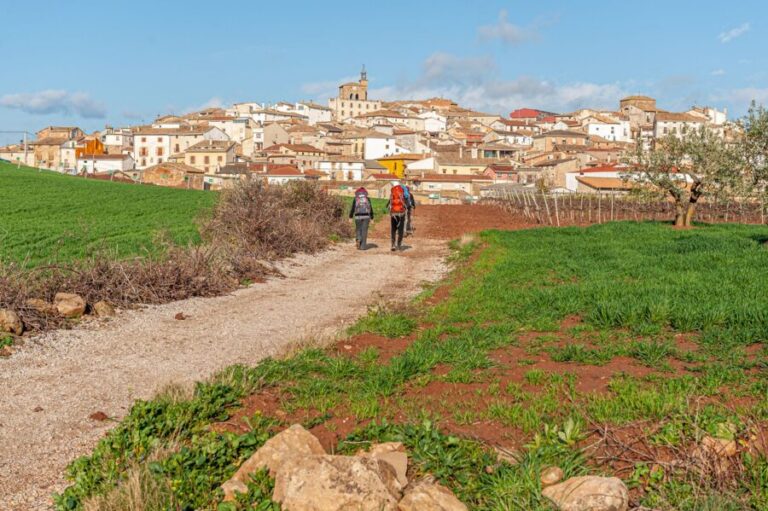
On foot, Lourdes lies on the GR78, the Chemin du Piémont from Béziers to Saint-Jean-Pied-de-Port, a stage for pilgrims bound for Santiago, and the GR101 links it to the Le Puy and Arles routes, both feeding the Camino de Santiago. By car, leave the A64 at Tarbes Ouest or Soumoulou.
One day or two in Lourdes
One day covers the essentials if you start early; two let you add the town.
- Day one, morning: the grotto at opening, the Crypt and Upper Basilica, then the baths or water gesture (or the International Mass on Sunday or Wednesday).
- Day one, afternoon: the Rosary Basilica, the 3 p.m. rosary at the grotto, the Medical Bureau, the 5 p.m. Eucharistic procession.
- Day one, evening: the 9 p.m. torchlight procession, then the grotto again.
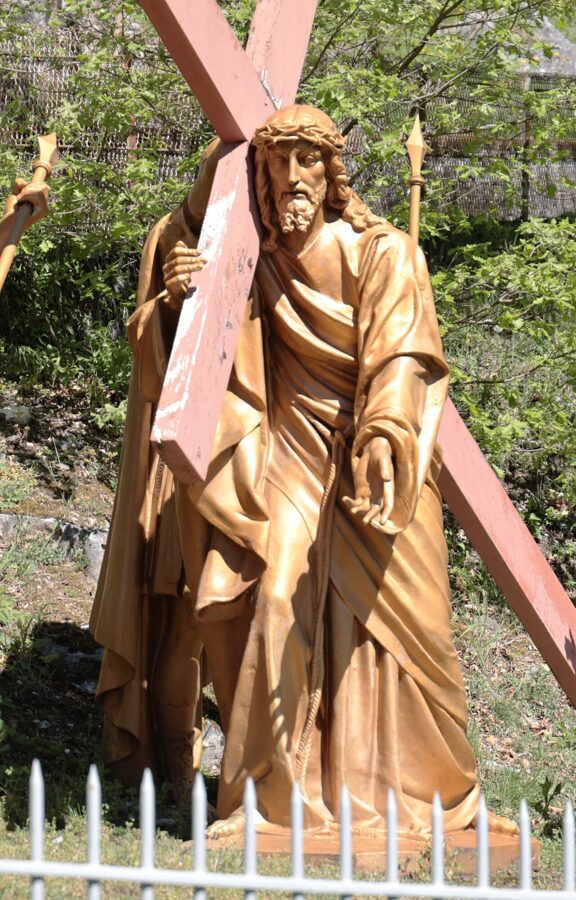
- Day two: the Stations of the Cross on the Espélugues hill (1,500 meters, 115 life-size cast-iron figures; the riverside Prairie stations are level), lunch by Les Halles, the 1895 covered market, then the Chemin de Bernadette and the château fort.
Almost any hotel in the compact center is within walking distance of the Sanctuary. Eat in the old town near the market rather than on the souvenir streets by the gates.
On the second night, when the candles are out and the esplanade is empty, walk back down to the grotto. The benches will be nearly bare and the spring still running under its glass. Bring a bottle for the water, and a sweater for 11 p.m.