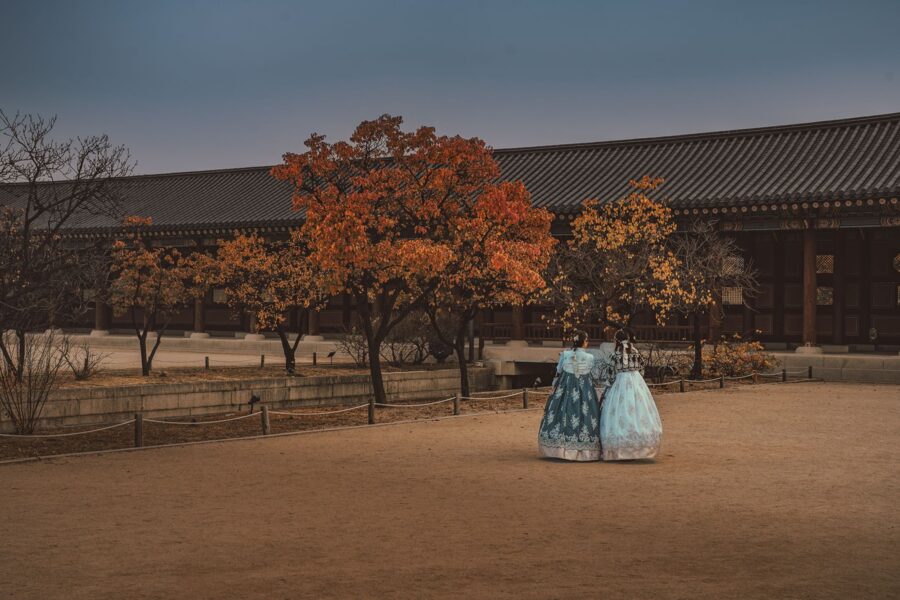
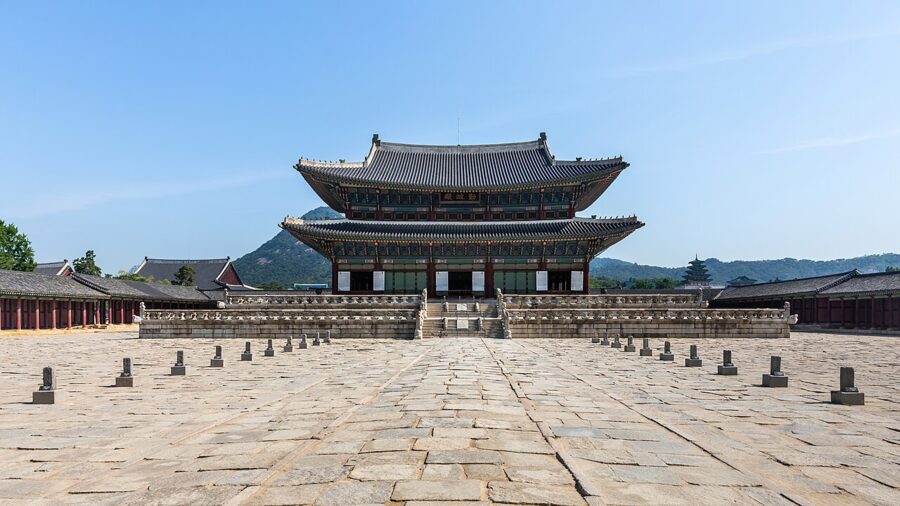
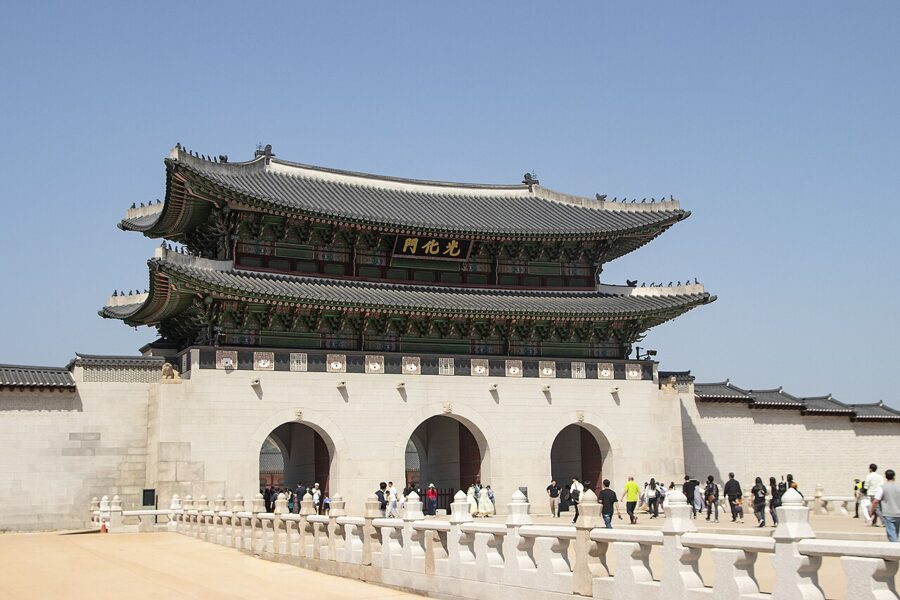
Gyeongbokgung opens its gates at 9 a.m., and for a short while after that the stone court in front of the throne hall is almost empty. A photographer who knows this has you dressed, pinned and standing on the right flagstone before the tour groups come through Gwanghwamun. One who doesn’t spends your paid hour asking strangers to step out of the frame.
Seoul is one of the easiest cities in Asia to hire a portrait photographer in, and one of the most regulated places to shoot. Palaces have equipment limits, Bukchon has a curfew, the river parks charge for wedding shoots, and the temples are working places of worship.
Prices here are in won, with dollars at about ₩1,340, the rate in November 2026.
Contents11 parts
- Decide what the pictures are for
- Where to find a photographer, and how booking works
- What a Seoul photo shoot costs in 2026
- What to ask before you pay
- How to judge a portfolio
- The palaces: free in hanbok, strict about equipment
- Bukchon and Ikseon-dong: lanes where people live
- Temples: Jogyesa and Bongeunsa
- Parks, Namsan and the Han River
- Seasons and light
- Hanbok rental and the day itself
Decide what the pictures are for
Price, length and location all follow from what you want. Koreans call outdoor portrait work a snap (스냅), a useful word for searching in Korean.
- Travel portrait, solo or with friends. One hour, one or two neighborhoods, everyday clothes or hanbok.
- Couples and proposals. The photographer plays tourist until the ring comes out. Send the plan in writing a few days ahead.
- Hanbok shoots at the palaces. The most booked kind in Seoul, often sold by rental shops as a bundle with the clothes.
- Pre-wedding. Expect two to four hours, outfit changes off site and a long edit.
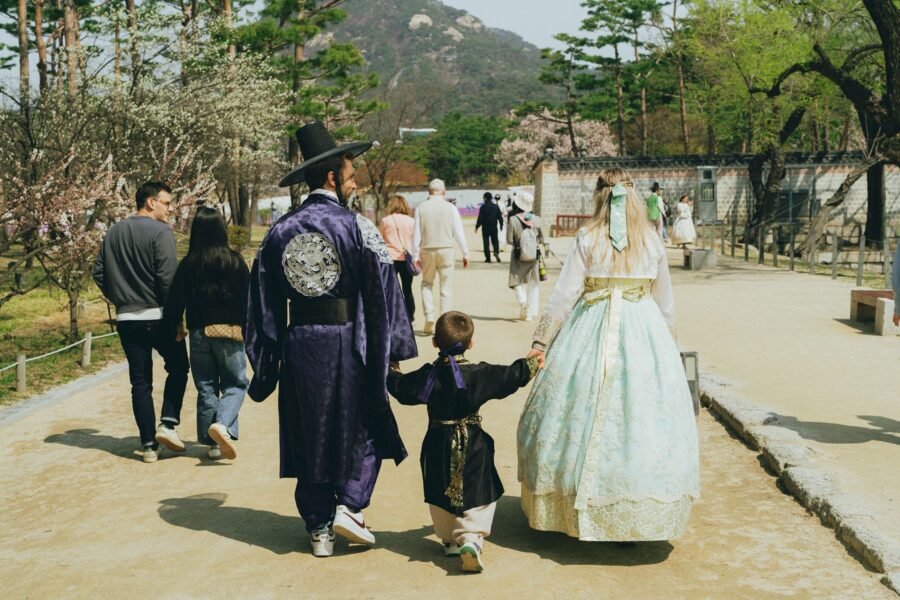
- Family. Parks and lawns suit children better than alleys. Ask for someone who shoots fast.
Whichever you choose, a good result needs three things: soft light, a place that means something to you, and a photographer who has worked that place often enough to know its rules. The first two are your job. The third is what you are paying for.
Where to find a photographer, and how booking works
There are four doors in. Independent photographers advertise on Instagram, Naver blogs and their own sites, and book by message, email or KakaoTalk, Korea’s main messaging app. Most want a deposit to hold the date.
Korean marketplaces such as Kmong and Soomgo list hundreds of snap photographers with posted prices, and a newer site, Moca, compares Seoul studios by style and price. They are mostly in Korean, but a browser translation is enough. Their advantage is payment protection: the marketplace holds your money until the job is done.
International platforms such as Klook, KKday, Viator, Trazy and the Seoul PASS resell fixed packages with English confirmation and clear cancellation terms. And the hanbok rental shops near the palaces sell bundled shoots, the cheapest way in and the most rushed.
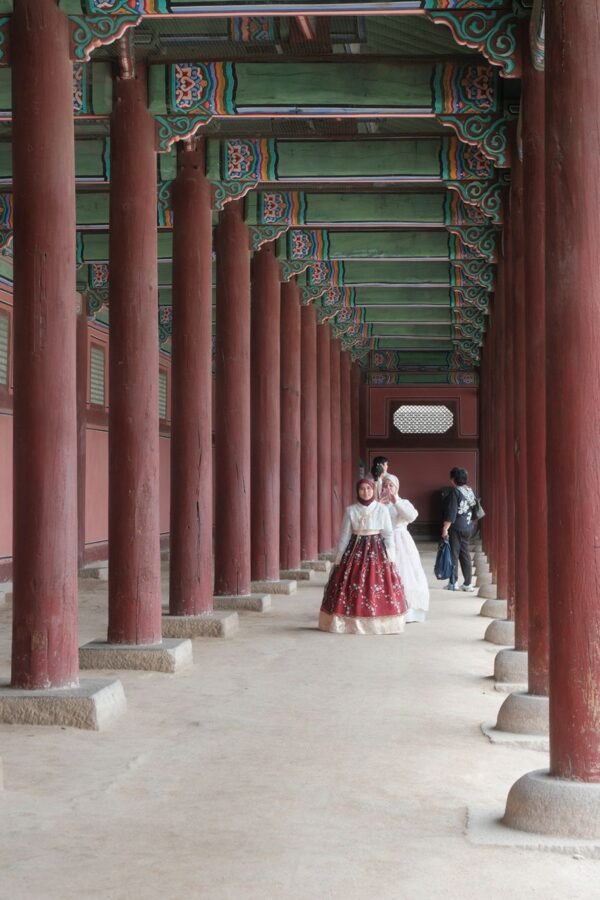
Learn four Korean words before you message anyone. Wonbon (원본) means the unedited original files. Bojeongbon (보정본) means retouched images, and listings often split them into saekgam bojeong (색감보정), color grading only, and sebu bojeong (세부보정), detailed retouching of skin and shape. Selek (셀렉) is the step where you choose which frames get retouched.
What a Seoul photo shoot costs in 2026
The bands below come from packages listed in April 2026 by Seoul studios, rental shops and independent photographers, and from Kmong’s April 2026 survey of snap and wedding photography prices, based on its 2025 bookings. Shops change their prices often, so treat these as ranges.
| Kind of shoot | Typical price, as of 2026 | What you usually get |
|---|---|---|
| Hanbok rental with a 5–10-minute studio session | ₩37,600–₩75,200 per person (about US$28–56) | Original files by email; few or no retouched images |
| Hanbok rental with a 30-minute outdoor palace shoot | ₩120,000–₩190,000 (about US$90–142), per person or per group depending on the shop | Around 100 originals; 0–5 retouched |
| Hanbok with a 50–60-minute palace shoot | ₩135,000–₩255,000 (about US$101–190) | 100–250 originals; 3–5 retouched |
| Independent photographer, 1 hour, 1–3 people | ₩200,000–₩320,000 (about US$149–239) | From 70 originals with 10 edited to every file color-graded |
| Independent photographer, 1.5–2 hours | ₩280,000–₩390,000 (about US$209–291) | 150 originals with 20 edited, or 80–100 color-graded |
| Small-group photo walk, 90 minutes | ₩95,000 per person (about US$71) | 20 retouched within 72 hours, plus originals |
| Korean-market outdoor or date snap | ₩200,000–₩500,000 (about US$149–373) | Varies; ask about originals |
| Pre-wedding or wedding snap | ₩500,000–₩1,500,000 and up (about US$373–1,119); two hours with basic retouching averages ₩600,000–₩800,000 | Delivery usually 4–8 weeks |
| K-pop concept studio | ₩99,000–₩339,900 (about US$74–254) | 1–4 retouched images and a 10-second clip |
Delivery ran from 72 hours on a group walk, through 11 days at one rental shop and two weeks for an independent photographer, to four to eight weeks for Korean wedding work. Hair and makeup is the expensive surprise: ₩80,000 (about US$60) to more than ₩200,000 per person in 2026 listings. Extra retouched frames tend to cost ₩10,000–₩15,000 each.
Palace tickets are rarely the issue. Adults pay ₩3,000 (about US$2) at Gyeongbokgung and ₩1,000 at Deoksugung, and anyone in hanbok goes in free.
What to ask before you pay
Send these in one message, and judge the photographer partly on the answers.
- How long is the shoot, and does walking between locations count against it?
- How many originals, how many retouched, and who chooses the retouched frames?
- When and how will I receive them?
- What happens if it rains?
- Are hanbok, hair, makeup, entry fees and any permit fees included?
- Have you shot at this palace or temple, and do you know its rules?
- What is the deposit, how do I pay it, and is it refundable?
- May I use the images commercially, and will you post them yourself?
Be wary of anyone who promises Bukchon at sunset (the main lanes close to visitors at 5 p.m.), Gyeongbokgung on a Tuesday (it is shut), drone shots over a palace, or lights and assistants inside the palace walls with no mention of a permit. Walk away from full prepayment by personal bank transfer with no contract and no delivery date.
How to judge a portfolio
Ignore the highlight reel and ask to see one complete session, 15 or 20 frames from a single shoot. It shows whether a photographer is consistent or has a few lucky frames.
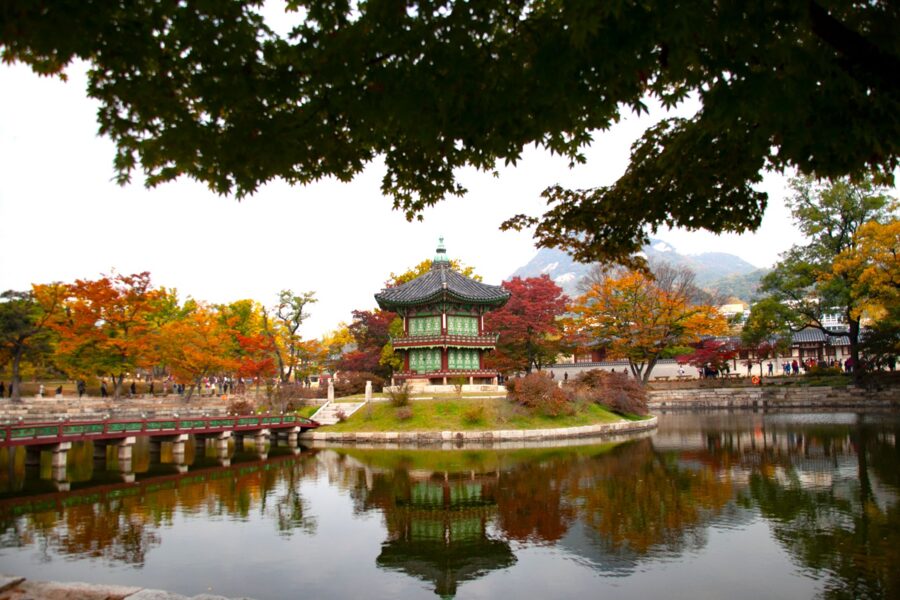
Then look at skin and whites: pale hanbok jackets that turn blue or yellow from frame to frame mean you will be fixing color yourself. Look at hands and posture, which show whether the photographer directs people or waits for luck.
Look for pictures in poor light: a gray morning, a dark alley. Anyone can make a palace look good at 10 a.m. in October. The photographer worth paying is the one whose rainy-day pictures still look like a choice.
Heavy smoothing and slimmed jaws are a house style at some Korean studios. If you want to look like yourself, say so before the shoot.
The palaces: free in hanbok, strict about equipment
The palaces and the Jongmyo shrine are run by the Korea Heritage Service’s palace office, and two of its rules shape every shoot. The first is free entry in hanbok, in place since 2013 and set out in the admission rules; more than two million visitors used it in 2025.
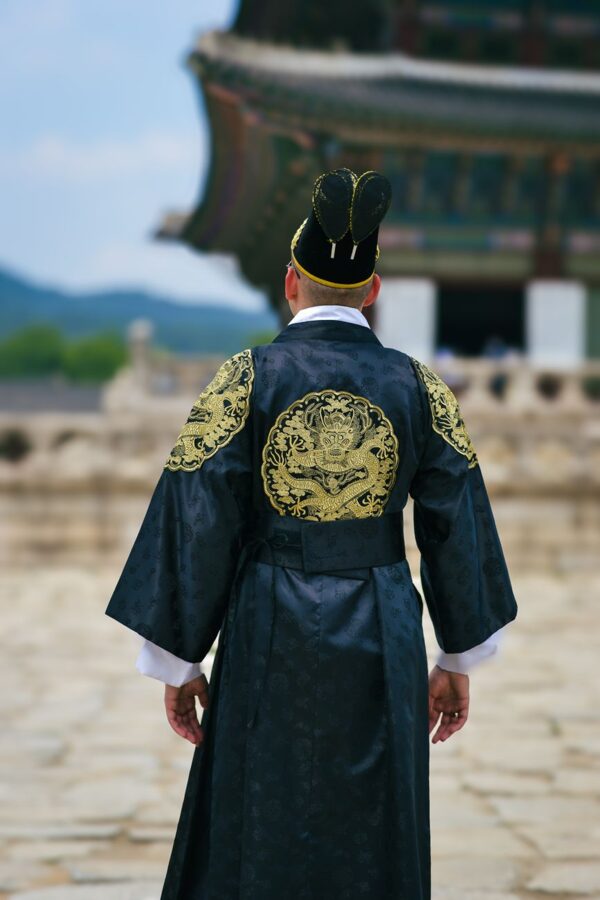
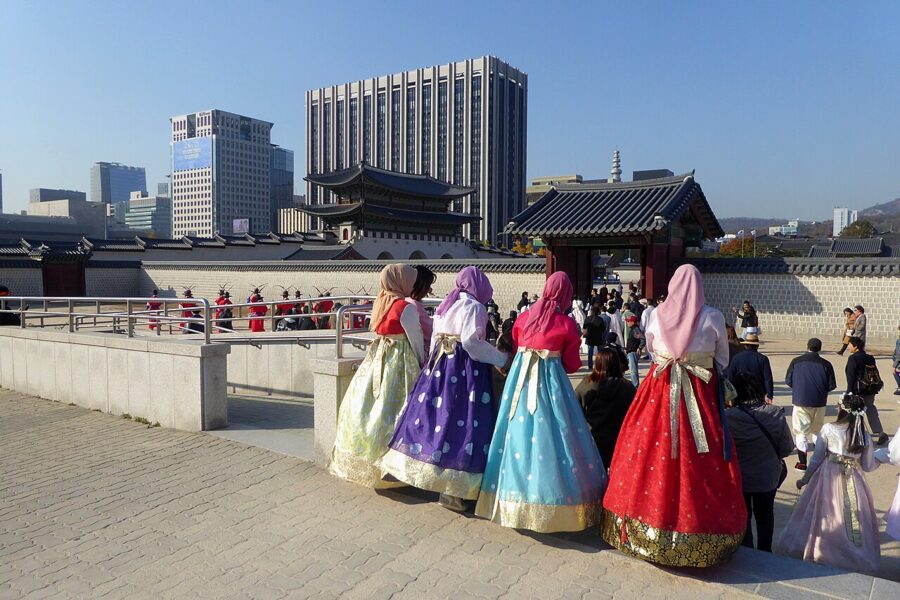
Not everything sold as hanbok counts. A Yonhap fact-check in May 2026 set out what counts as hanbok under the official guideline: a separate jacket (jeogori) and skirt (chima) or trousers (baji), with the jacket wrapping across the front. Modern “everyday hanbok” qualifies, and men in women’s hanbok and women in men’s have been admitted since July 2019. A royal robe or outer coat over ordinary clothes does not count, nor does a one-piece “hanbok dress” without a wrap-front jacket.
In autumn 2026 the heritage service said it was reviewing free hanbok entry within a wider rethink of palace fees. Nothing had changed by late November 2026, but check before a trip in 2027.
The second rule is about cameras. Under the visitor regulations, visitors’ souvenir photos count as already permitted, and the filming permit guidance draws the lines:
- A personal shoot may bring one camera, one tripod and one selfie stick; more makes it commercial.
- Couples in wedding or ceremonial dress may use two cameras and one photographer. More cameras, lights or two or more assistants need a permit.
- Character costumes and unusual props need a permit regardless.
- No makeup or changing on the grounds, and filming can be stopped on crowded stairs and terraces.
- Permitted commercial stills cost ₩120,000 (about US$90) for up to two hours, plus ₩60,000 (about US$45) for the first model. Apply 60 to 5 days ahead.
- Drones are effectively out.
So one photographer with one camera, shooting you in hanbok, is within the rules. A pre-wedding team with a reflector holder and a rail of dresses is not, unless it holds a permit.
| Palace | Hours (last entry one hour before closing) | Closed | Adult ticket |
|---|---|---|---|
| Gyeongbokgung | 9 a.m.–5 p.m. Nov–Feb; to 6 p.m. Mar–May and Sep–Oct; to 6:30 p.m. Jun–Aug | Tuesday | ₩3,000 |
| Changdeokgung | 9 a.m.–5:30 p.m. Nov–Jan; to 6 p.m. Feb–May and Sep–Oct; to 6:30 p.m. Jun–Aug | Monday | ₩3,000; rear garden ₩5,000 extra |
| Deoksugung | 9 a.m.–9 p.m. | Monday | ₩1,000 |
| Changgyeonggung | 9 a.m.–9 p.m. | Monday | ₩1,000 |
| Jongmyo | 9 a.m.–5:30 p.m. Nov–Jan; to 6 p.m. Feb–May and Sep–Oct; to 6:30 p.m. Jun–Aug | Tuesday | ₩1,000 |
These are the opening hours as of November 2026. If a closing day falls on a public holiday, the palace closes the next day instead.
Gyeongbokgung
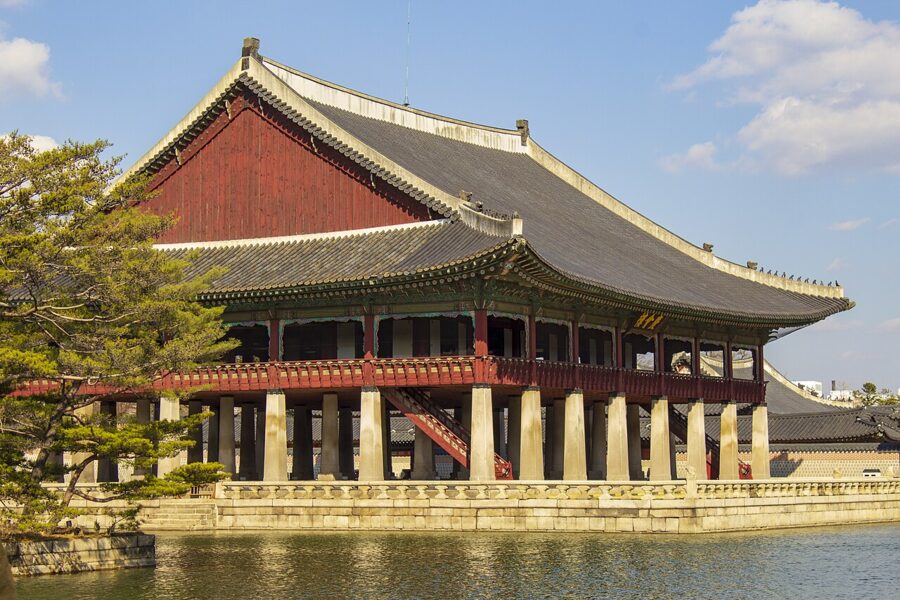
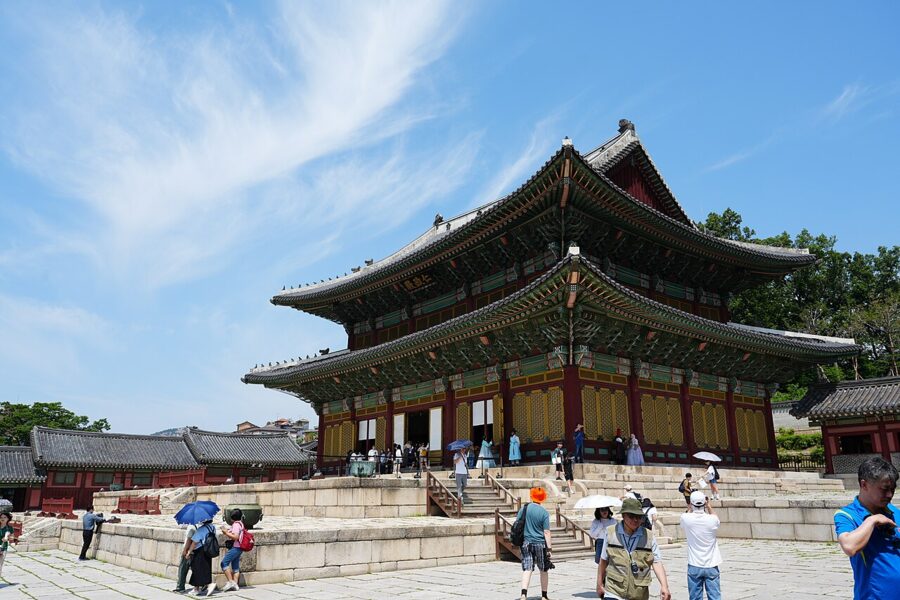
The largest palace, and the one every package sells. The throne hall court and Gyeonghoeru are the classic frames; the northern courtyards and Hyangwonjeong are quieter. I would book the first slot and finish before 11 a.m.
Changdeokgung and its rear garden
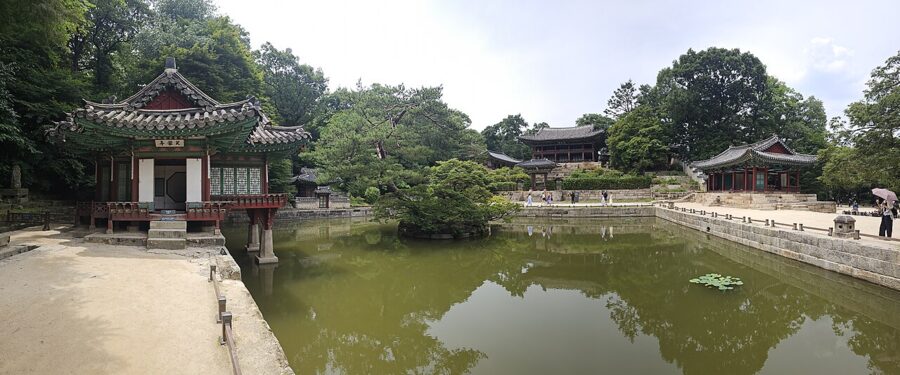
Changdeokgung, a UNESCO World Heritage site, is greener and calmer than Gyeongbokgung. Its rear garden, the Huwon, needs a separate ticket and is seen on timed visits, so most shoots stay among the halls and wooded lanes.
Deoksugung and Changgyeonggung after dark
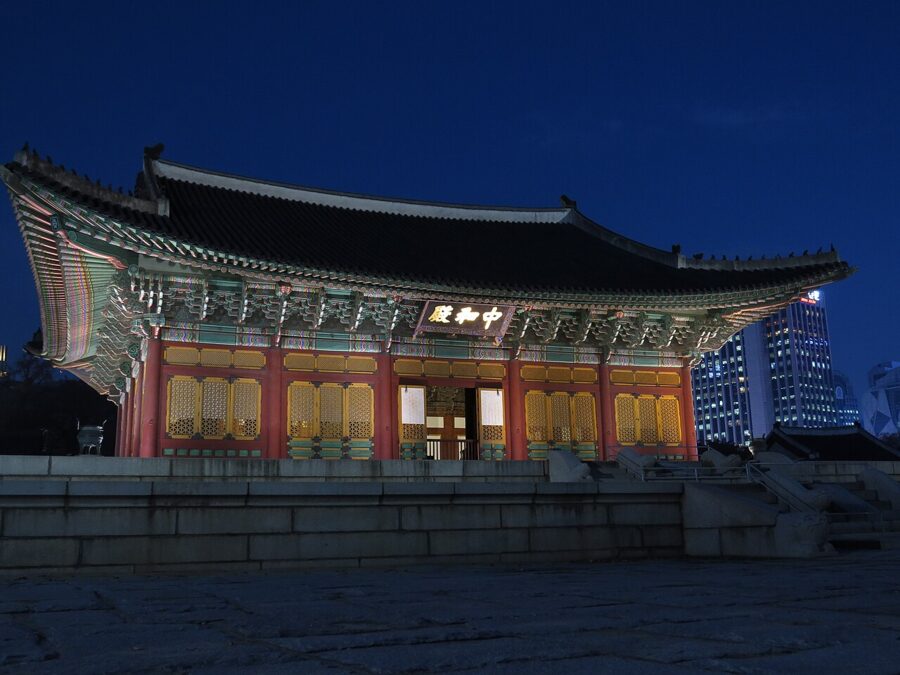
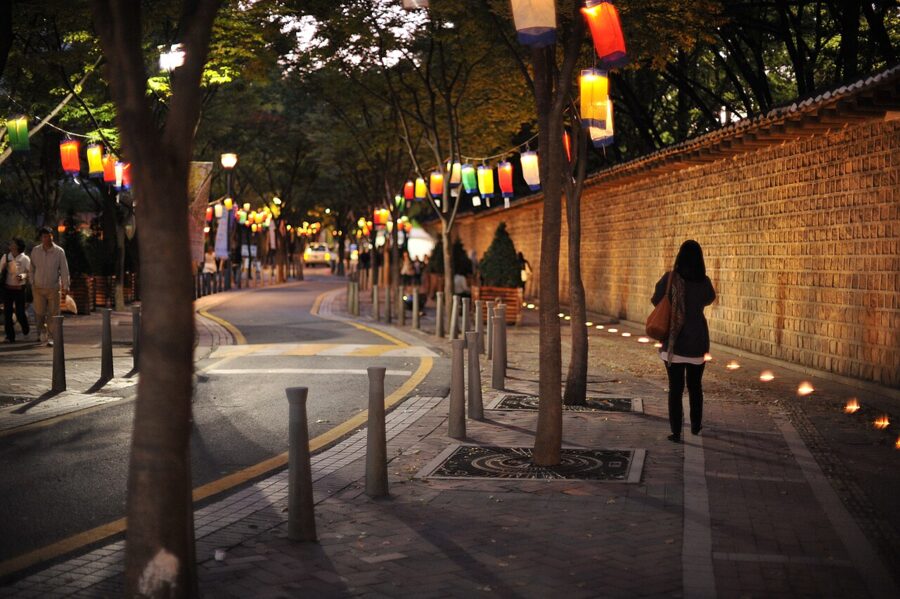
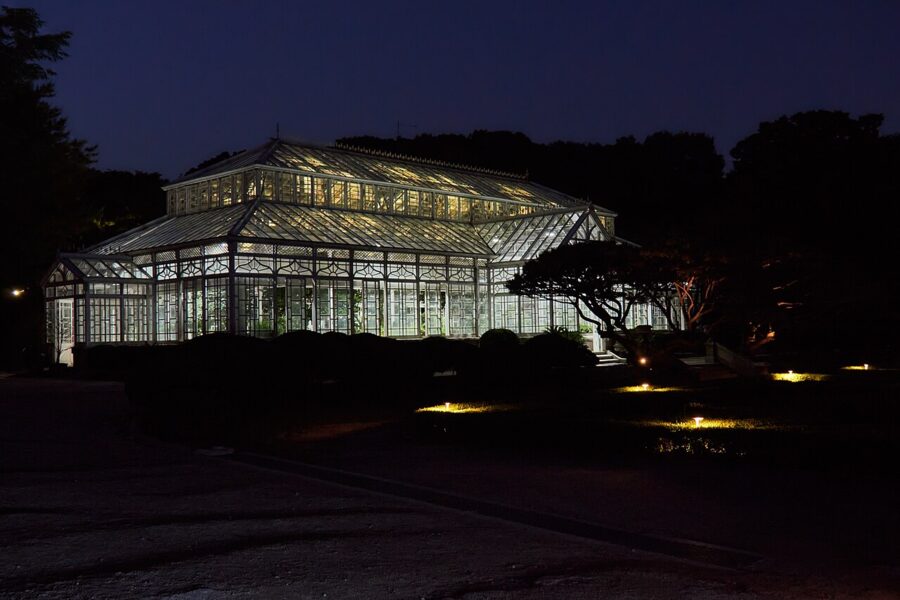
These two stay open until 9 p.m. all year, the answer for evening portraits. Deoksugung, beside City Hall, has Western-style stone halls inside and its stone-wall road outside. At Changgyeonggung the Daeonsil glasshouse is lit after dark.
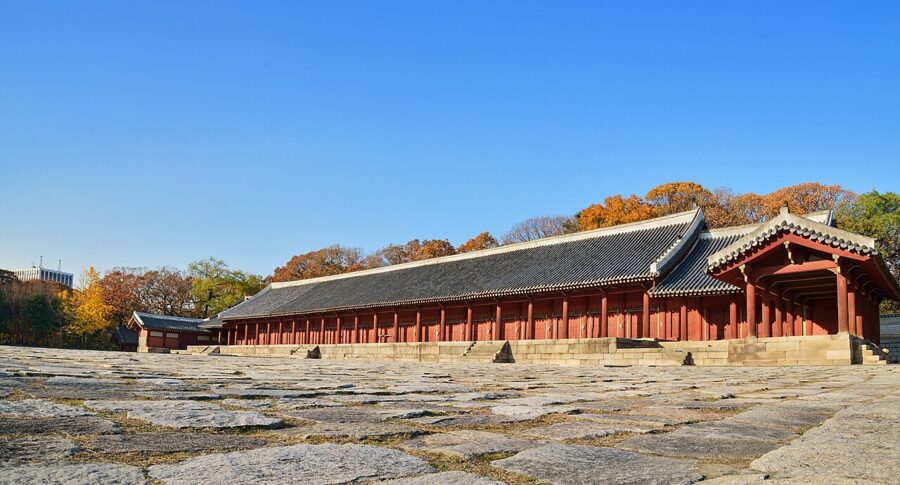
Jongmyo is different. It is the royal ancestral shrine where the Jongmyo Jerye rite is still performed, and on Mondays, Thursdays and Fridays entry is by guided tour only. Costumes can be banned here, and I would keep a shoot plain and quiet or skip it.
Bukchon and Ikseon-dong: lanes where people live
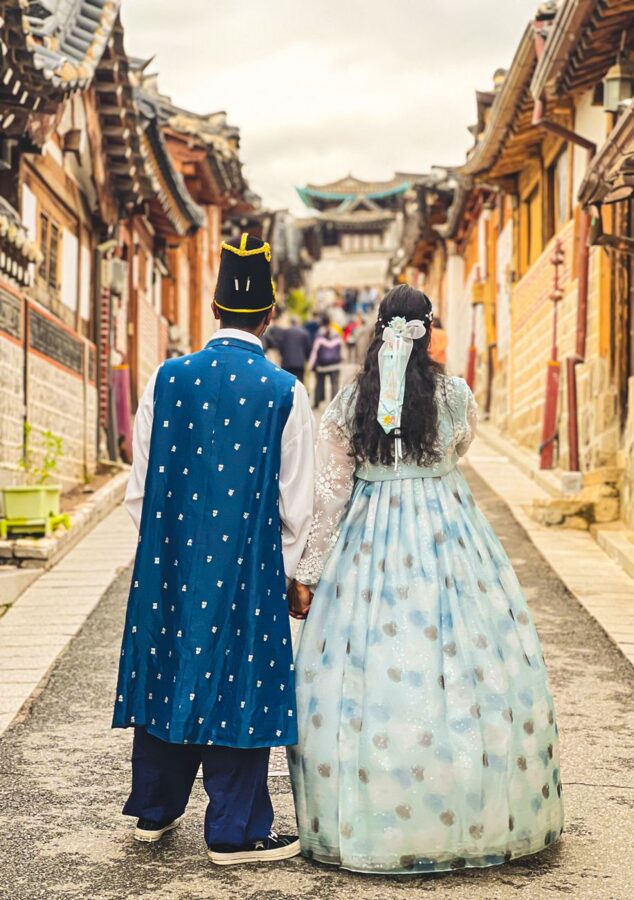
Bukchon Hanok Village is a residential neighborhood, and its residents had had enough of the crowds. Jongno-gu designated the whole area a special management zone on July 1, 2024, and in the “red zone” around Bukchon-ro 11-gil, the famous sloping lane, tourist visits are restricted from 5 p.m. to 10 a.m. Fines of ₩100,000 (about US$75) have applied since March 1, 2025, after a warning from an enforcement officer.
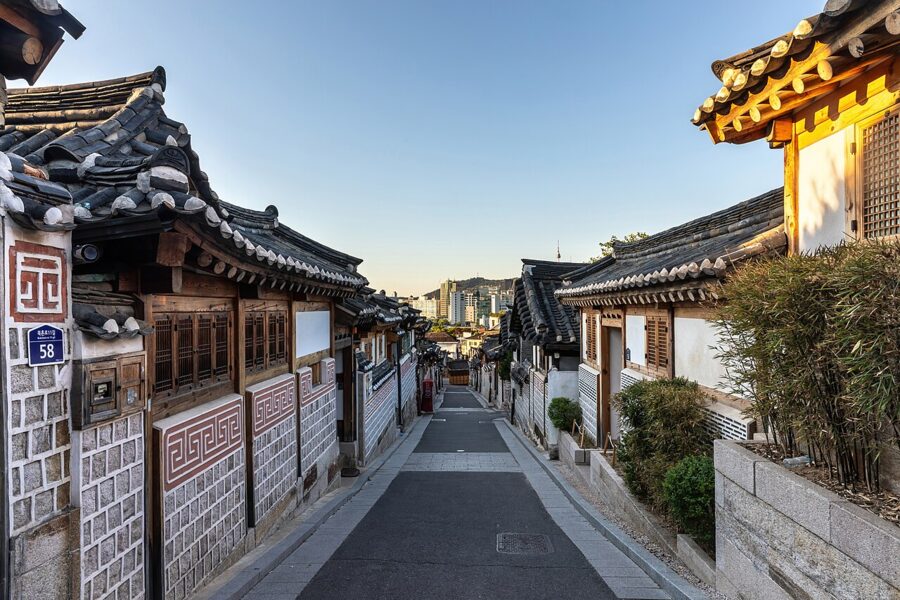
Residents, guests, shop customers and people passing through are exempt; a photo shoot is not. Plan Bukchon between 10 a.m. and 5 p.m., keep voices down, stay off doorsteps, and never shoot through an open gate.
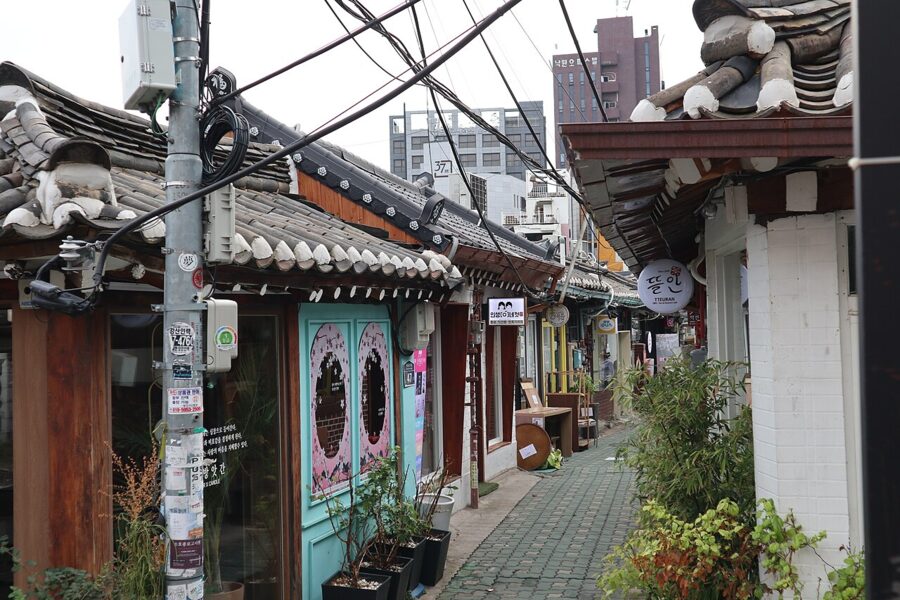
Ikseon-dong, near Jongno 3-ga Station, is a tight grid of small hanok now full of cafes. The narrow lanes take light from above, which flatters faces at midday. Ask before using a shopfront as a backdrop.
Temples: Jogyesa and Bongeunsa
Jogyesa, at 55 Ujeongguk-ro near Insadong, is the head temple of the Jogye Order, Korea’s largest Buddhist order. People come to pray, light incense and make offerings through the day, and that sets the terms for a camera.
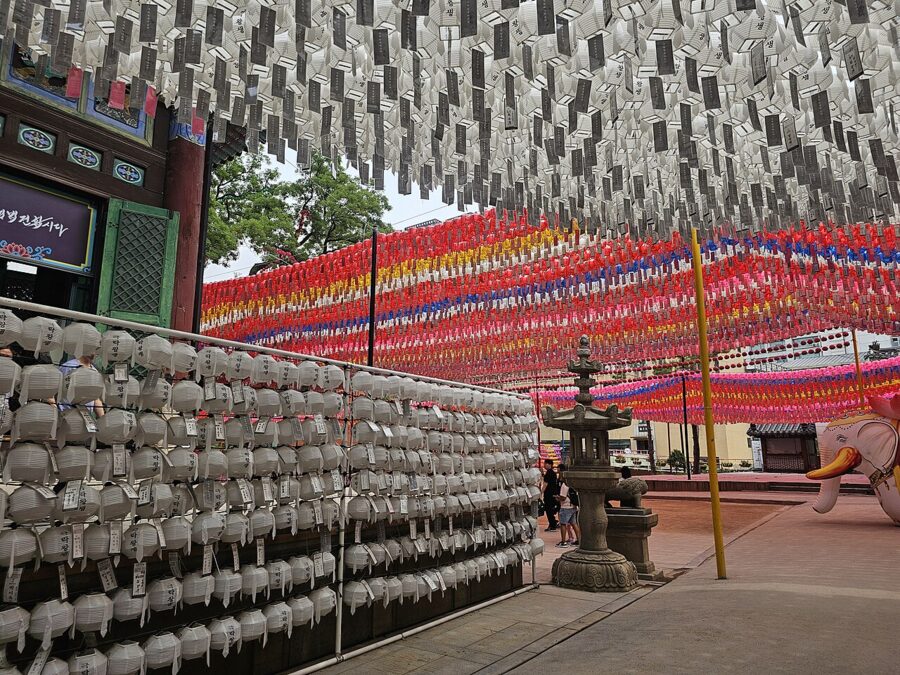
The etiquette is simple. Photograph outside the halls and never during a service. Ask before photographing monks or nuns, and don’t use worshippers as background. Use the side doors of the main hall, since the central door is for monks, and keep romantic poses and proposals for somewhere else.
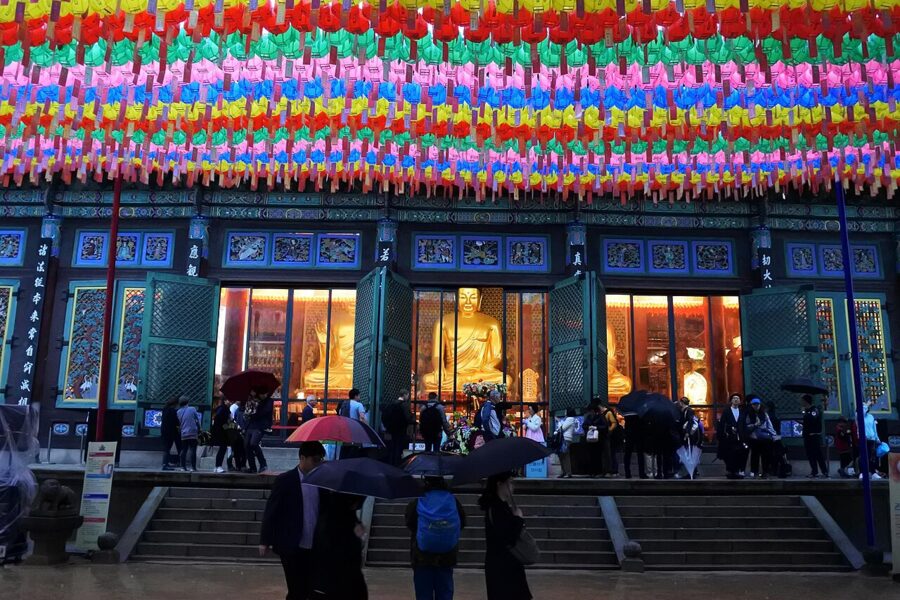
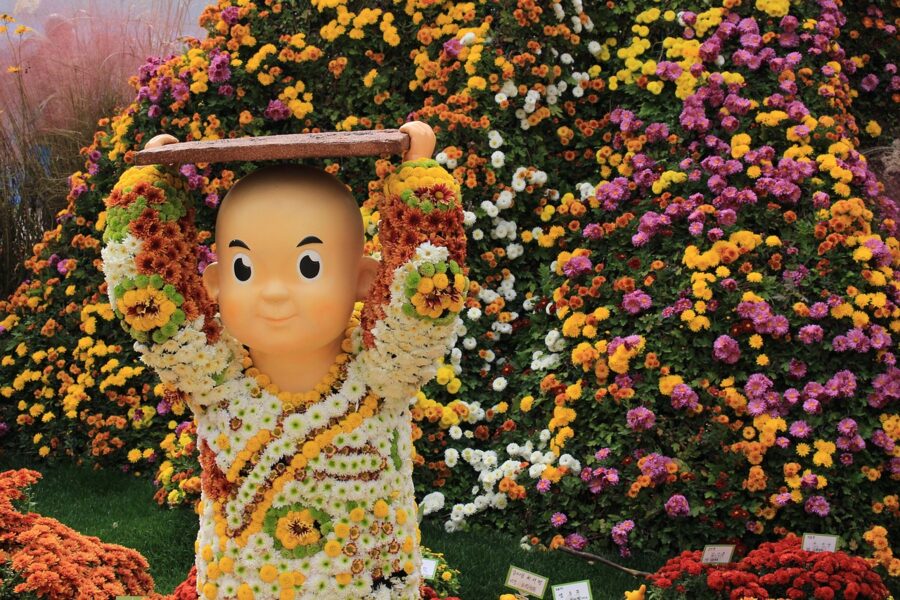
The lantern festival, Yeondeunghoe, is on UNESCO’s intangible heritage list. In autumn the temple fills with chrysanthemums instead.
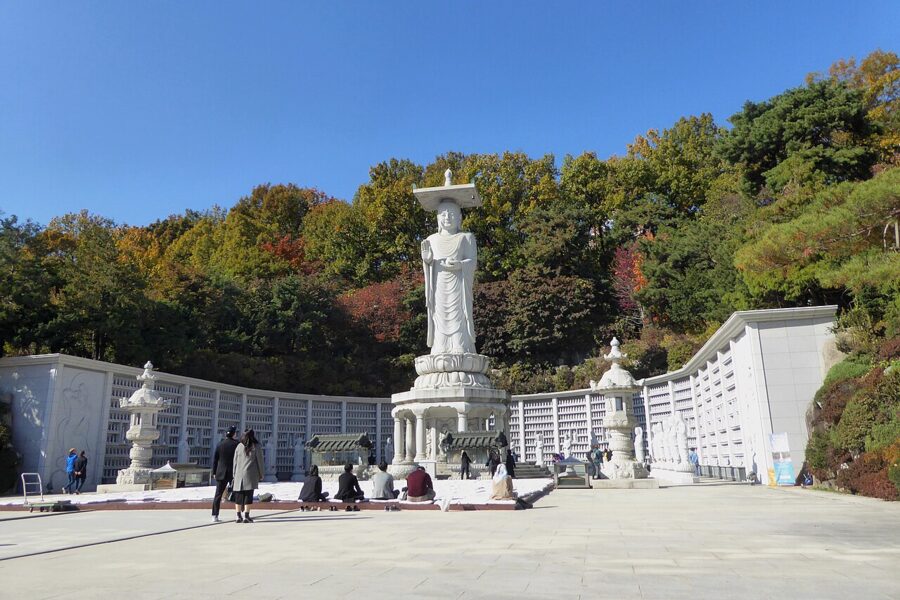
Bongeunsa, opposite COEX in Gangnam (Bongeunsa Station, Line 9, Exit 1), is the other temple photographers use. Its giant standing Maitreya, the Mireuk Daebul, rises over a terrace with office towers behind. The same etiquette applies; the terrace is a place of prayer first.
Parks, Namsan and the Han River
Seoul Forest, near Seongsu, is the easy choice for families: lawns, woodland paths, ponds and gardens. I found no published rule for small portrait shoots there, so ask your photographer whether they clear it with the park office.
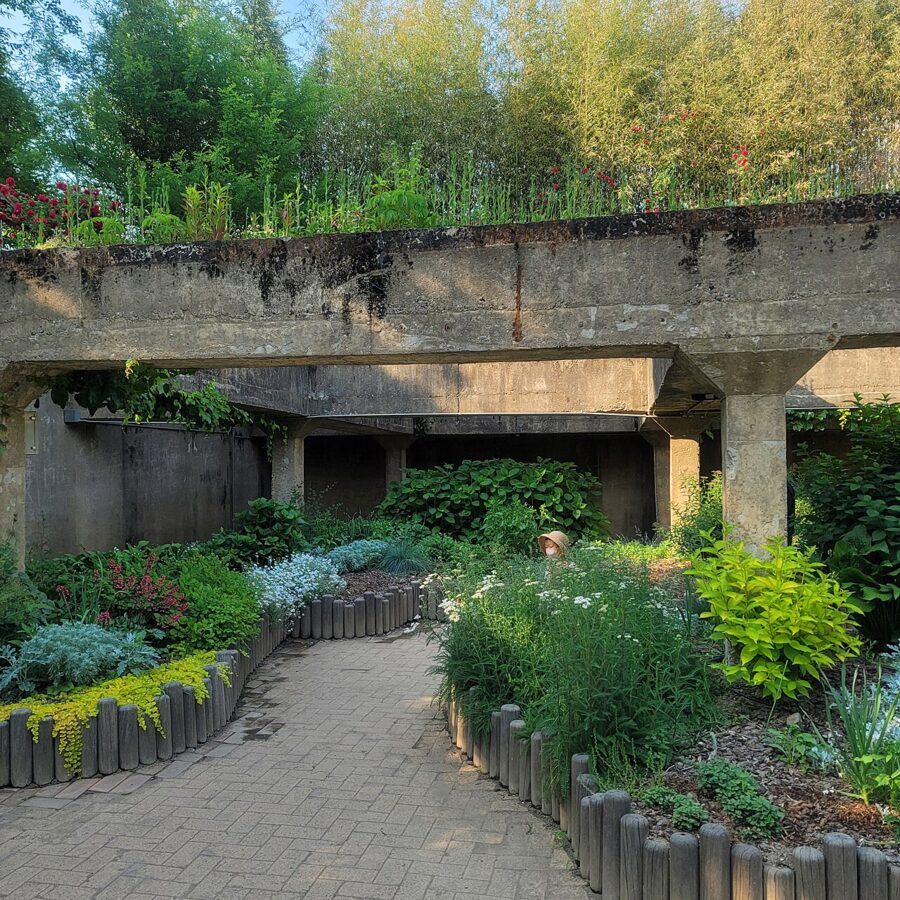
The Han River parks do publish a rule. Wedding photography and fashion or magazine shoots need a filming reservation, at ₩26,000 (about US$19) for the first hour and ₩13,000 for each extra hour across all 11 parks. Casual travel portraits are not named, but a pre-wedding shoot should be booked.
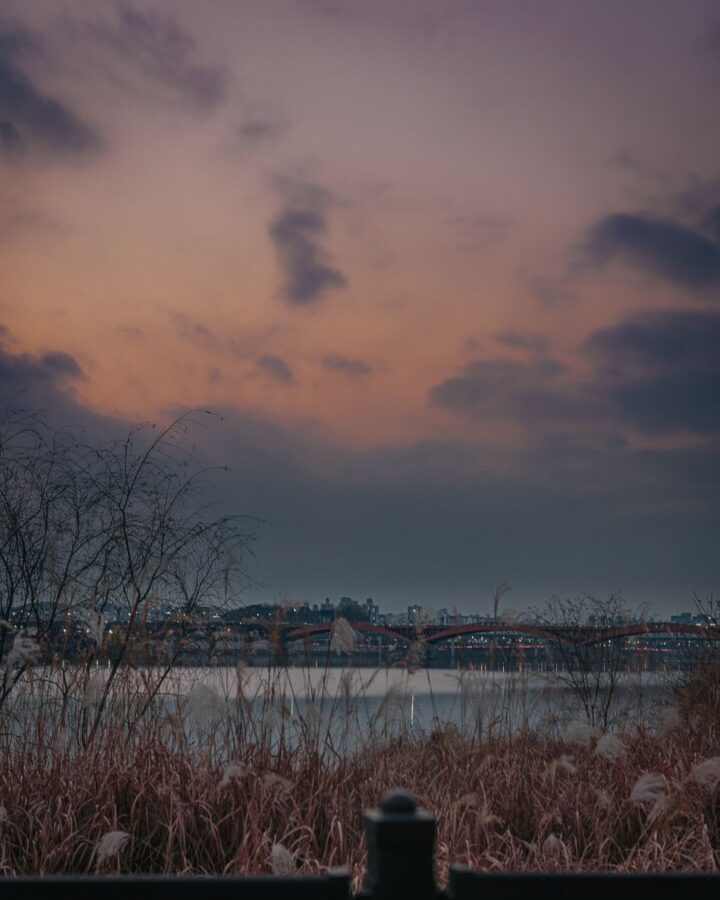
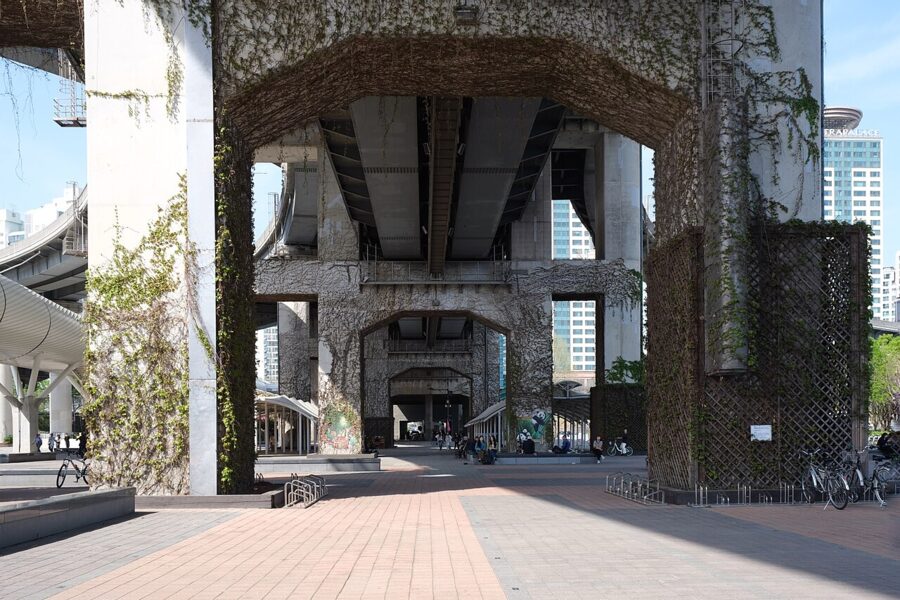
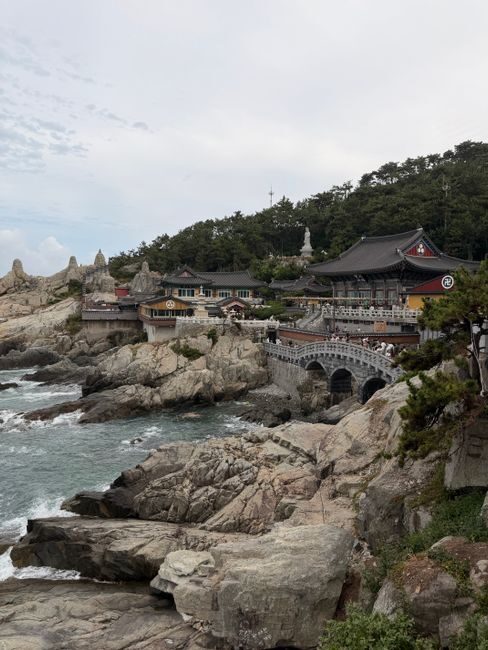
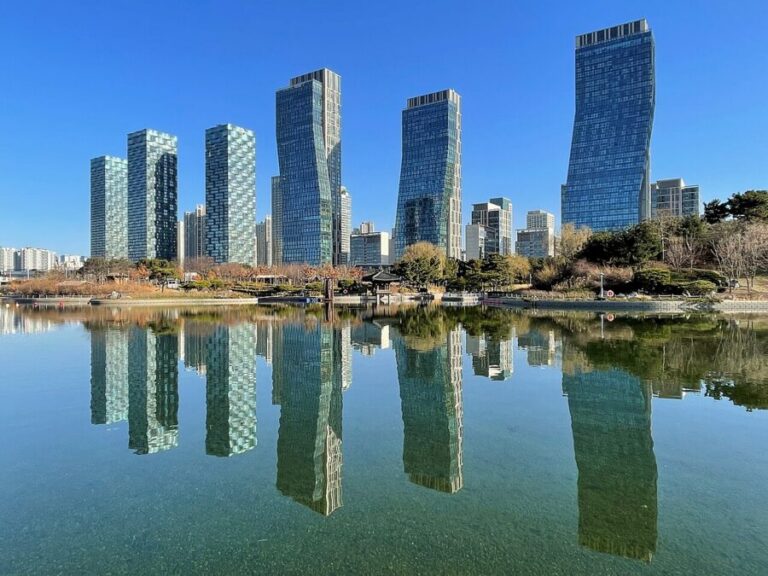
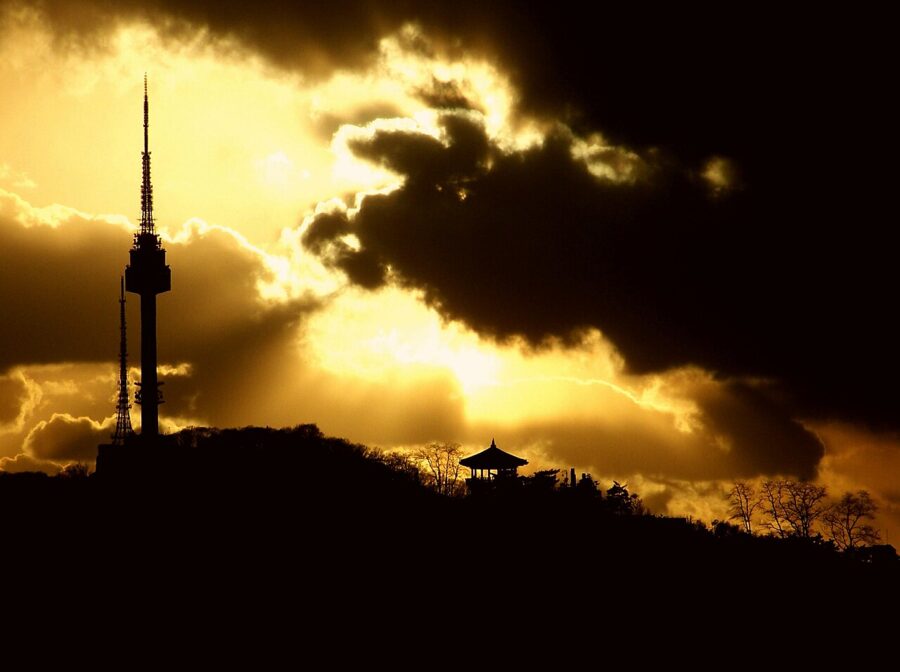
Namsan, the wooded hill in the middle of the city, gives the skyline, the love-lock fences below N Seoul Tower and views toward the palaces at sunset. If your trip continues south, the same questions apply to a private photo session in Busan, and to a photo session in Incheon on your way to or from the airport.
Seasons and light
Cherry blossom is the most booked fortnight of the year and getting harder to plan. In 2026 the Korea Meteorological Administration recorded Seoul’s official flowering on March 29, six days earlier than in 2025 and ten days ahead of the April 8 average. The trees along Yeouido’s Yunjung-ro opened the same day, and by early April the city was in full bloom.
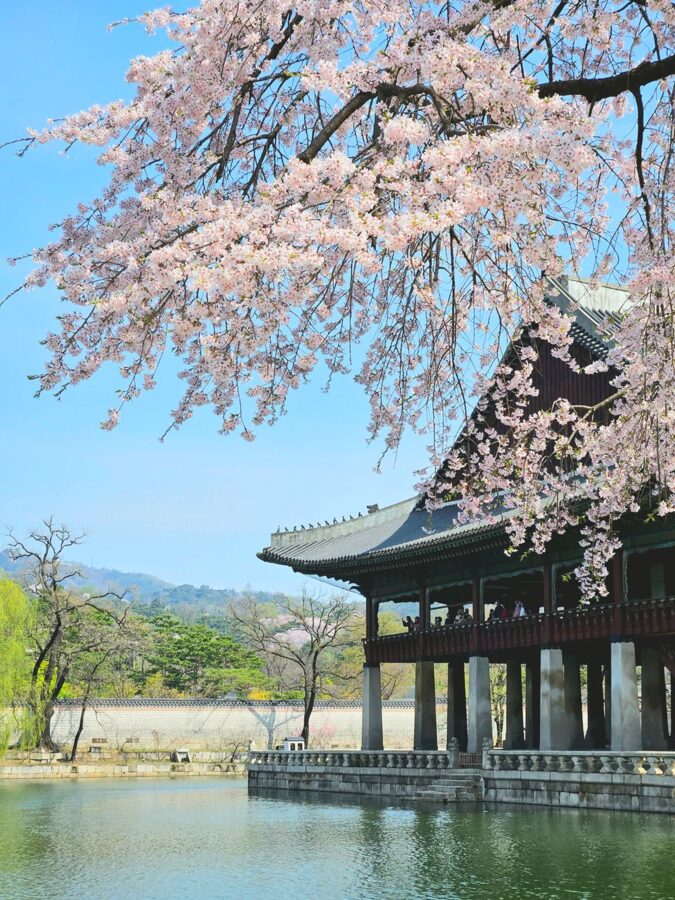
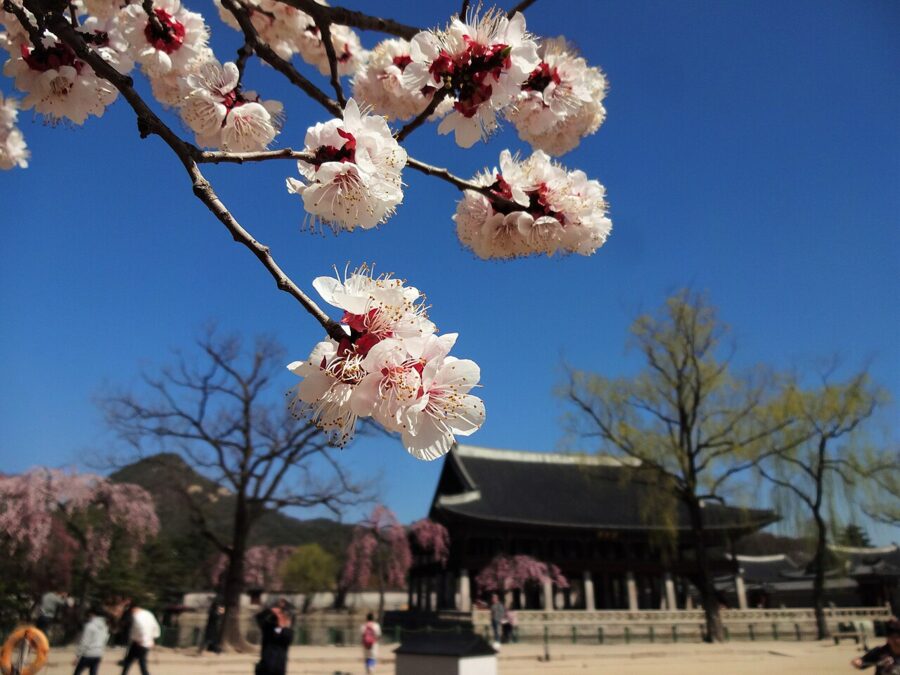
Autumn is the other peak and, to my eye, the better one: the palace maples and ginkgoes turn from late October into November, and the light stays low all day. Summer brings heat and the rainy season in late June and July. Winter is quiet and cold.
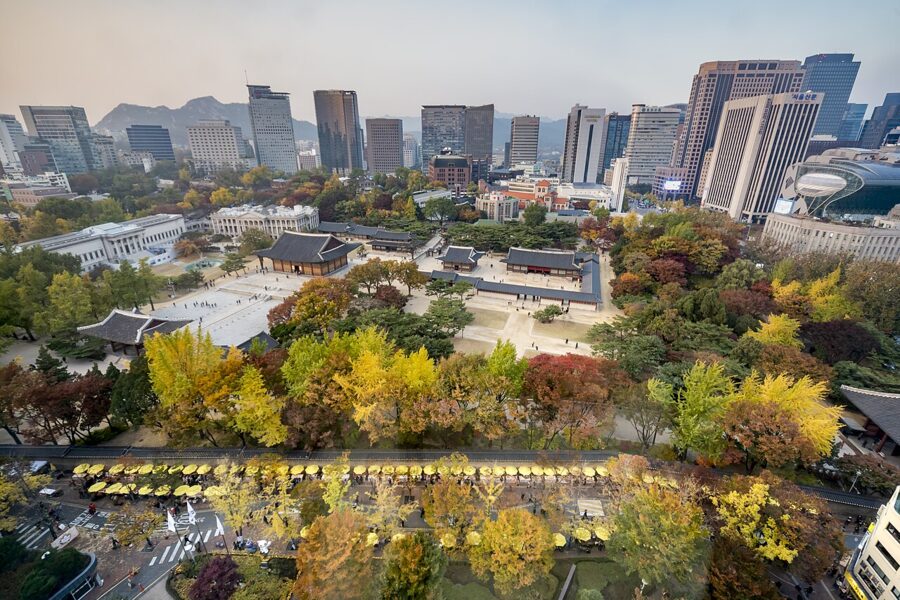
Golden hour is where palace hours and the sun disagree. In December the sun sets around 5:15 p.m., as Gyeongbokgung closes; in June it sets near 8 p.m. So plan mornings at Gyeongbokgung or Changdeokgung and evenings at Deoksugung, Changgyeonggung, the river or Namsan.
Gyeongbokgung also ran booked evening openings in 2026, from mid-May to mid-June and through September. Look for next year’s dates in spring.
Hanbok rental and the day itself
Rental shops cluster around Gyeongbokgung and Anguk stations. Prices listed in spring 2026 started under ₩10,000 (about US$7) for 90 minutes in a basic set and rose past ₩100,000 for a premium or royal outfit for the whole day. Some shops include simple hair styling with a ribbon; full hair and makeup is always extra.
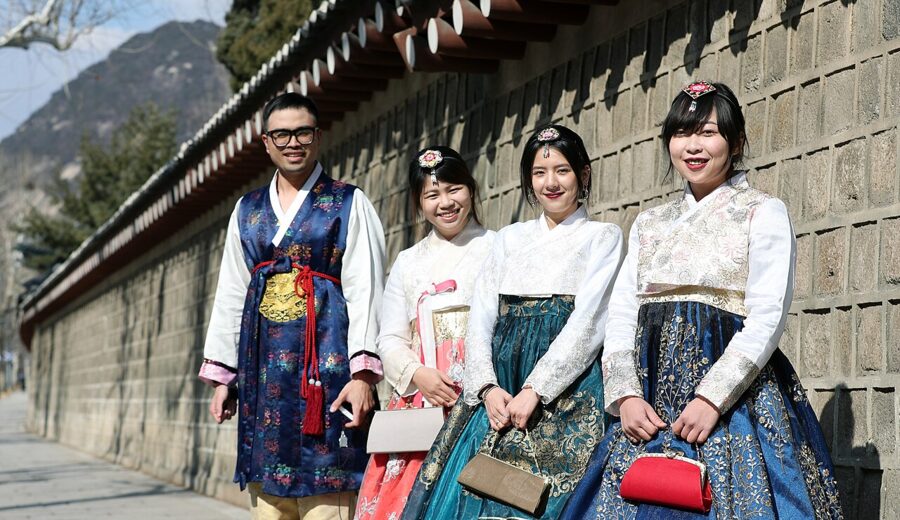
Read the shop’s rules. One large shop asks guests to arrive an hour early, allows 30 minutes and two try-ons, and charges for every 10 minutes the clothes come back late. Since you can’t change inside the palace, build that hour into the plan.
On the day, wear flat shoes under the long skirt and eat beforehand, since packed food is banned outside designated areas in the palaces. Agree on the two or three pictures you most want first, so they are done if the light goes or a crowd arrives.
Back at Gyeongbokgung, the gates open at 9 a.m. again tomorrow, and the throne hall court will be empty for a little while. Book the photographer who already knows that, and arrive with an hour more than you planned.