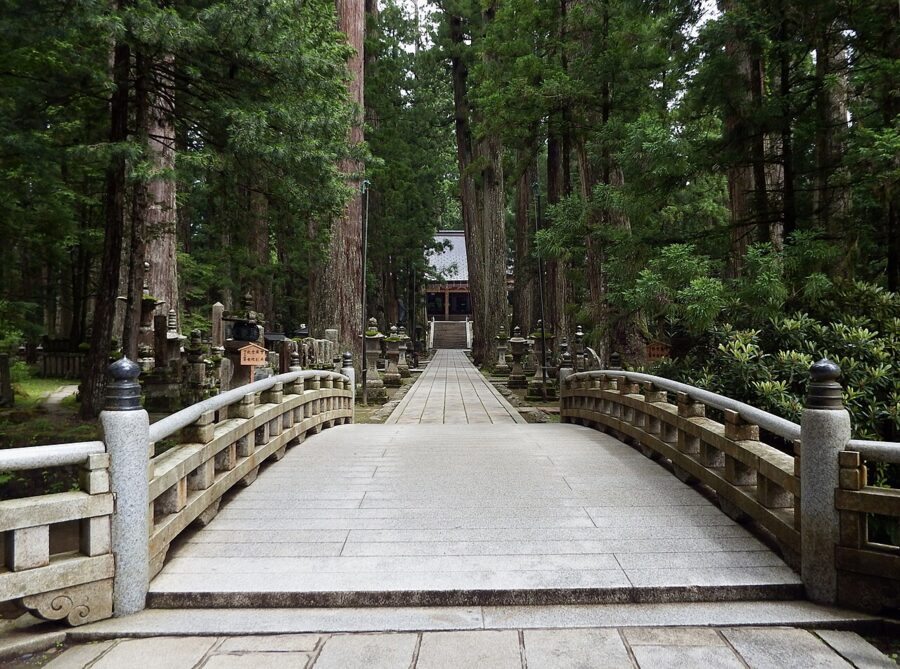
At about six in the morning, before the first bus pulls in at Okunoin, monks carry breakfast from the offering hall across Gobyōbashi, the last bridge, to the mausoleum of Kōbō Daishi. They do it again at about half past ten. The man they are feeding entered his final meditation there in 835, and the Shingon faithful believe he has not died at all but sits on in that meditation, still praying for the world.
That meal, the shōjingu, has been served twice a day for close to 1,200 years. It is the clearest way I know into Koyasan (Mount Kōya, 高野山), a town of 117 temples on a high basin in northern Wakayama Prefecture, founded by the monk Kūkai in 816 and still the seat of Kōyasan Shingon Buddhism. People come for the cemetery and the vermilion pagoda. The ones who stay a night in a temple leave with the morning chanting in their ears.
Everything below is current as of November 2026, including the new rail fares that took effect in April.
Contents9 parts
Kūkai and his mountain
Kūkai was born in 774 in Sanuki, on Shikoku, and sailed to Tang China in 804 to study esoteric Buddhism. Back in Japan he looked for a remote place to train monks in the new teaching. In 816 Emperor Saga granted him the Kōya plateau, and Kūkai named the monastery Kongōbu-ji after the title of a sutra. The head temple still writes the name Kōyasan with characters assembled from his own handwriting.
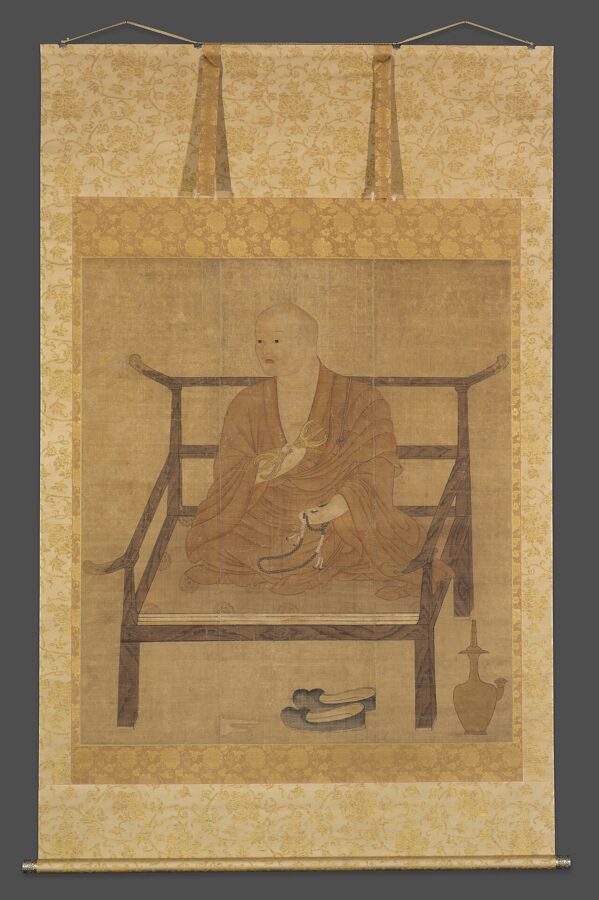
Legend fills in the rest. Temple tradition says that before leaving China he threw a three-pronged vajra toward Japan and later found it caught in a pine on this plateau, and that a hunter deity with a white dog and a black dog led him up. Both stories are still told on the mountain, and the pine still stands, fenced, in the Danjō Garan.
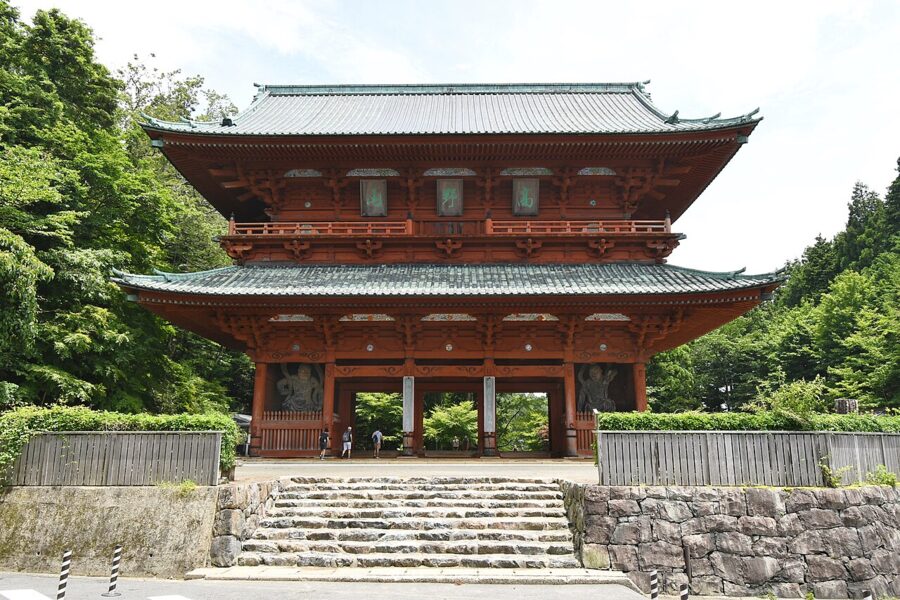
Kūkai entered his final meditation on the 21st day of the third month of 835. In 921 Emperor Daigo gave him the title Kōbō Daishi, “Great Teacher who Spread the Dharma”, and the belief grew that he had never left Okunoin. A plaque on the great gate says he comes out every day to make his rounds, the belief pilgrims sum up as dōgyō ninin, “two traveling together”: the pilgrim and the Daishi.
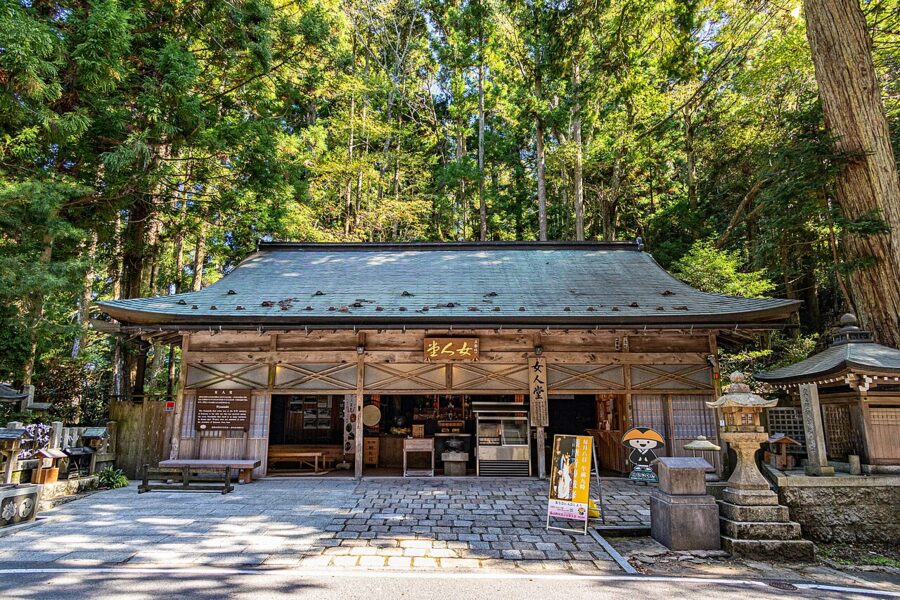
For most of its history the mountain was closed to women. They prayed at halls built at each of the old entrances, and only one of those, the Nyonindō at the Fudōzaka entrance, survives. The Meiji government lifted the ban in 1872.
Getting there in 2026
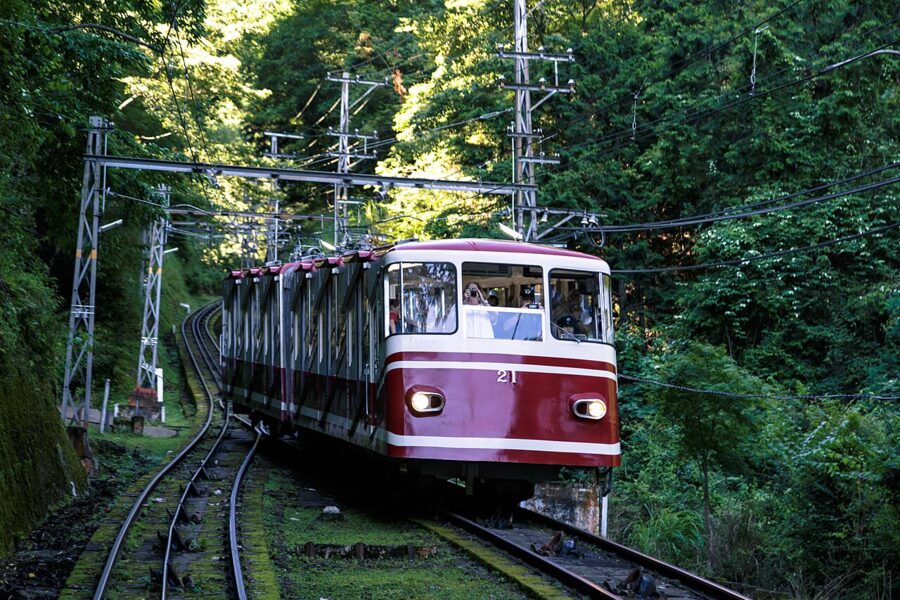
Everything runs through Nankai Namba station in Osaka. The Nankai Kōya Line climbs south through Hashimoto and up the valleys to Gokurakubashi, the end of the line, where a cable car takes you up to Koyasan station. From there Nankai Rinkan buses run into town and on to Okunoin. Koya’s tourism association puts the whole trip from Shin-Osaka at 1 hour 50 minutes to 2 hours 30.
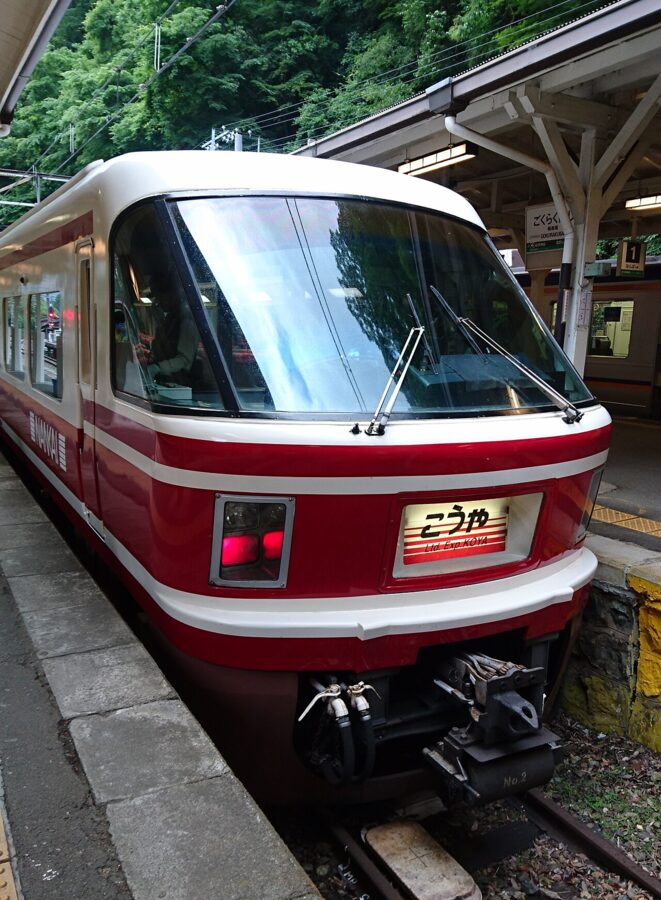
The fastest way is the Limited Express Kōya, with every seat reserved, so you need an express ticket on top of the fare. Slower trains run all day for the base fare. The Japan Rail Pass is no use here: this is a private railway.
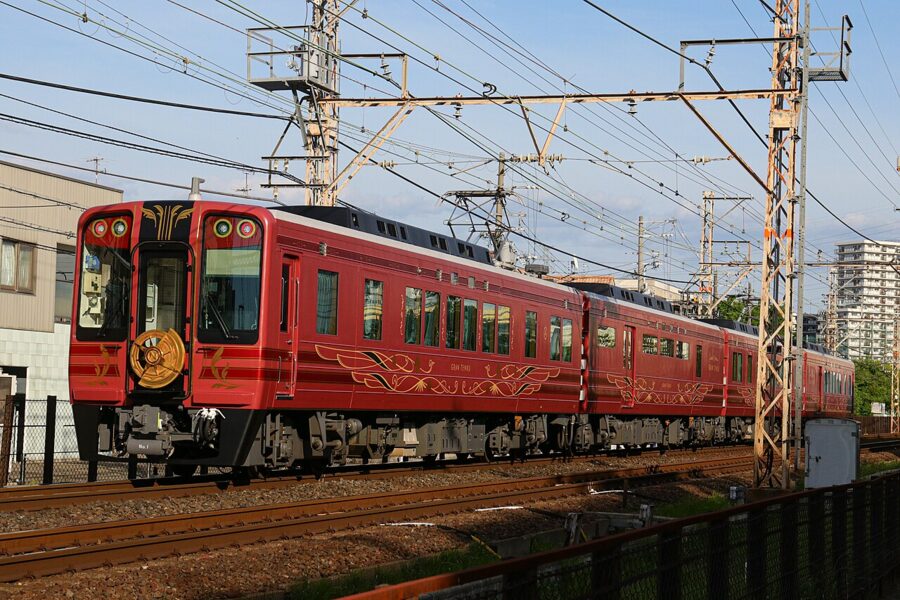
Since April 24, 2026 Nankai has also run GRAN Tenku, a sightseeing train with food service that takes about 90 minutes from Namba to Gokurakubashi. It is a treat rather than a necessity.
The Koyasan World Heritage Ticket
Nankai’s Koyasan World Heritage Ticket bundles a round trip to Koyasan station, cable car included, with unlimited Rinkan buses on the mountain and a sheet of discount coupons for temples and shops. It is valid for two consecutive days, which fits a one-night stay exactly. The price went up on April 1, 2026, so older guides quote figures that no longer apply.
| From Namba (adult, as of 2026) | Fare only | With outbound Limited Express seat |
|---|---|---|
| Paper ticket (station window) | ¥4,210 (about US$27) | ¥5,200 (about US$34) |
| Digital ticket (smartphone) | ¥3,980 (about US$26) | ¥4,910 (about US$32) |
| Before April 2026, for comparison | ¥3,540 paper / ¥3,140 digital | ¥4,090 paper / ¥3,690 digital |
The express seat in the bundle covers the way up only. Children pay about half, the digital ticket can now be bought on the day until 3 p.m., and one phone can hold everyone’s QR codes. I would buy the digital version, fare only, and add an express seat for the climb if the timing suits.
Staying in a shukubō
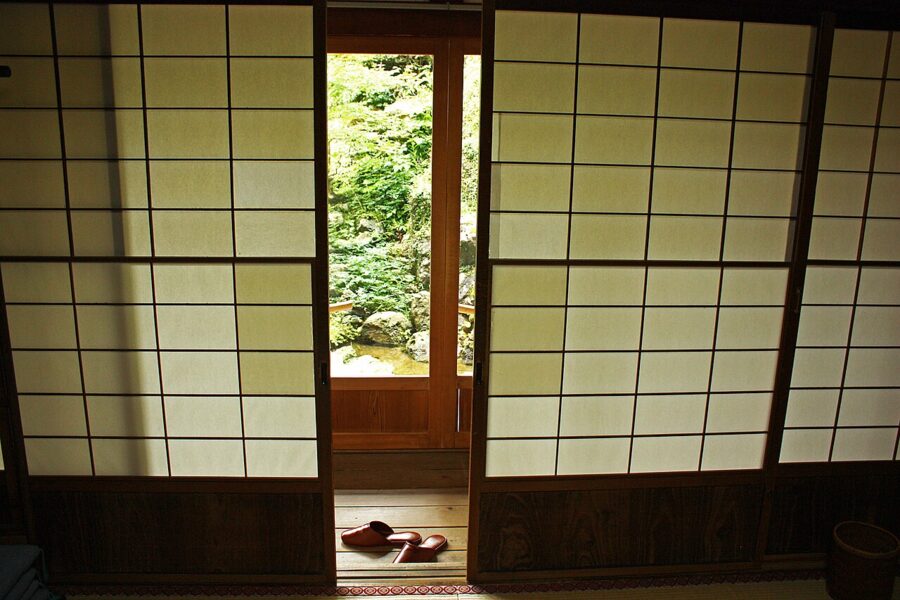
A shukubō is a temple lodging: rooms in a working temple, run by its monks, first meant for pilgrims who walked up. The Koyasan Shukubo Association handles bookings for 51 of them. You sleep on futon on tatami, eat the temple’s vegetarian meals and are welcome at the morning service. You are a guest in a place of worship, which is the whole point and also the reason for the rules.
Booking and prices
The association’s official site takes request bookings: you give your dates and room type, and the office proposes a temple, including ones that take no online reservations. Its published bands, per adult with dinner, breakfast and tax, were these as of November 2026:
| Room type | Per adult per night, two meals |
|---|---|
| Japanese room, shared bath and toilet | ¥15,000–25,000 (about US$97–160) |
| Japanese room with toilet, shared bath | ¥25,000–50,000 |
| Japanese room with private bath and toilet | ¥25,000–70,000 |
Check-in usually runs from 3 to 5 in the afternoon, check-out from 9 to 10 in the morning. The association’s site opens dates about six months ahead, while some temples open their own calendars earlier; Eko-in takes bookings up to eleven months out. Spring and autumn weekends go first.
Prices have climbed with demand, and several temples have rebuilt rooms into suites with beds and cypress tubs that cost several times a plain room. Ask in writing about anything that matters to you: whether there is a goma on your date, whether the bath is shared, how cold the rooms get in winter, how they handle food allergies. A vegetarian kitchen is not automatically a safe one.
Shōjin ryōri, the temple meals
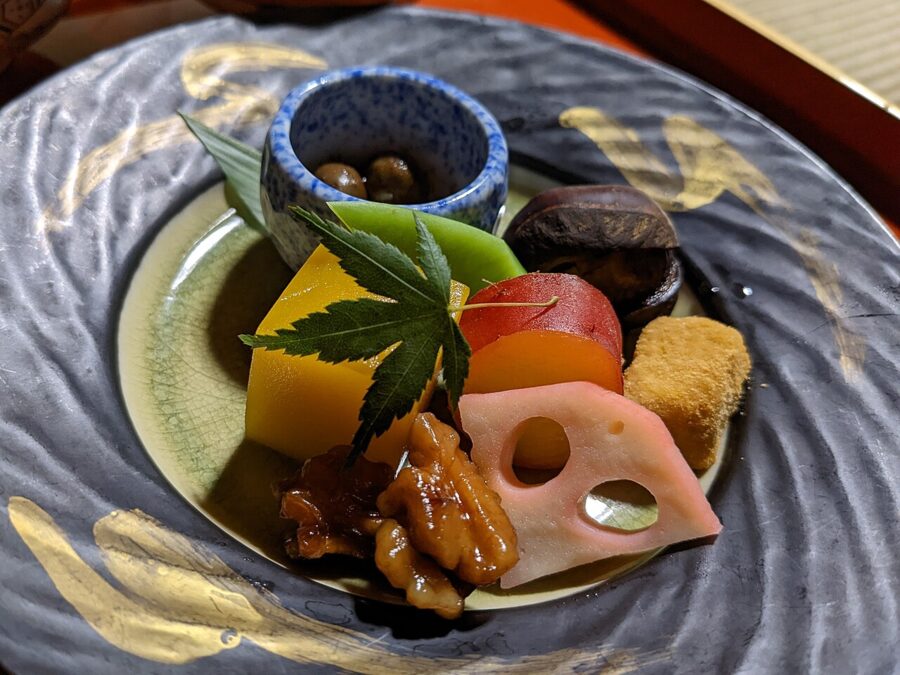
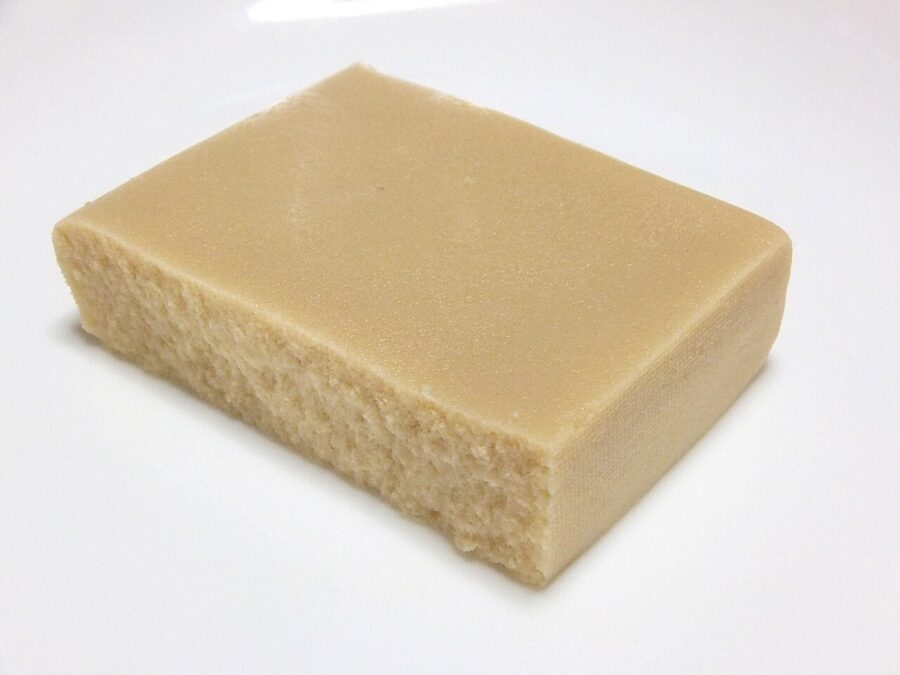
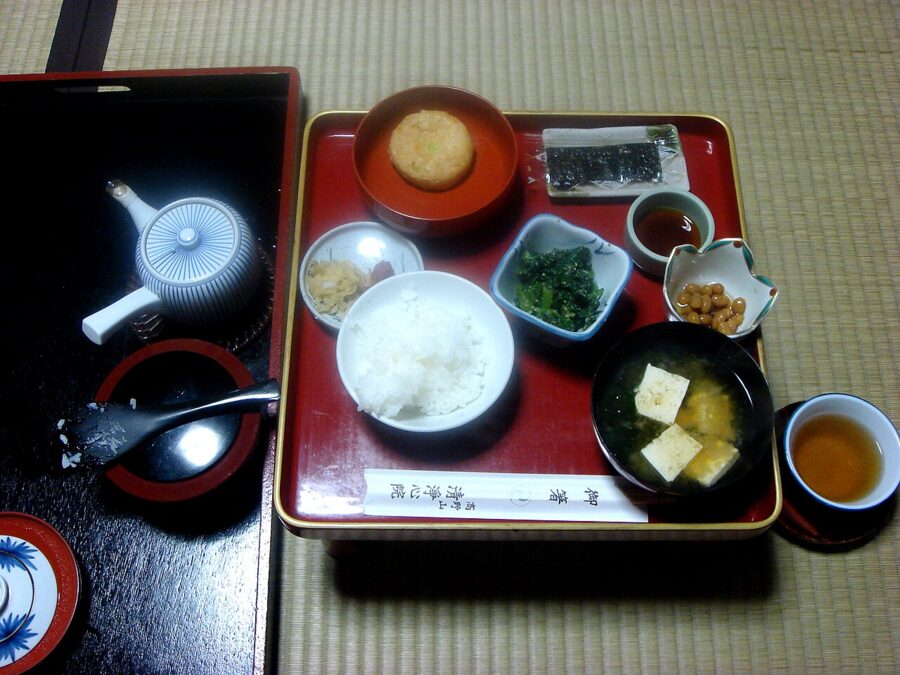
Dinner and breakfast are shōjin ryōri, the Buddhist vegetarian cooking of Japanese temples: no meat or fish, served as many small dishes on lacquer trays, in your room or in a hall. Koyasan’s own signatures are sesame tofu, goma-dōfu, made by kneading sesame with kudzu starch, and Kōya-dōfu, freeze-dried tofu simmered in broth. Dinner comes early, soon after check-in closes, and the town is dark and shut not long after.
The morning service
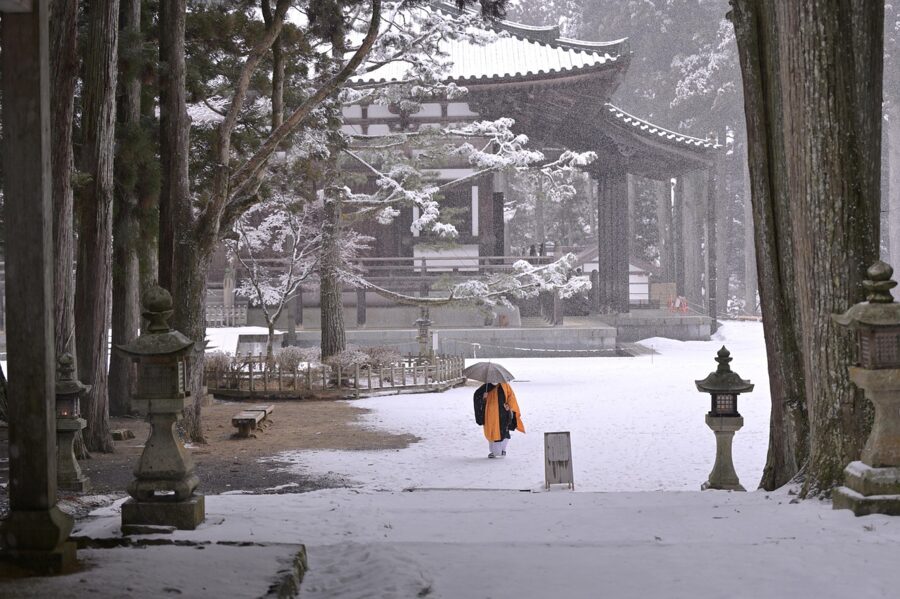
The gongyō, the morning service, is the one thing every shukubō offers its guests. You sit at the back of the main hall while the monks chant sutras and the shōmyō hymns of Shingon, then go forward to offer incense. Each temple keeps its own hour: 5:50 at one, 6:00 at another (6:30 from November to March), 7:00 at Eko-in. Most last 30 to 45 minutes.
Change out of the temple yukata first. Kongōbu-ji’s visitor guidelines say plainly that it is for indoors and not for the main hall, the service, the Garan or Okunoin. Wear socks for the tatami and wooden floors, and leave the phone in your room.
Goma, ajikan and sutra copying
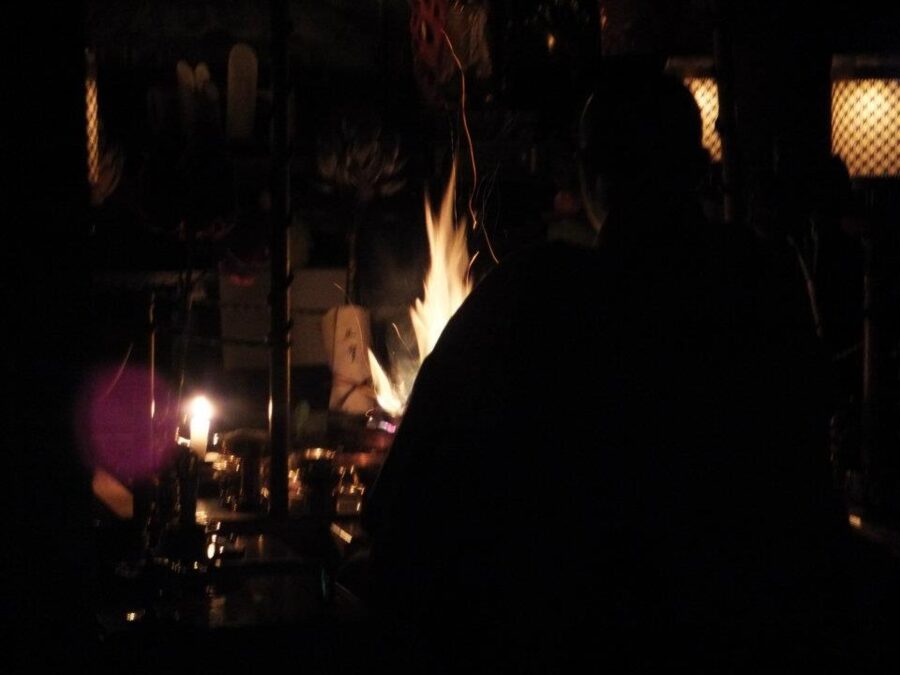
The goma is the fire ritual of esoteric Buddhism, from the Sanskrit homa: a monk feeds wooden sticks into a fire, usually before an image of Fudō Myōō, and the sticks stand for the passions burned away by the fire of wisdom. Not every temple performs it, and some only on certain days or in certain seasons. Eko-in holds one every morning at 7:30 in its Bishamon hall, and another temple holds one daily at 8. If the goma is why you are going, get it confirmed for your date before you pay.
Ajikan is Shingon’s own meditation: you sit before a scroll of the Sanskrit letter A, which Shingon treats as the source of all things, and breathe with it. Eko-in runs a 40-minute session daily at 4:30 p.m., free for guests. Kongōbu-ji holds ajikan sessions in its meditation hall inside the Banryūtei garden; in 2026 they ran on Fridays, weekends and holidays from April to November 23, four times a day, for ¥1,000 (about US$7) plus admission, taught in Japanese with an English text.
On the 20th of each month the tourism association runs meditation inside the Saitō, the Garan’s normally closed western pagoda, for ¥3,500 with advance booking. Sutra copying, shakyō, is offered in most lodgings and at the Daishi Kyōkai for ¥1,500, brush pen included. The Daishi Kyōkai also gives the jukai, a short ceremony in which a senior monk gives you ten precepts for daily life, several times a day for ¥1,000.
The rules, plainly
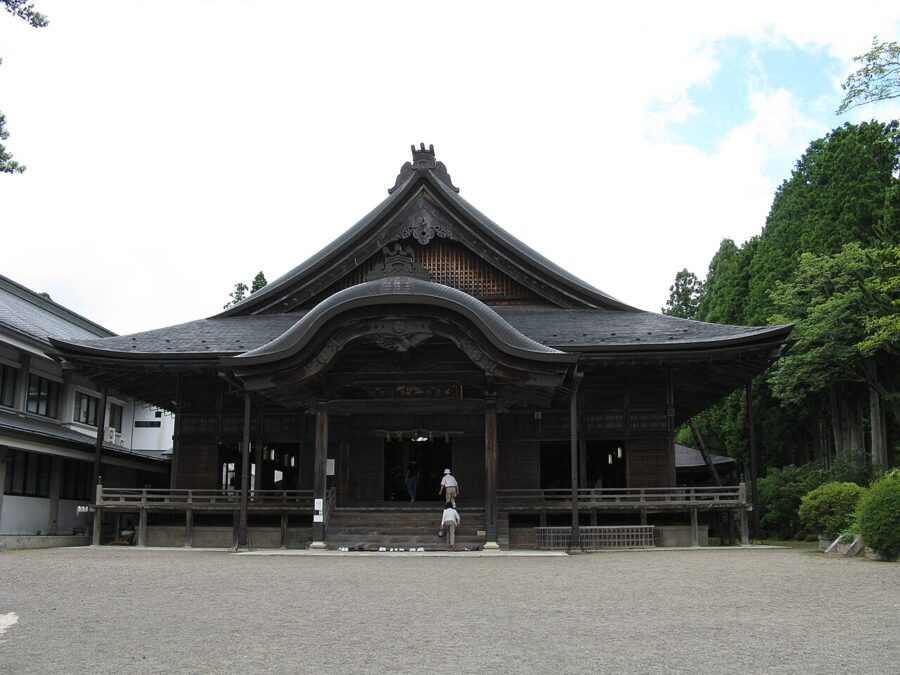
Arrive before check-in closes and be on time for meals, because the kitchen works to the temple’s schedule. Keep voices down after dinner, since the monks rise before dawn. Most temples forbid photographs of the main image, and none at all are allowed inside Kongōbu-ji, the Kondō, the Konpon Daitō or the Reihokan galleries. Smoke only where it is marked, and don’t point a camera at monks without asking.
Okunoin, by day and by night
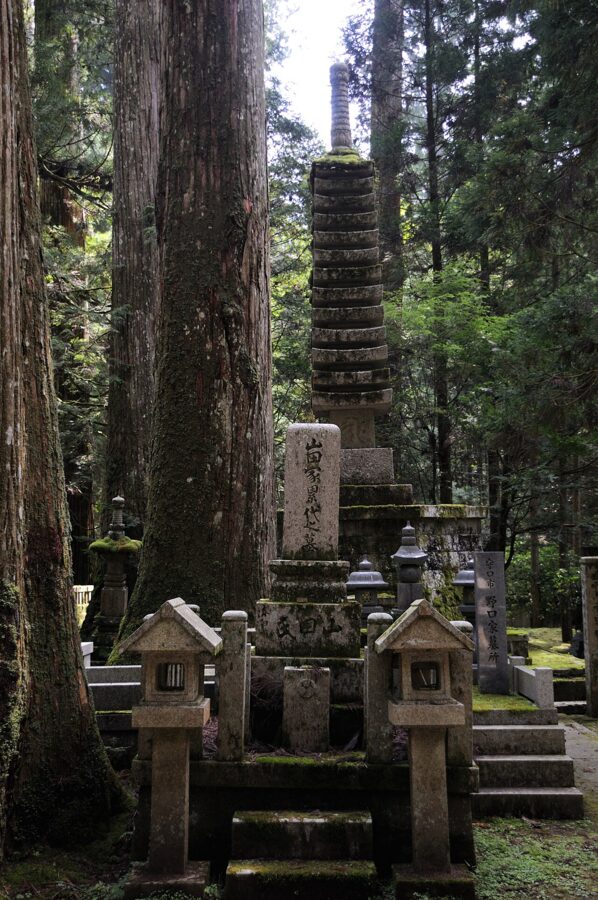
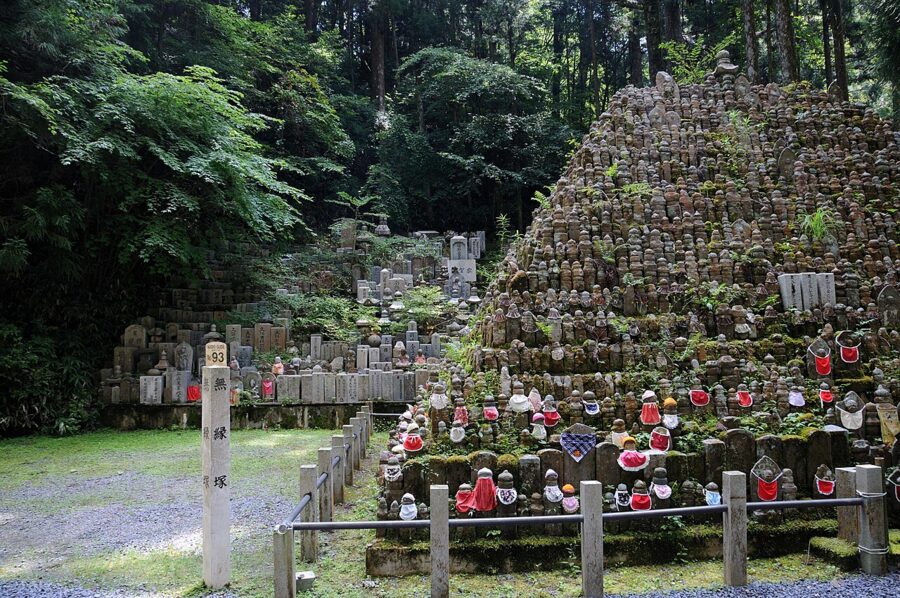
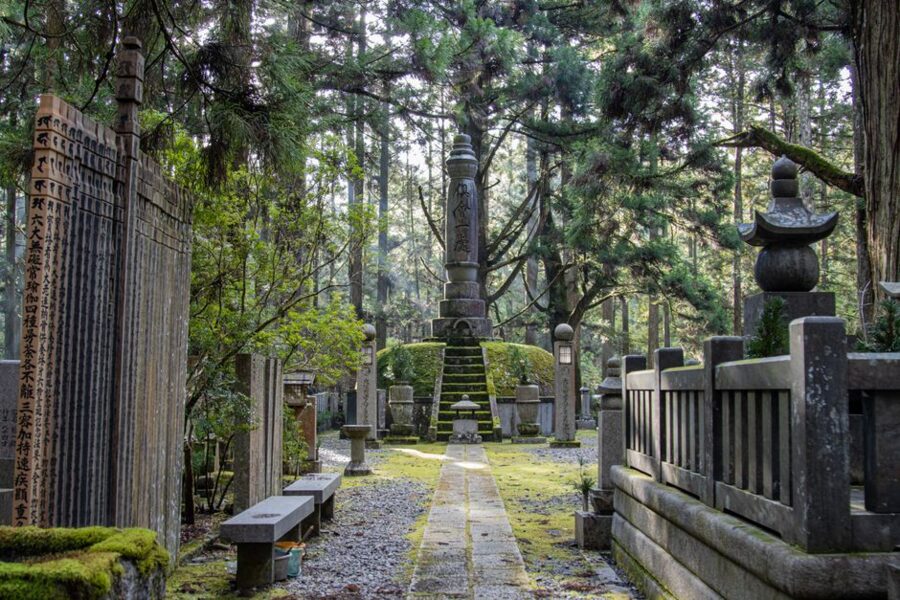
Okunoin is the heart of the mountain. The walk properly starts at Ichinohashi, the first bridge, and runs about 2 km to the mausoleum through cedars Kongōbu-ji describes as up to a thousand years old. Feudal lords, shoguns’ families and memorials for emperors stand beside the graves of farmers and merchants, all wanting to rest near the Daishi.
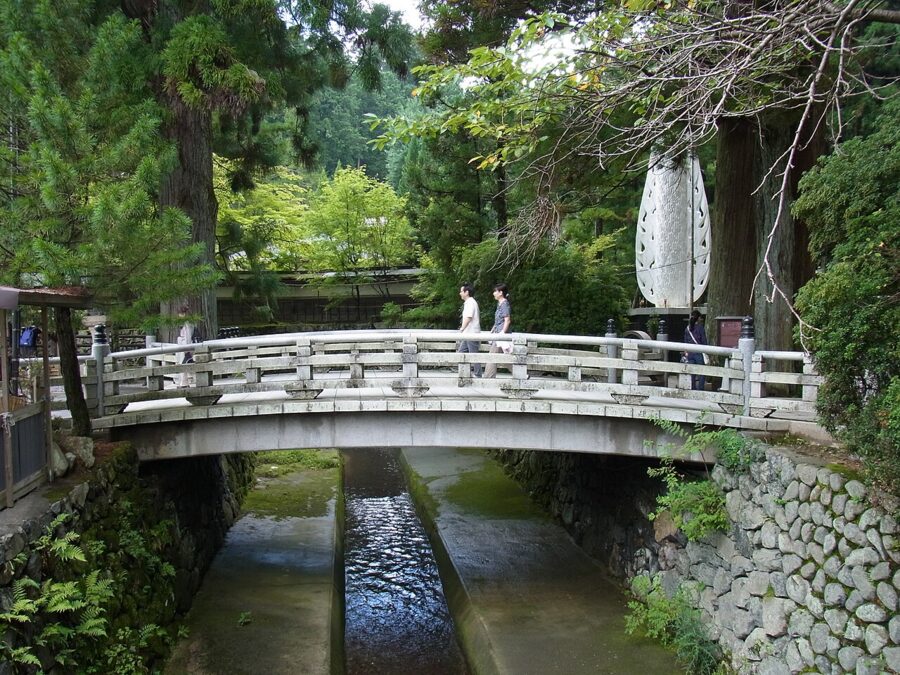
The Okunoin-mae bus stop is closer to the mausoleum if you are short of time, but you lose most of what makes the walk.
The Tōrōdō and the mausoleum
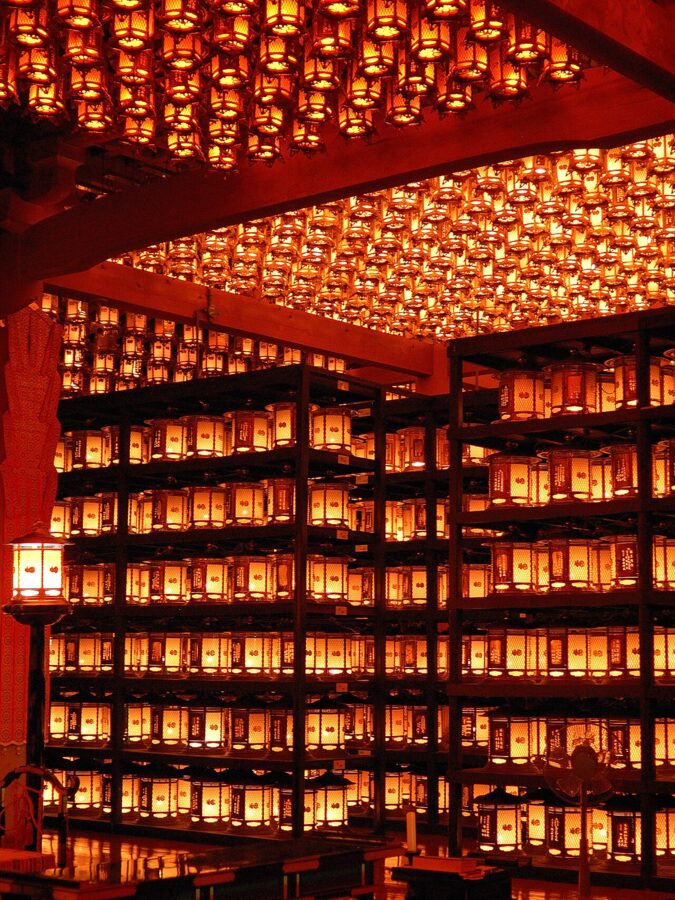
The Tōrōdō, the Hall of Lamps, stands just in front of the mausoleum and is open from 6 in the morning to 5 in the afternoon, with its underground hall closing at 4:45. Memorial services with sutra chanting are held there six times a day, between 9:00 and 2:40. The mausoleum itself lies behind, and you pray at it from outside.
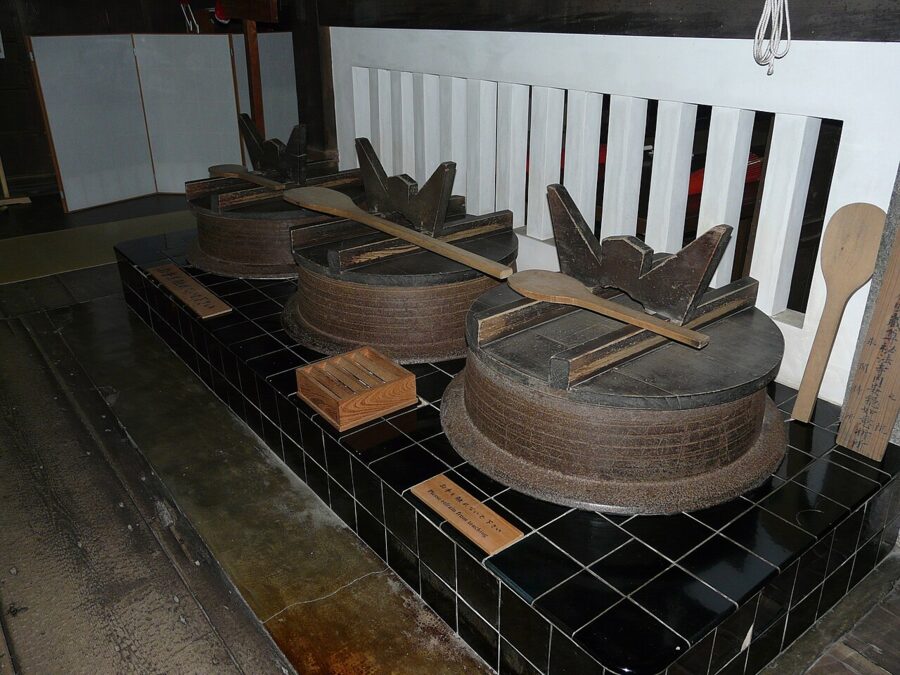
The offering hall, the Gokusho, near Gobyōbashi, is where the Daishi’s meals are prepared. Before they go to the mausoleum, they are set before a small statue called the Ajimi Jizō, the tasting Jizō, who tries them first. The food is always vegetarian, and the menu changes; reference books note that pasta has turned up.
At night
The cemetery path has no gate and no ticket, and it stays walkable after dark, lit by stone lanterns at intervals. It is quiet in a way the daytime path never is. Bring a flashlight, stay on the main path, and remember that the Tōrōdō is closed at night except on a few festival evenings.
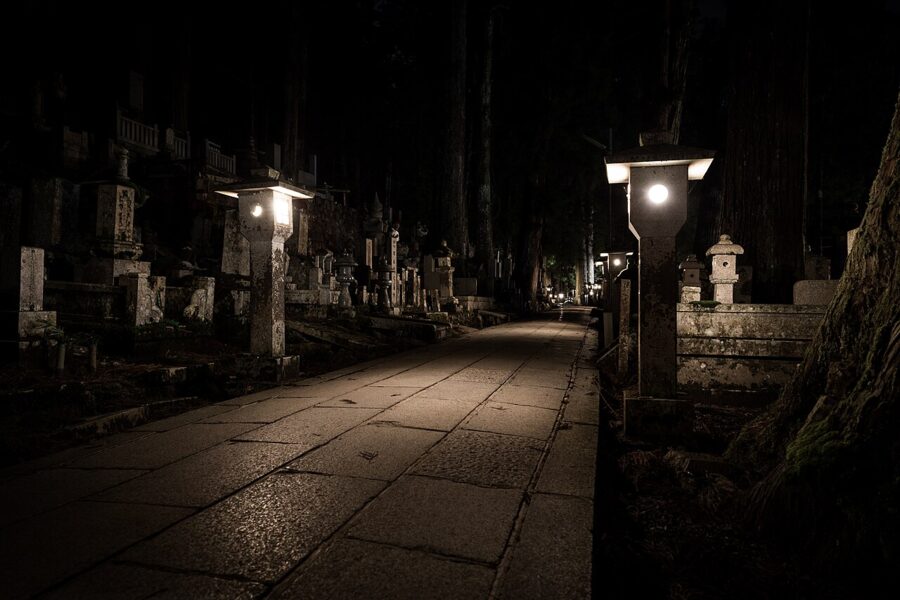
The best-known guided night walk meets at Eko-in at 7 p.m. and takes about two hours. It is run by a separate tour company, not included in any room rate, and often full between March and November, so book it with the room. I would go once with a guide and then walk it again alone in the morning.
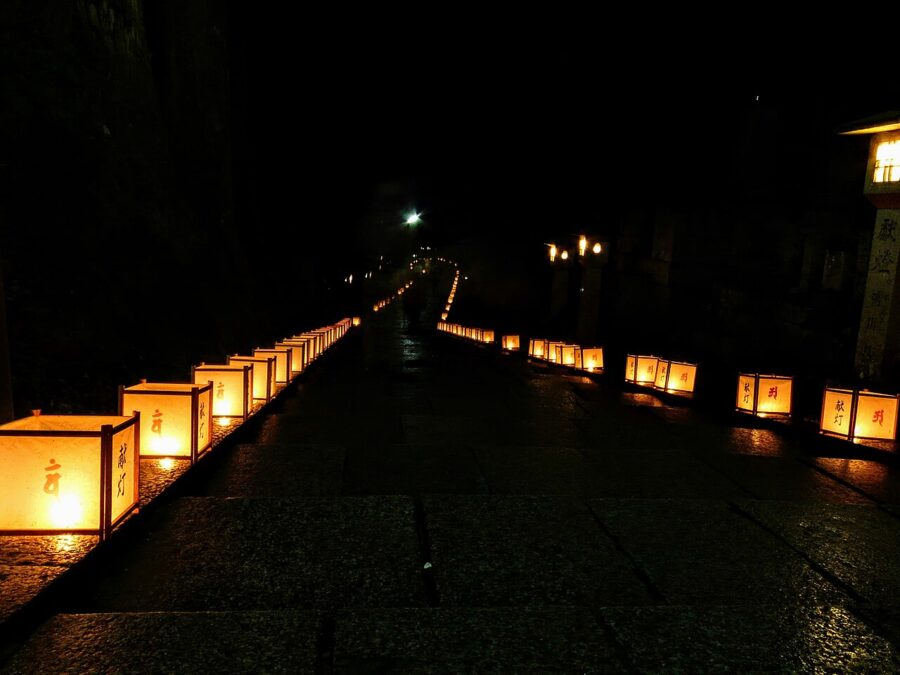
On August 13 the Mandō Kuyōe, the candle festival, lines the approach with candles lit by visitors for their dead, and the Tōrōdō reopens from 7 to 9 p.m. If you have seen the torchlight procession at Lourdes, the hush is similar. The hall also reopens those evening hours on October 1–3 and on New Year’s night from midnight to about 2 a.m.
Kongōbu-ji
The name Kongōbu-ji once meant the whole mountain. The building that now carries it began as Seigan-ji, built in 1593 by Toyotomi Hideyoshi in memory of his mother. In 1869 it was merged with a neighboring temple and renamed, and it is now the head temple of the Kōyasan Shingon school. In January 2024 twelve of its buildings were designated Important Cultural Properties.
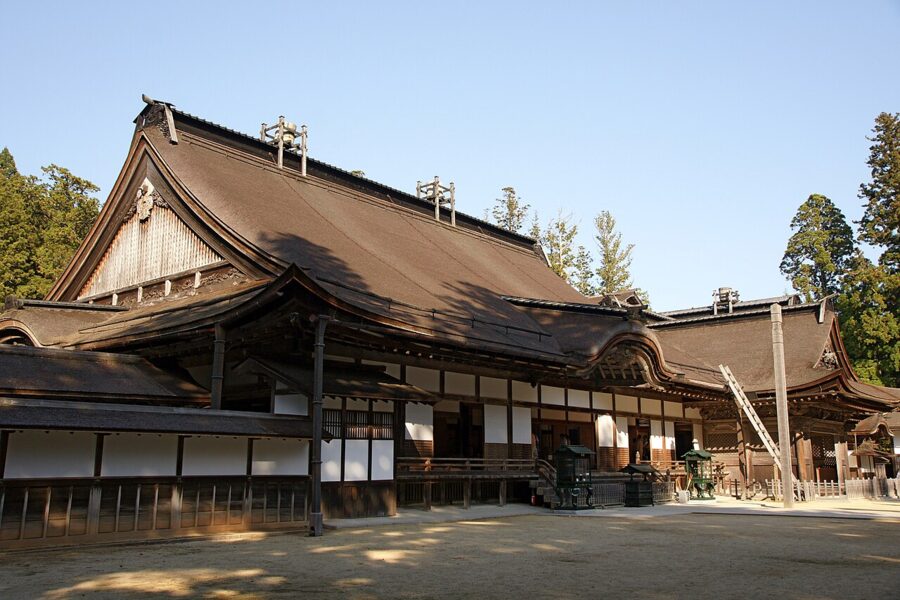
Inside, painted sliding doors run from room to room. In the Willow Room, Hideyoshi’s nephew Toyotomi Hidetsugu took his own life in 1595. The upper reception room, all gold-leaf walls and coffered ceiling, once received retired emperors, with a hidden chamber behind small tasseled doors for their guards.
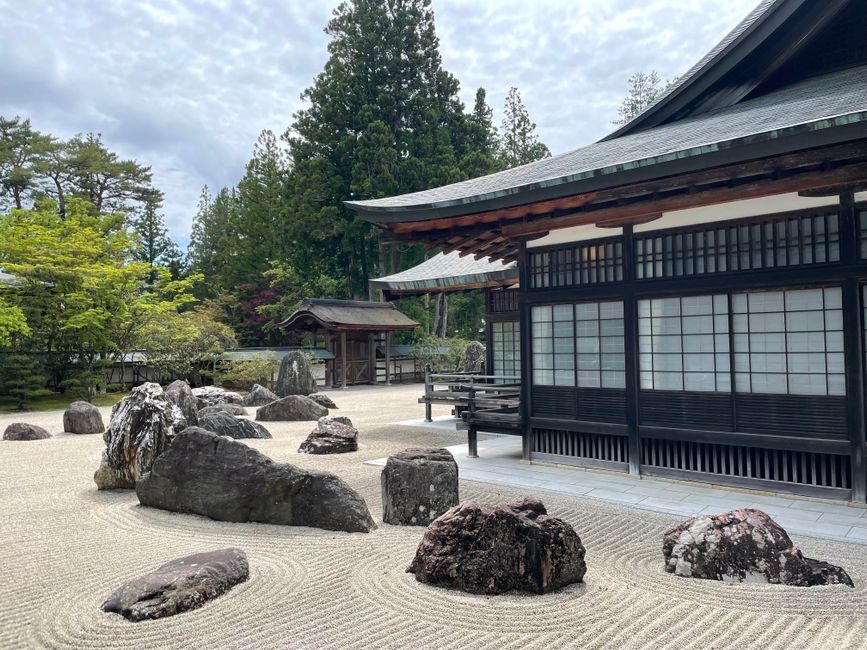
Banryūtei, at 2,340 square meters, is counted among the largest rock gardens in Japan. It was laid out in 1984 for the 1,150th anniversary of Kūkai’s entering meditation: granite from Shikoku, his birthplace, forms a pair of dragons rising from a sea of clouds made of white sand from Kyoto. In the new hall beside it, visitors are served tea, and monks give short talks.
Kongōbu-ji opens from 8:30 in the morning to 5 in the afternoon, last entry 4:30, for ¥1,000. Give it 45 minutes to an hour, and don’t hurry past the old kitchen.
The Danjō Garan and the Konpon Daitō
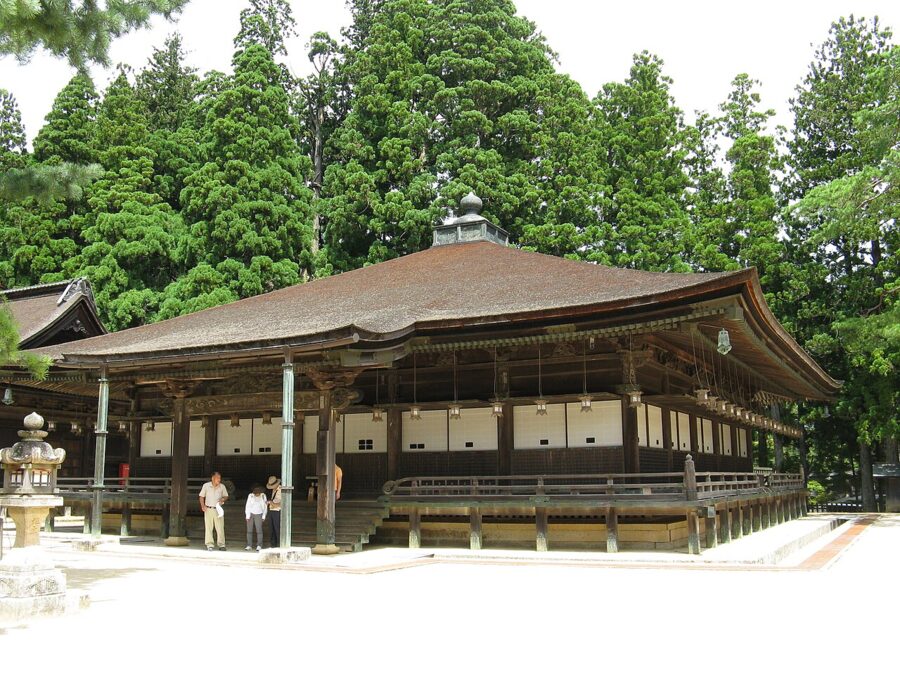
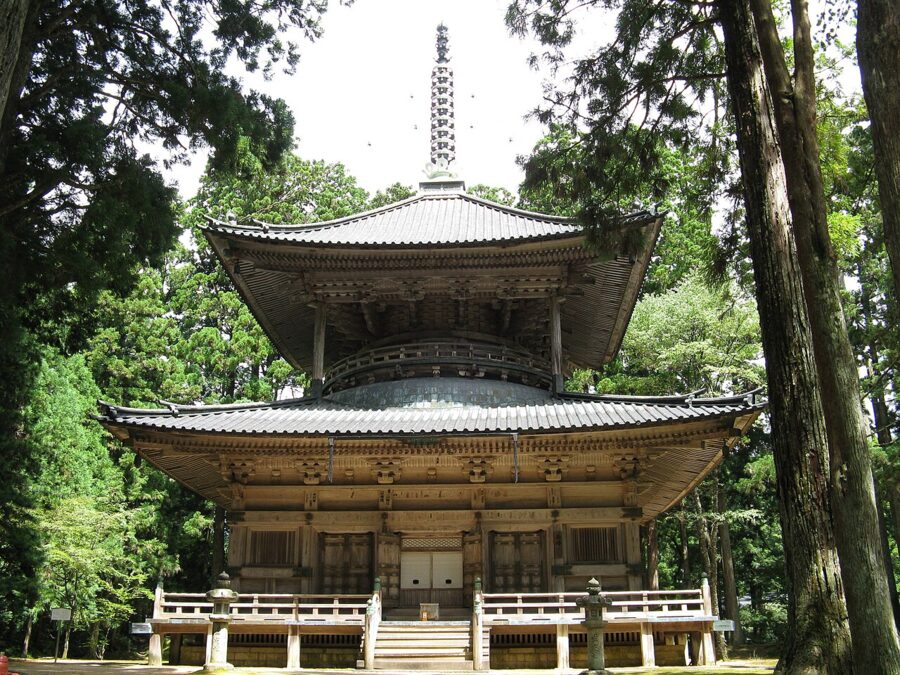
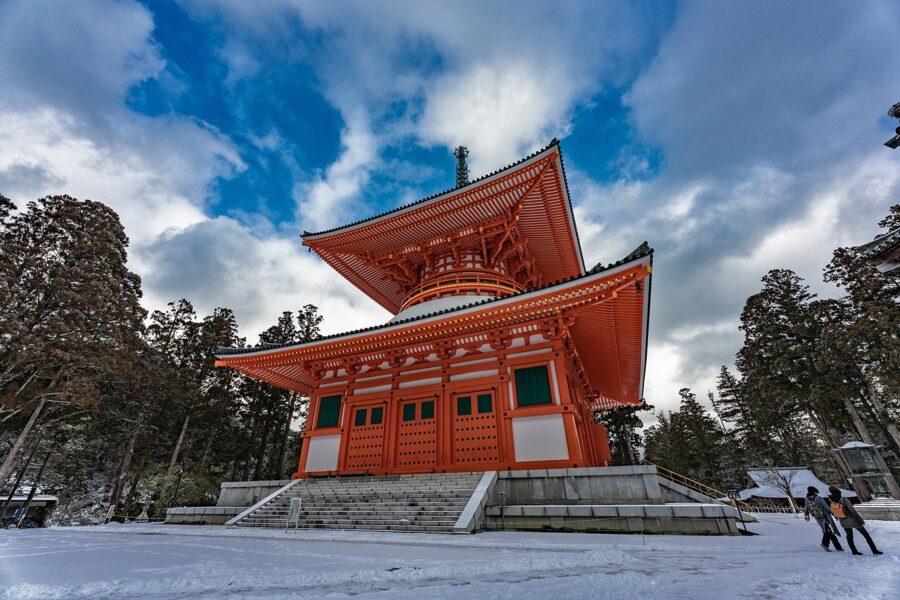
The Danjō Garan is where Kūkai himself began building, and the temple says it expresses the world of the Womb Realm Mandala. The grounds are free; only the Kondō and the Konpon Daitō charge, ¥500 each, open 8:30 to 5. Kongōbu-ji suggests a set order of homage around the buildings in its own guide to the Garan, and it is worth following.
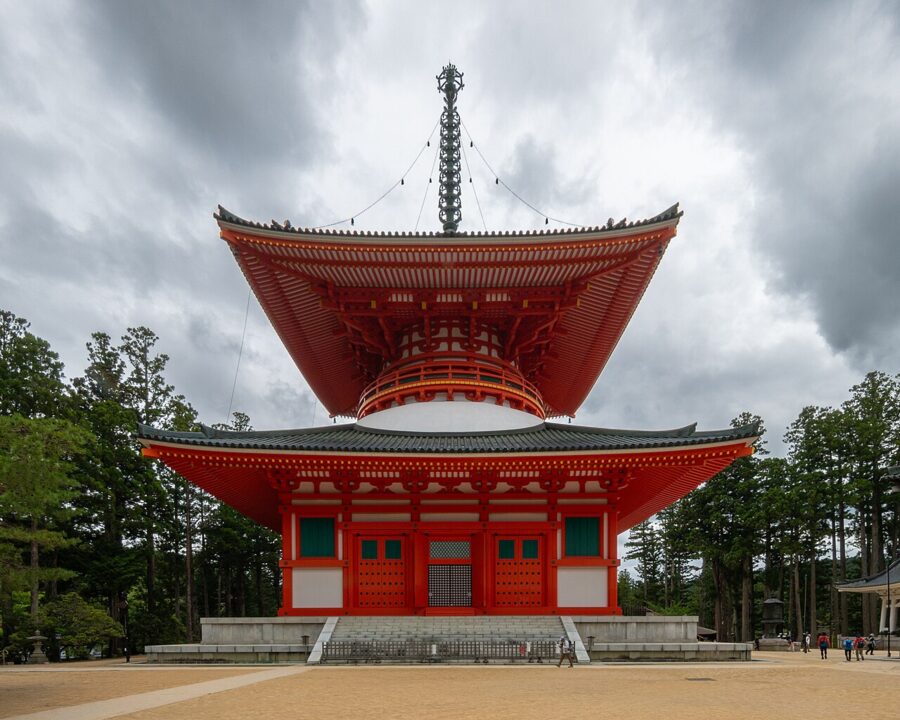
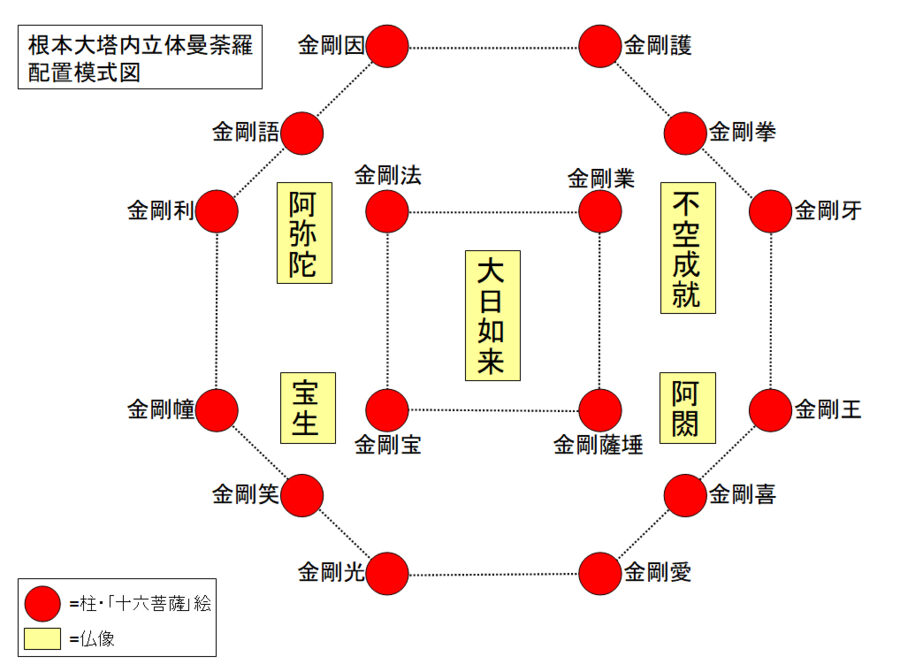
Inside the Konpon Daitō sits Dainichi Nyorai, the cosmic Buddha of the Womb Realm, surrounded by the four buddhas of the Diamond Realm. Sixteen bodhisattvas are painted on the pillars by Dōmoto Inshō, and the eight patriarchs of esoteric Buddhism look in from the corners. The temple calls the whole interior a mandala, and standing in it is the moment the teaching stops being abstract.
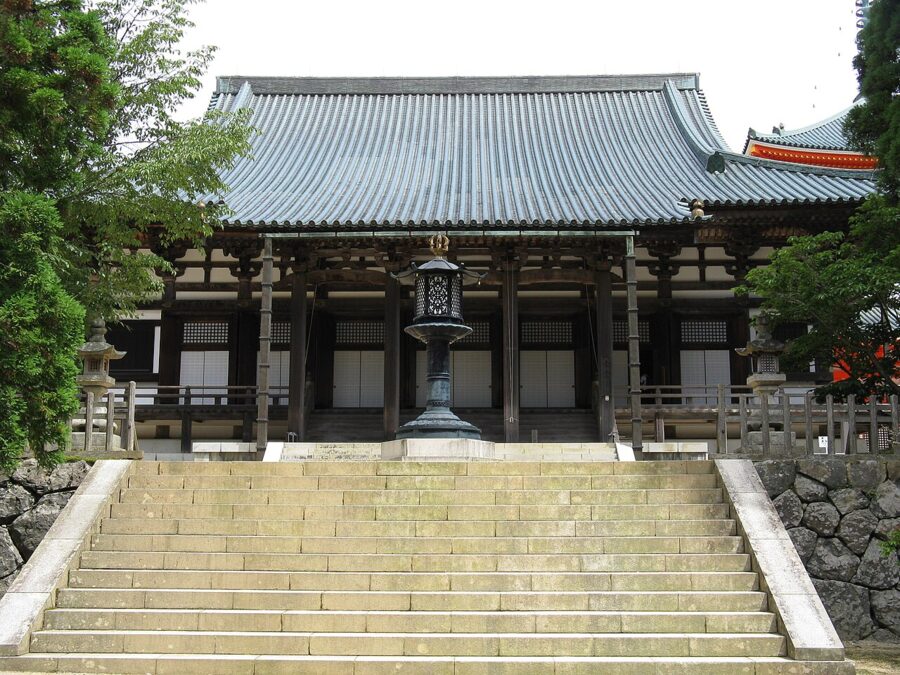
The Kondō, the main hall, is the seventh building on the site, finished in 1932 around a reinforced-concrete core because fire had destroyed its predecessors. Its main image is by the sculptor Takamura Kōun. The Kondō and the Konpon Daitō have both been designated Important Cultural Properties.
Behind it stands the Miedo, the Great Portrait Hall, once Kūkai’s own hall for practice, which holds a portrait of him by his disciple Prince Takaoka. Lay people may enter its outer room only once a year, on the night of the 20th day of the third lunar month, when the Garan is filled with flowers and candles.
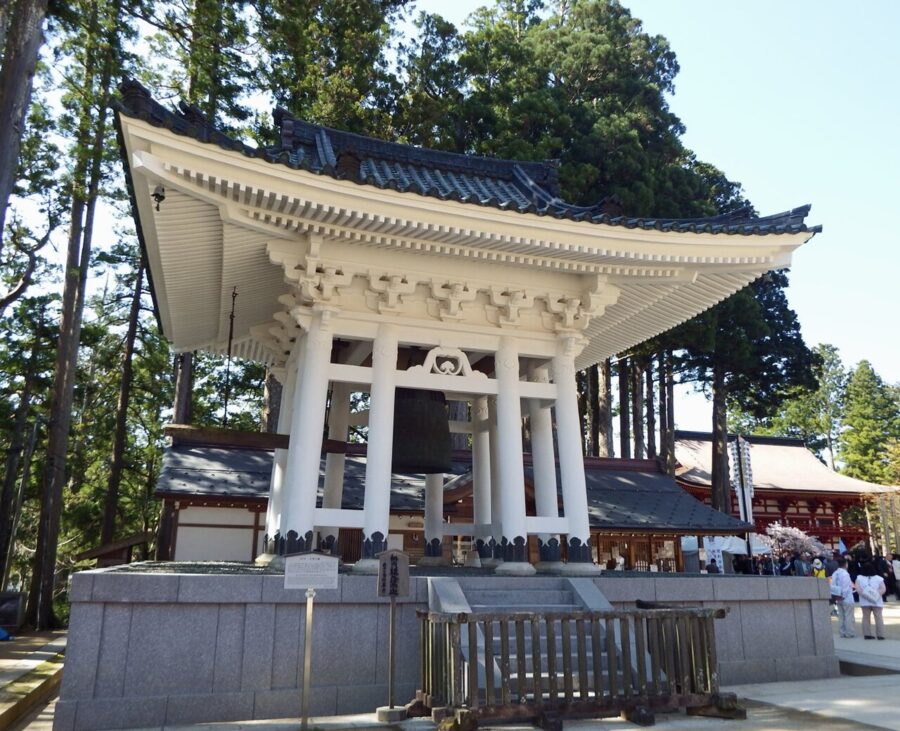
The great bell of the Garan, cast in 1547, still tells the time five times a day: at 4 a.m., 1 p.m., 5 p.m. (6 p.m. between the equinoxes in summer), 9 p.m. and 11 p.m.
The common ticket
Kongōbu-ji sells a common ticket for ¥2,500 (about US$16) that covers Kongōbu-ji, the Kondō, the Konpon Daitō, the Tokugawa mausoleum and the jukai at the Daishi Kyōkai. Paid separately, those five come to ¥3,200, so it is worth it only if you do the jukai. Between December 26 and January 4 some halls close for New Year rites.
The Reihokan and the quieter halls
The Koyasan Reihokan, the mountain’s museum, opened in 1921 in a building modeled on Byōdō-in at Uji. Its holdings are put at about 100,000 objects, among them 21 National Treasures, such as Unkei’s eight youthful attendants of Fudō. Shows rotate, and the museum’s autumn 2026 exhibition turned to Koyasan and the Toyotomi family. Admission is ¥1,300 (about US$8), and Kongōbu-ji’s 2026 fee table gives the hours as 9 to 5, last entry 4:30.
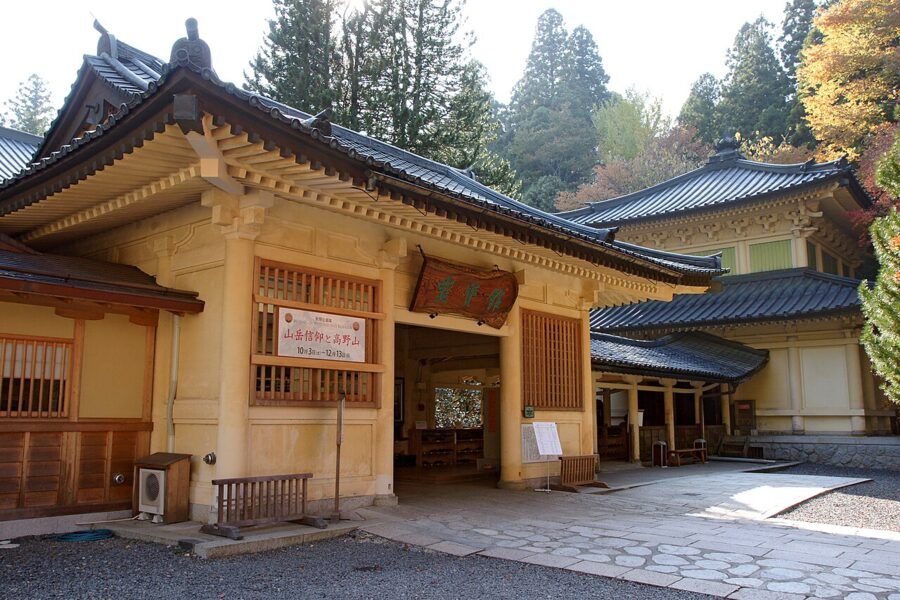
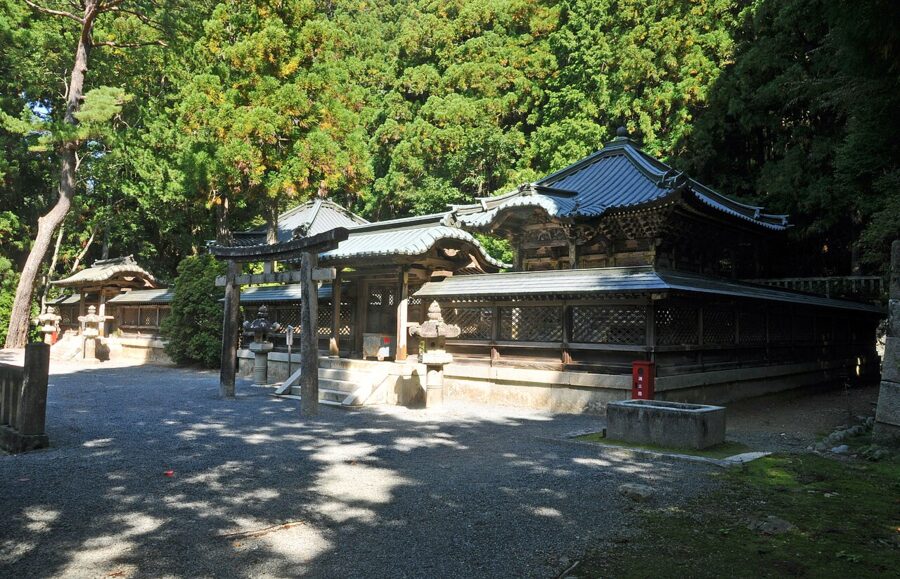
Two smaller places repay the walk. The Tokugawa Reidai, built in 1643 by the third shogun Iemitsu, is a pair of identical mausoleum halls for Ieyasu and Hidetada, open 9 to 4:30 for ¥200.
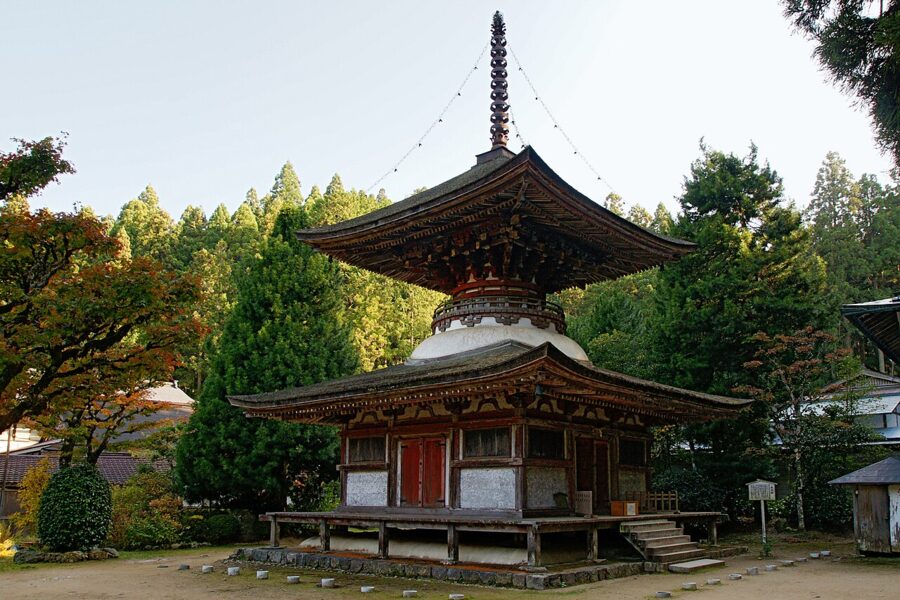
Kongō Sanmai-in was founded in 1211 by Hōjō Masako, widow of the first Kamakura shogun, and its two-story pagoda of 1223, a National Treasure, is the oldest building on the mountain. It is also a shukubō, and Koya’s tourism association calls it the only temple lodging on the mountain inside the World Heritage listing.
The Chōishi-michi, the old pilgrim path
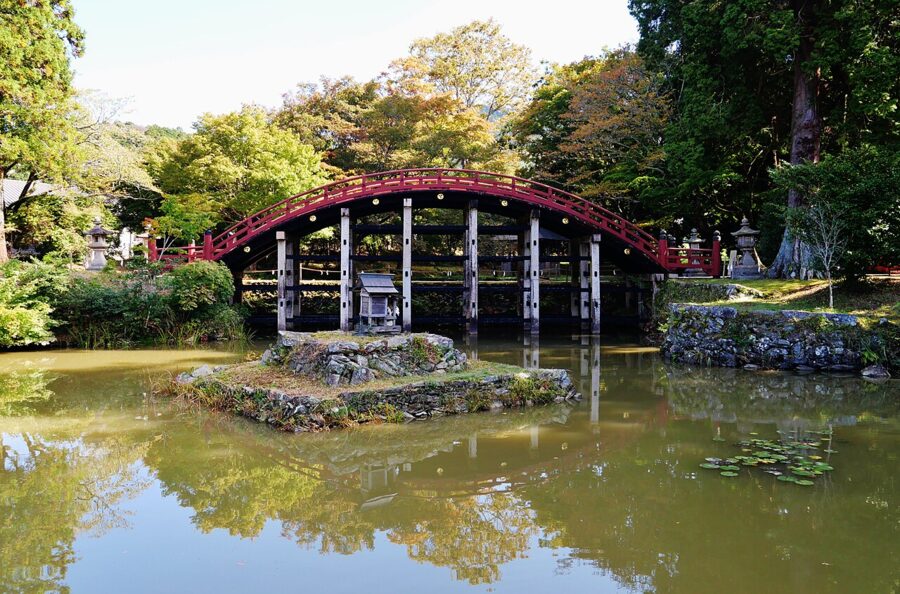
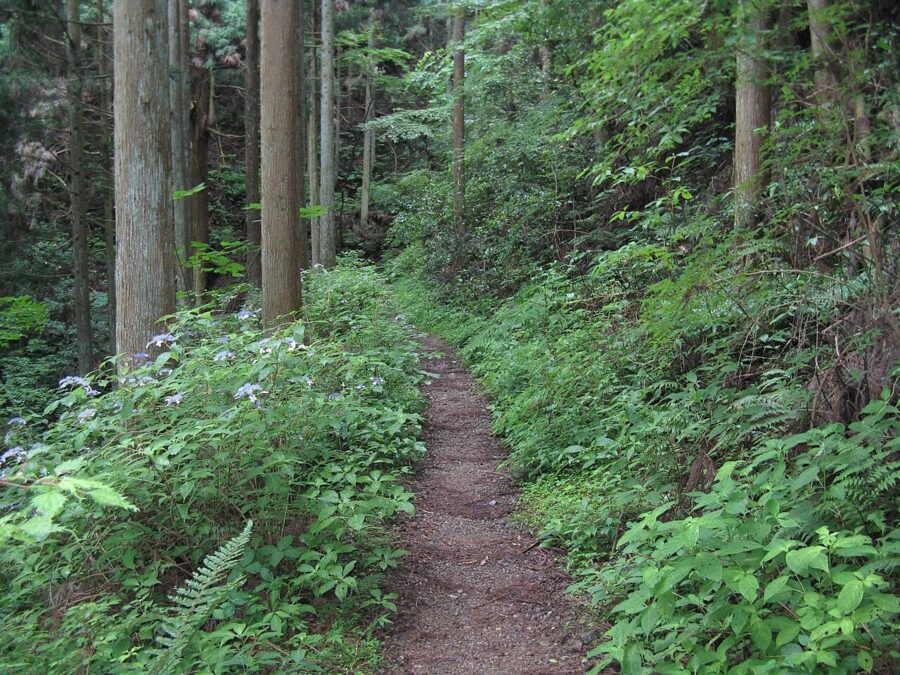
Before the railway, pilgrims walked. The main route, the Chōishi-michi, climbs about 22 km from Jison-in in Kudoyama, down in the Kinokawa valley, to the Danjō Garan, marked every chō (about 109 m) by a stone post. There are 180 posts up to the Garan and 36 more on to the mausoleum, 216 in all; 179 of the originals still stand.
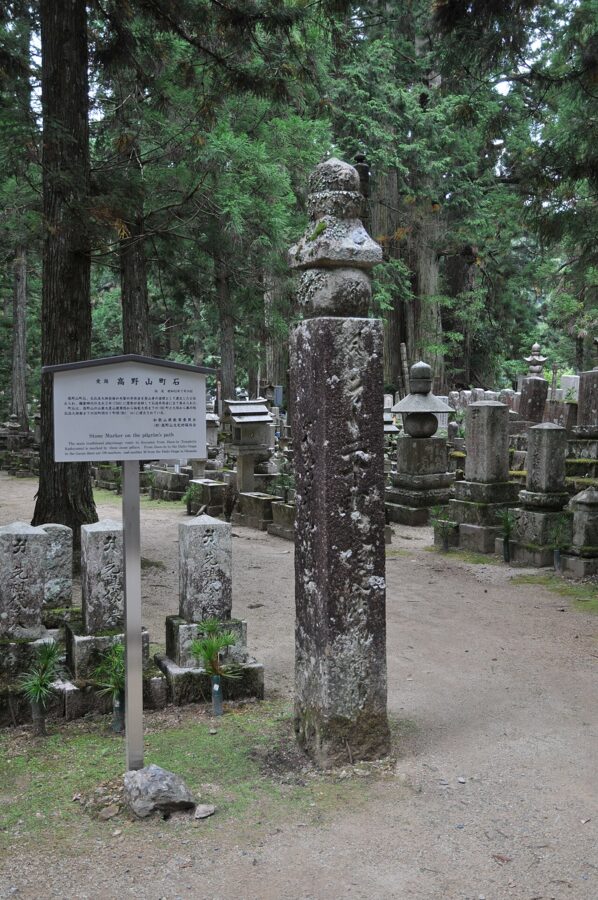
The first markers were wooden. Between about 1265 and 1285 a monk of Henjōkō-in replaced them with granite posts, and the route was listed by UNESCO in 2004 as part of the Sacred Sites and Pilgrimage Routes in the Kii Mountain Range. In 2016 four more Kōya routes were added, among them the women’s path, the Nyonin-michi.
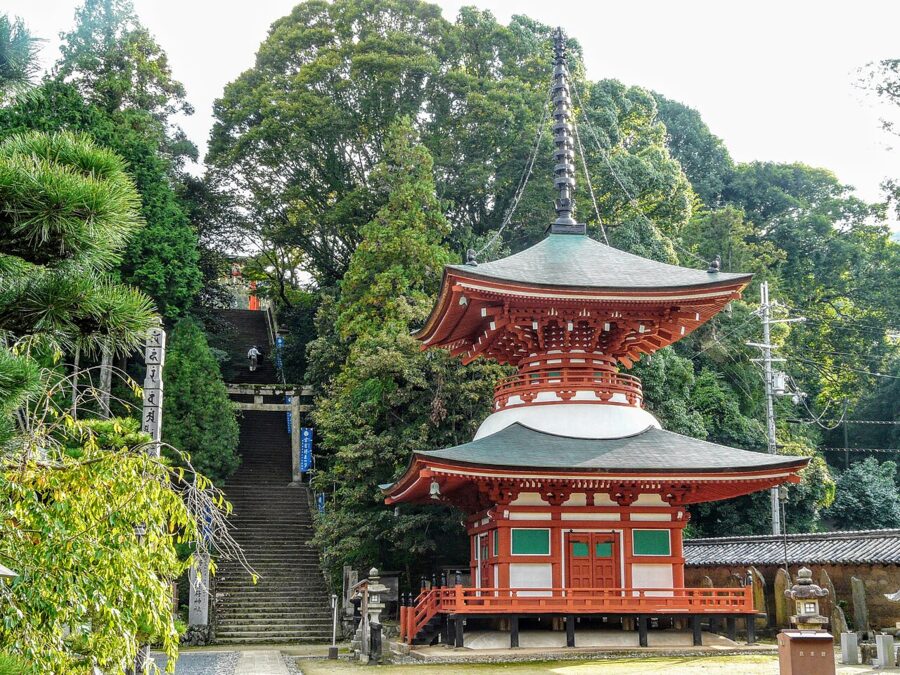
From Jison-in to the top takes six to seven hours. Starting from Niutsuhime Shrine cuts it to four or five, and from Yatate to two or three. The path is well kept but steep in places, and phone signal drops out along the way. Kudoyama station is on the same Nankai line, so you can walk up, sleep in a shukubō and ride down.
One night or two
A day trip is possible: about two hours each way, and four or five hours on the mountain for Okunoin, Kongōbu-ji and the Garan. It is also the version where you see the place at its busiest and miss what the temples are for.
One night is the right minimum. Come up in the morning, see Kongōbu-ji and the Garan, check in by mid-afternoon, eat early and walk Okunoin at dusk. Next morning, go to the service, have breakfast and walk Okunoin again before the first buses. You will be back in Osaka by midafternoon on the two-day ticket.
Two nights let you add the Reihokan, an ajikan session or the Chōishi-michi on the way up, or Okunoin both with a guide at night and alone at dawn. To compare this with temple stays elsewhere, Korea’s Templestay program works differently, with a set program of practice for its guests, and the two make a good pair.
Whatever you choose, be at Okunoin once in the morning. At about half past ten the monks cross Gobyōbashi with the Daishi’s second meal of the day, and by then you will know whom it is for.