On a Thursday in winter, three of the six monasteries of Meteora keep their gates shut. On a Saturday all six are open, and by mid-morning the road between them fills with coaches. Before the dress code, before the steps, the first decision at Meteora is the day you go.
The second decision is how to look at the place. It is easy to treat Meteora as scenery with buildings on top, but for close to a thousand years men, and later women, have climbed these rocks to pray, and six communities still do.
Contents8 parts
The rocks, the hermits and a name
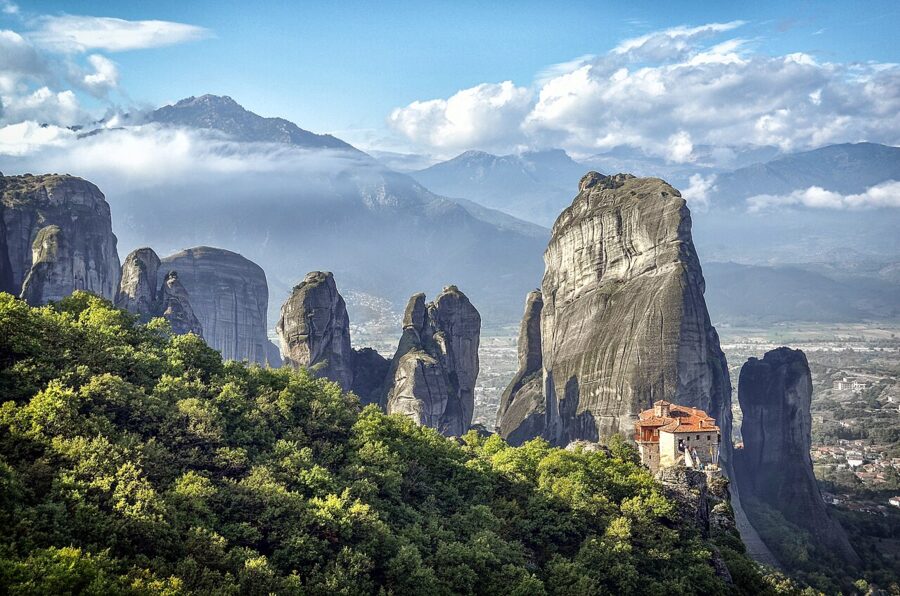
The pillars rise between the town of Kalambaka and the village of Kastraki, at the northwestern edge of the Thessalian plain, where the Pindus mountains begin. UNESCO, which inscribed Meteora on the World Heritage List in 1988 as both a natural and a cultural site, describes peaks rising more than 400 meters above the ground. They are not volcanic. They are sandstone and conglomerate, the stone, sand and mud carried down by rivers into a delta about 60 million years ago.
Earth movements later lifted that delta and split it along vertical faults, and rain, wind, frost and heat worked down the cracks until the plateau stood in separate towers. No ancient Greek writer ever mentioned the place. The rocks seem to have waited for the monks.
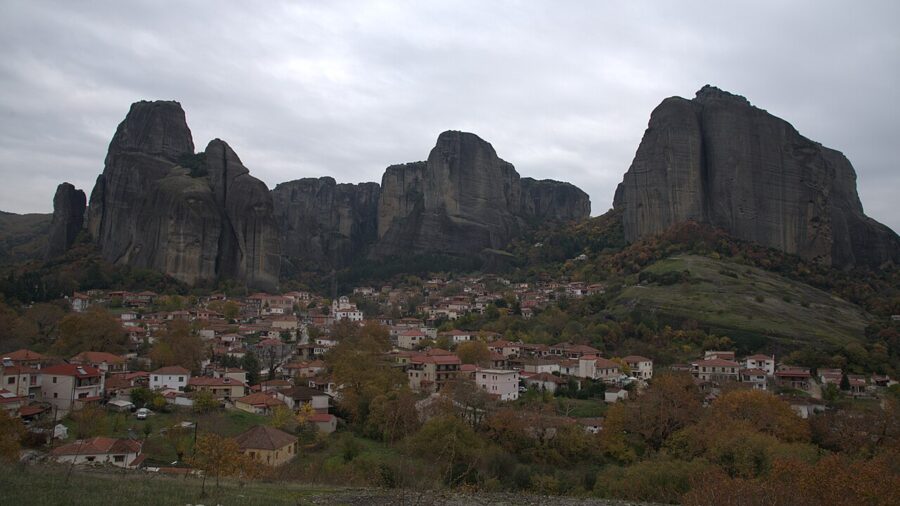
Hermits came first, probably from the 11th century, living alone in caves and hollows in the rock walls that they reached by rope ladders. In the late 12th century a small church of the Theotokos, the Mother of God, was built at the foot of the Doupiani rock near Kastraki, and the solitaries gathered there on Sundays and feast days. That church, the Doupiani skete (a loose community of hermits around one church), was the seed of everything that followed.
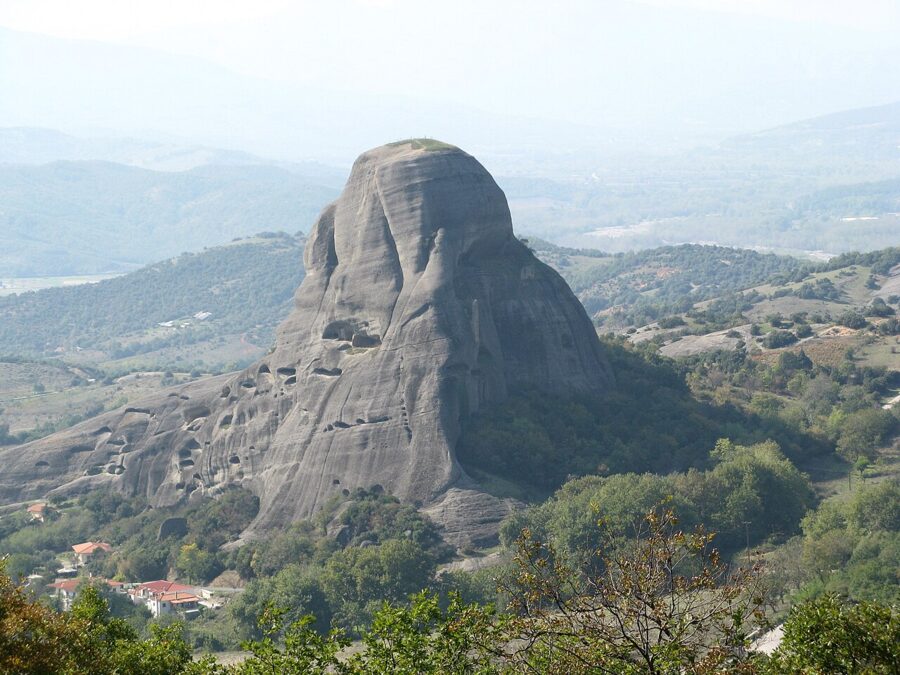
The man who turned the hermitages into monasteries was Athanasios, a monk who had left Mount Athos with his spiritual father Gregory to escape pirate raids. According to the account of his life written in 1390, they settled first on the Rock of Stagoi, around 1333 or 1337. A few years later Athanasios climbed the great flat rock the locals called the Platys Lithos, the Broad Rock, and named it Meteoron: the rock suspended between heaven and earth. The name spread to the whole stone forest.
In dangerous 14th-century Thessaly the rocks offered what the monks wanted most: distance and a door they could close. By the end of the 15th century there were 24 monasteries on the pillars, and in the 16th they were rebuilt and painted by artists such as Theophanes the Cretan and Frangos Katelanos. Then came debt, raids, the plundering of Ali Pasha of Ioannina, and in October 1943 the burning of Kalambaka and heavy damage to Great Meteoron’s church.
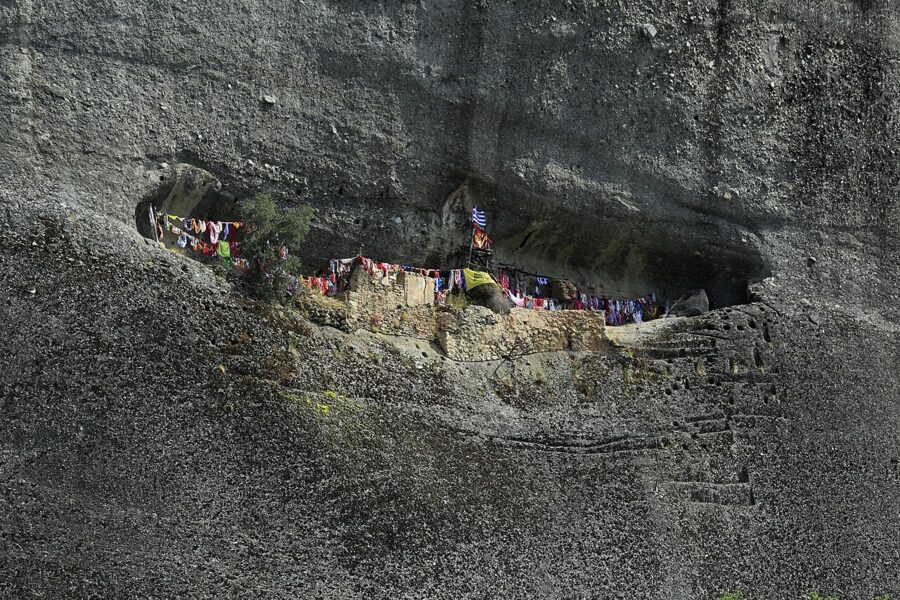
By the mid-20th century most of the houses were empty or close to it. The revival began in the 1960s, when Metropolitan Dionysios of Trikki and Stagoi repopulated almost all of them. Today six are active: four with monks, two with nuns. They belong to the Holy Metropolis of Stagoi and Meteora, which publishes their visiting hours.
The six monasteries, with their days and hours
Each monastery sets its own schedule, and each closes on a different day. The table below is the timetable the Metropolis lists as of November 2026. The summer schedule runs from 1 April to 31 October (Rousanou from 16 May), the winter one from 1 November to 30 April (Rousanou to 15 May). Great Meteoron’s own site ends its winter on 31 March instead, so in April trust the gate.
| Monastery | Closed | Summer hours | Winter hours |
|---|---|---|---|
| Great Meteoron | Tuesday (winter: Tuesday to Thursday) | 9:30 a.m.–3 p.m. | 9:30 a.m.–2 p.m. |
| Varlaam | Friday (winter: Thursday and Friday) | 9 a.m.–4 p.m. | 9 a.m.–3 p.m. |
| Rousanou | Wednesday | 9 a.m.–4:30 p.m. | 10 a.m.–2 p.m. |
| St. Nicholas Anapafsas | Friday | 9 a.m.–5 p.m. | 9 a.m.–4 p.m. (weekends 9:30 a.m.–2 p.m.) |
| St. Stephen | Monday | 9 a.m.–1:30 p.m. and 3:30–5:30 p.m. | 9 a.m.–1 p.m. and 3–5 p.m. |
| Holy Trinity | Thursday | 9 a.m.–4 p.m. | 10 a.m.–4 p.m. |
On this schedule Saturday and Sunday are the only days all six are open, and Friday in summer and Thursday in winter are the thinnest. If you have one day and want a particular monastery, plan around its closing day first and everything else second.
Great Meteoron also closes 5 to 7 August, 30 September and 1 October, and all of February. Hours change for major feasts, and every community can alter its schedule: these are houses of prayer that admit visitors, and the hours follow the prayer.
Great Meteoron (Transfiguration of the Savior)
The oldest and largest, on the highest rock. The monastery gives its founding as about 1340, the work of St. Athanasios, and his successor was a king: John Uroš Palaiologos, heir to the Serbo-Greek ruler of Thessaly, who took monastic vows around 1372 as the monk Joasaph and stayed about fifty years. The Church venerates both as saints, and the monastery keeps their memory on 20 April.
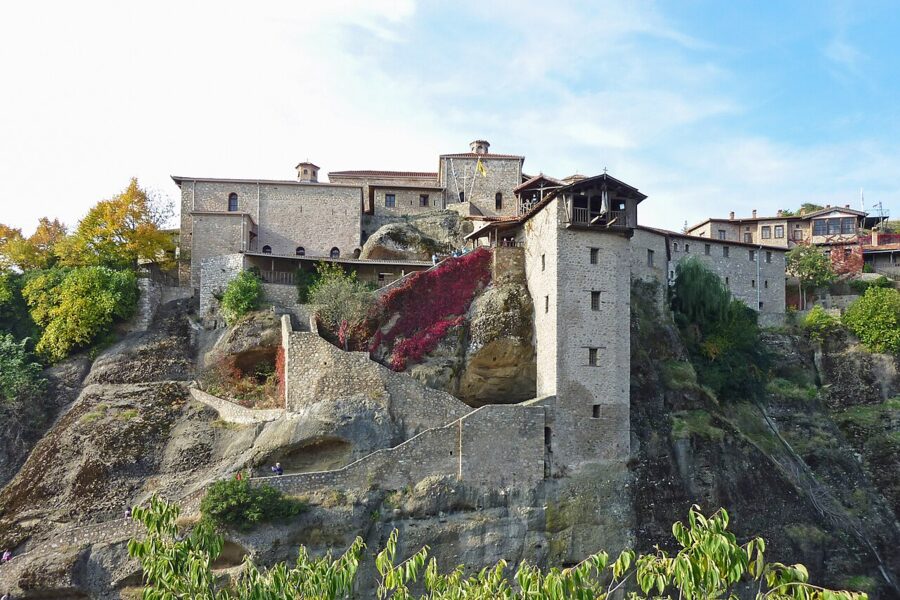
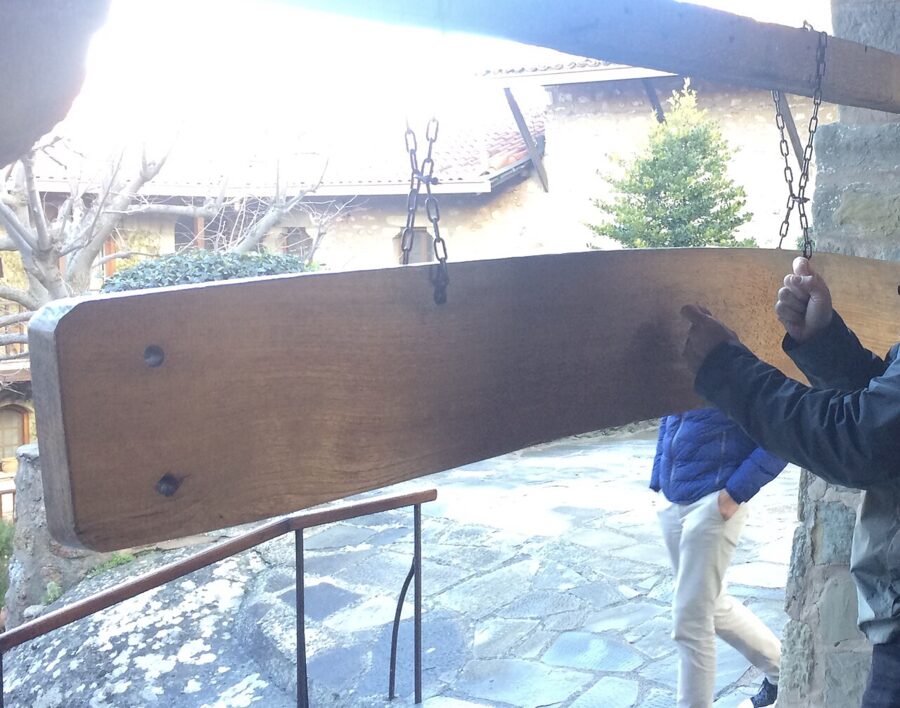
To the left of the entrance is the cave that was Athanasios’s own hermitage, now a chapel. The main church, the katholikon, was completed in 1544/45 and painted by the Cretan artist Tzortzis; at its iconostasis stands the 14th-century icon of the Panagia Meteoritissa, which the monks hold to be miracle-working, and in the lite, the hall before the nave, lies the founder’s tomb. In the gallery outside hangs the semantron, the long wooden beam struck to call the monks to prayer.
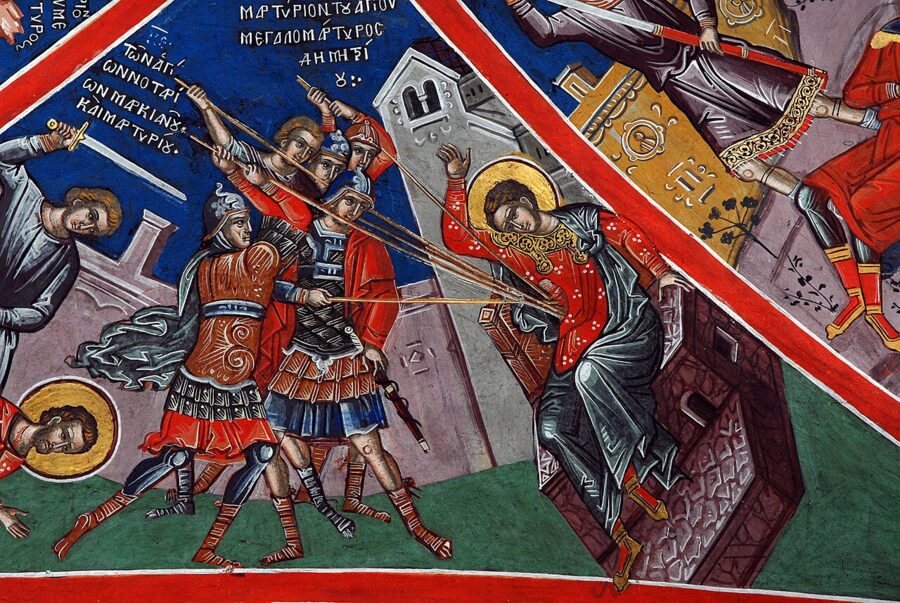
Leave time for the refectory of 1557 with the abbot’s stone table, the domed kitchen beside it, and the infirmary of 1572, now a museum of icons and manuscripts going back to the 12th and 13th centuries. Times are on the monastery’s visiting page.
Varlaam (All Saints)
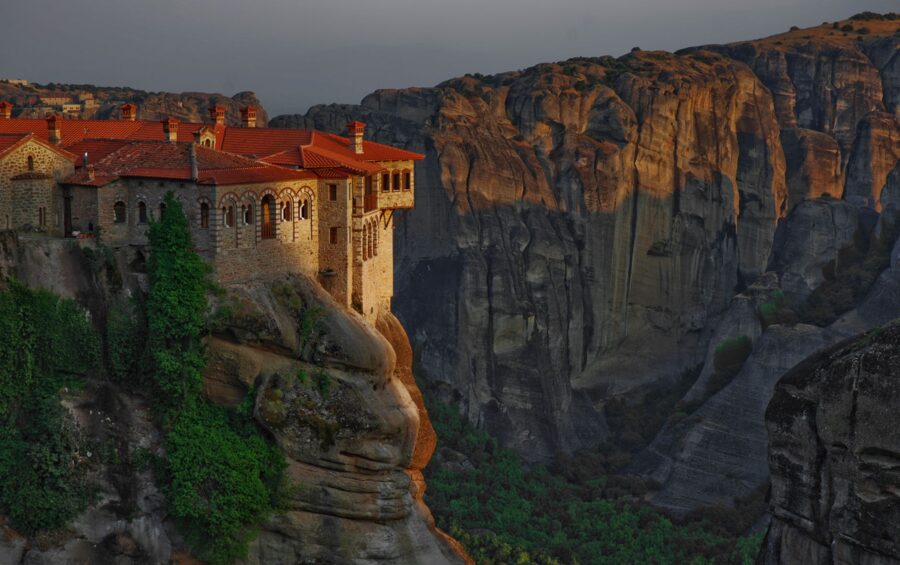
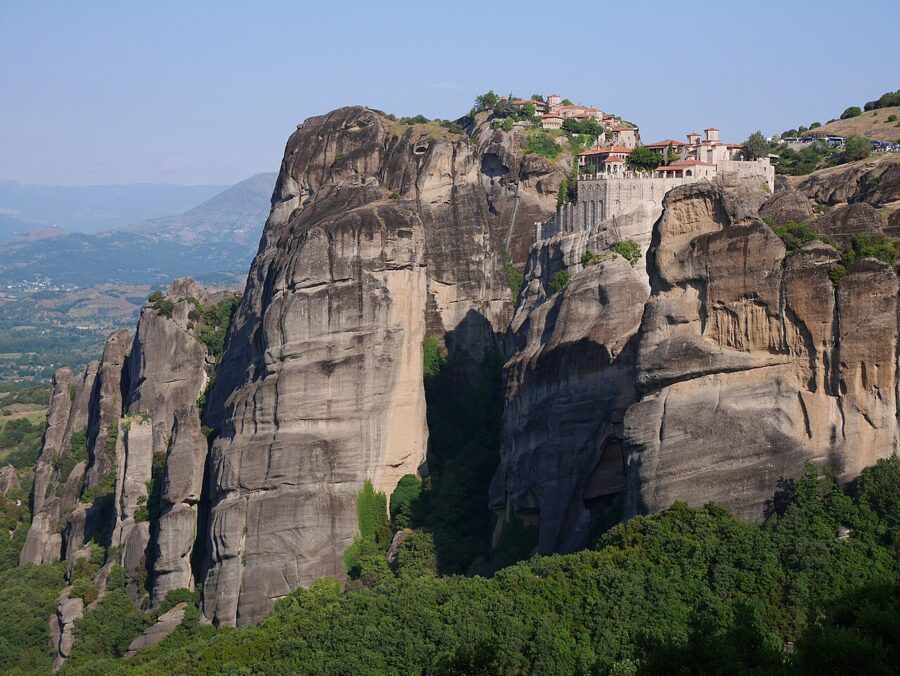
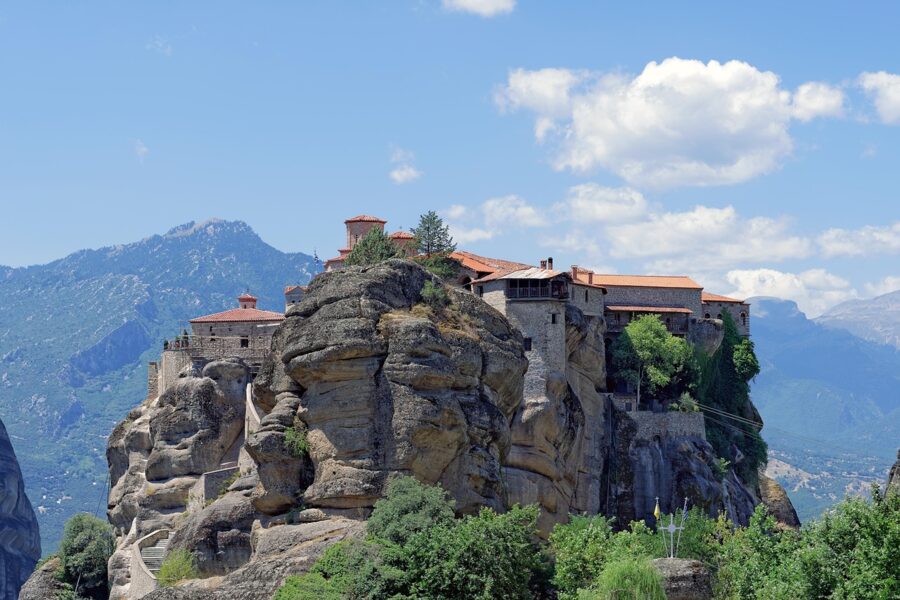
The second largest, a short walk across the valley from Great Meteoron. Tradition gives the rock to a 14th-century hermit named Varlaam, but the monastery as it stands was founded in 1517/18 by two brothers from Ioannina, Theophanes and Nektarios Apsarades, who found nothing on the summit but traces of old walls and a fragment of a sanctuary. The Varlaam community still lists a library of 290 manuscripts.
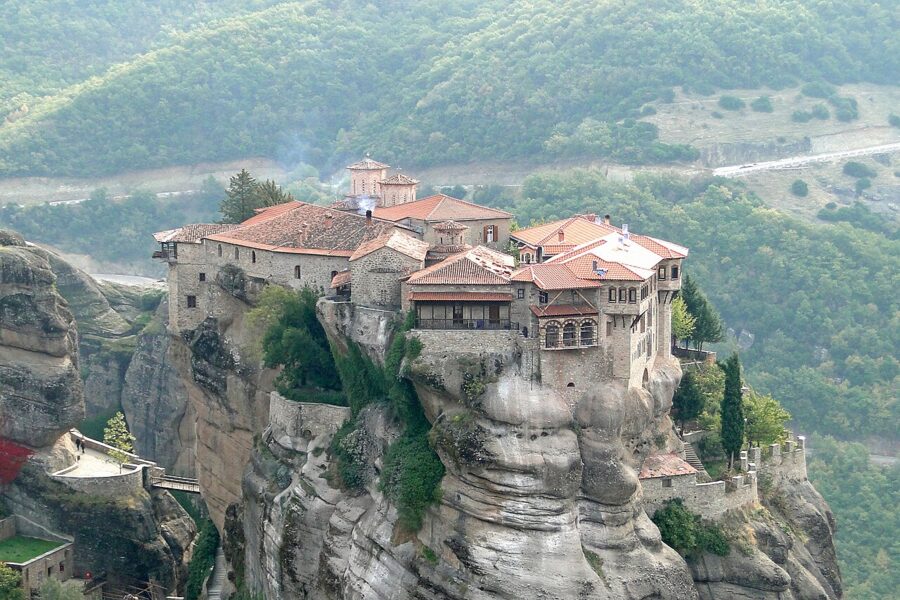
The church of All Saints, built in 1542, was painted in 1548 by Frangos Katelanos of Thebes, a painter who loved crowded, narrative scenes. Around 1600 Varlaam ran the best-organized scriptorium on the rocks.
Rousanou (St. Barbara)
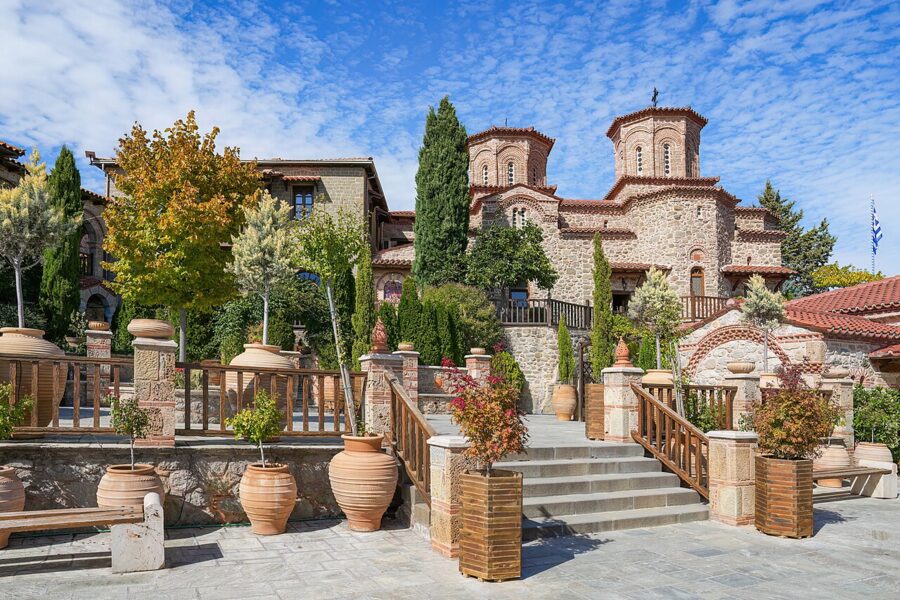
A convent of nuns that covers the whole top of a narrow rock in the middle of the forest of pillars, four stories built in the 1520s and 1530s by two brothers from Ioannina, Ioasaf and Maximos. Its church of the Transfiguration was painted in November 1560, probably by the same Tzortzis who worked at Great Meteoron, and the narthex holds a Last Judgment and thirty-six scenes of martyrdom. The nuns celebrate St. Barbara, whose relics they keep, on 4 December.
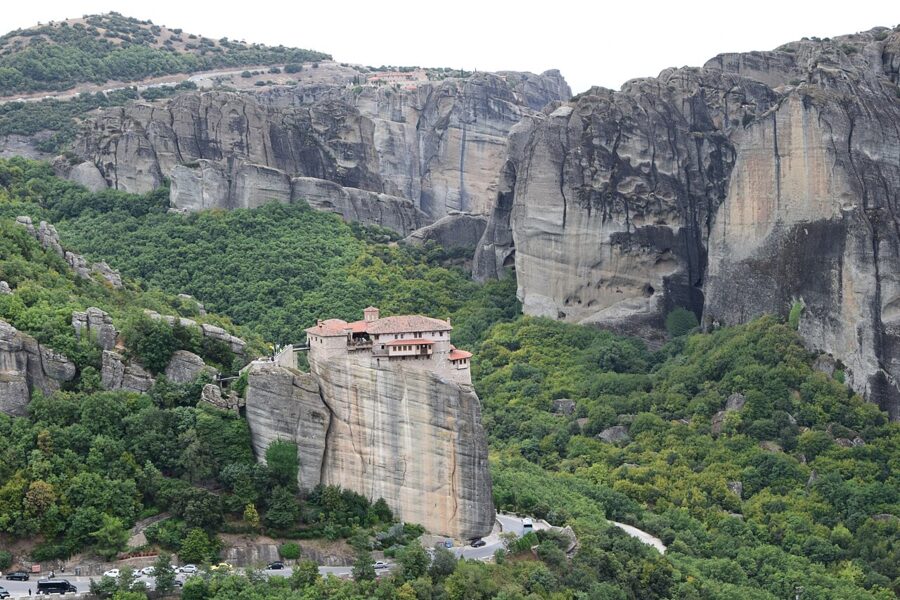
Rousanou is small, and one tour group can fill it; if a coach is unloading, see another monastery first. Its winter hours, 10 a.m. to 2 p.m. on the schedule the Metropolis posts for Rousanou, are the shortest of the six, and it is closed on Wednesdays all year.
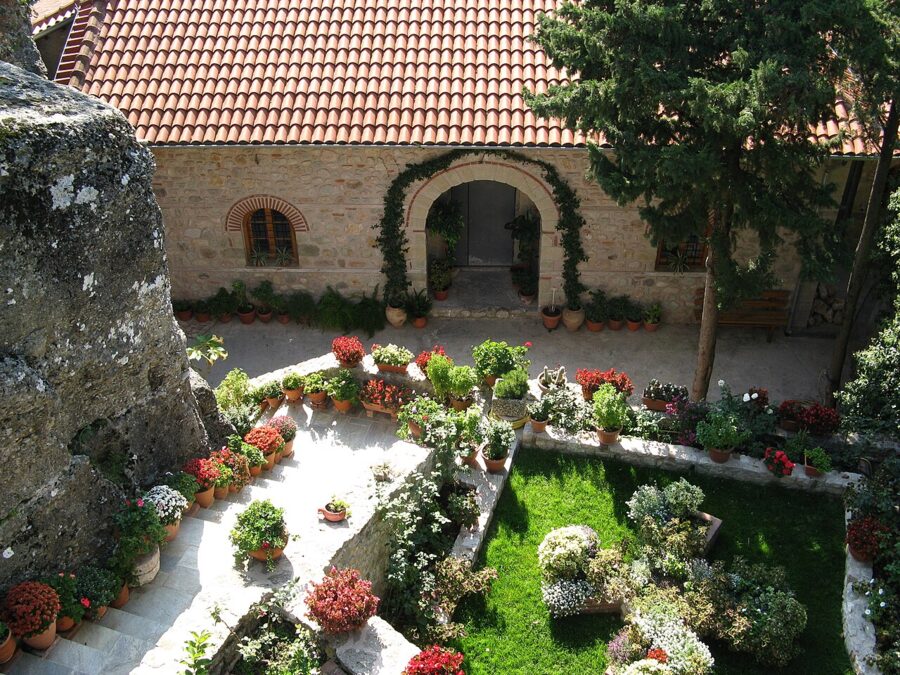
St. Nicholas Anapafsas
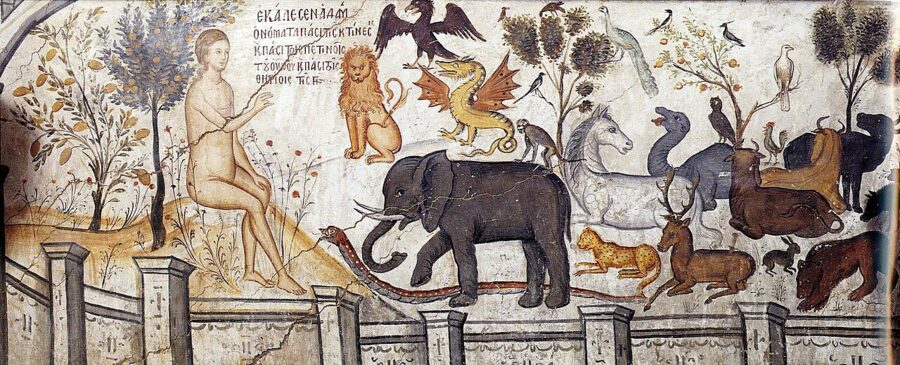
The first active monastery you meet on the road up from Kastraki, stacked in several stories on a cramped rock. Monastic life here goes back to the early 14th century, but the present church dates from a rebuilding in the early 16th. On the second floor is the small katholikon, and on its walls is the reason to come: the frescoes of 1527 by Theophanes Strelitzas Bathas, known as Theophanes the Cretan, his oldest signed work.
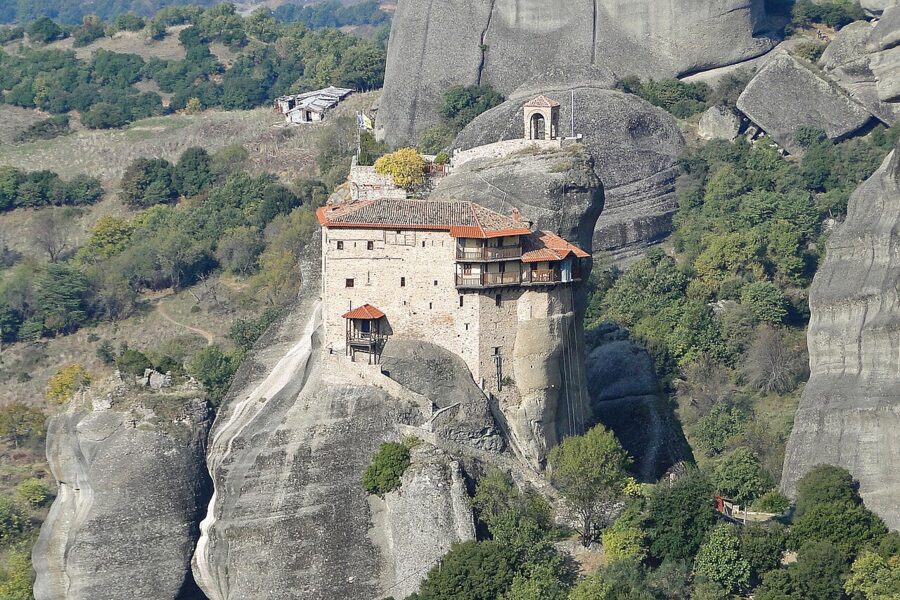
The founding inscription, dated 12 October 1527, sits over the door into the nave. UNESCO names these paintings as the reference point for post-Byzantine painting, and once you know that, the room changes. It is closed on Fridays, and on the Metropolis schedule for St. Nicholas it keeps the longest summer hours of the six, to 5 p.m.
St. Stephen
The one monastery without a climb. St. Stephen sits on a rock directly above Kalambaka, joined to the road by a short bridge, which makes it the only realistic choice for anyone who cannot manage steps. An inscription traces monastic life on the rock to 1192, and its small church of St. Stephen dates from 1350.
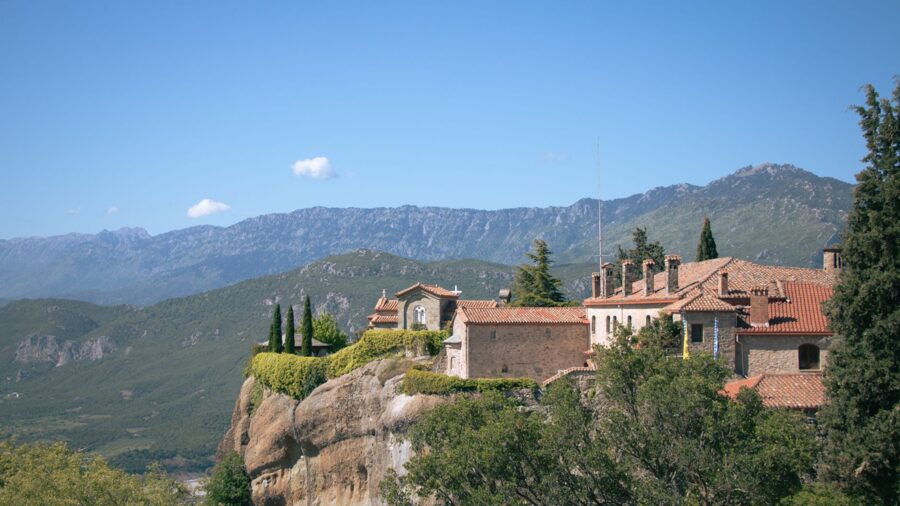
Since 1961 it has been a convent, and the St. Stephen community numbers about thirty nuns. Their larger church of St. Charalambos, built in 1798 and bombed in 1943, has been repainted in recent years by the icon painter Vlasis Tsotsonis. The nuns keep the head of St. Charalambos there, a relic the faithful believe still works miracles, and the old refectory is now a museum of icons, embroidered vestments and silverwork.
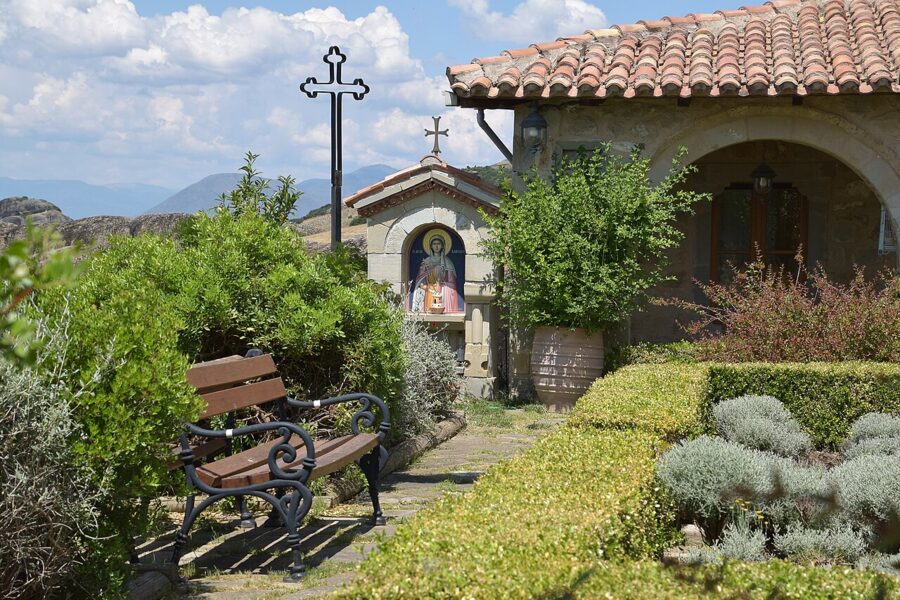
Holy Trinity
The most isolated of the six, on a sheer pillar east of the main group. Tradition says the monk Dometios built it in 1438, though a document shows an organized monastery here by 1362. The church went up around 1476, and its paintings date from 1741; a small chapel of St. John the Baptist was carved into the rock and painted in 1862.
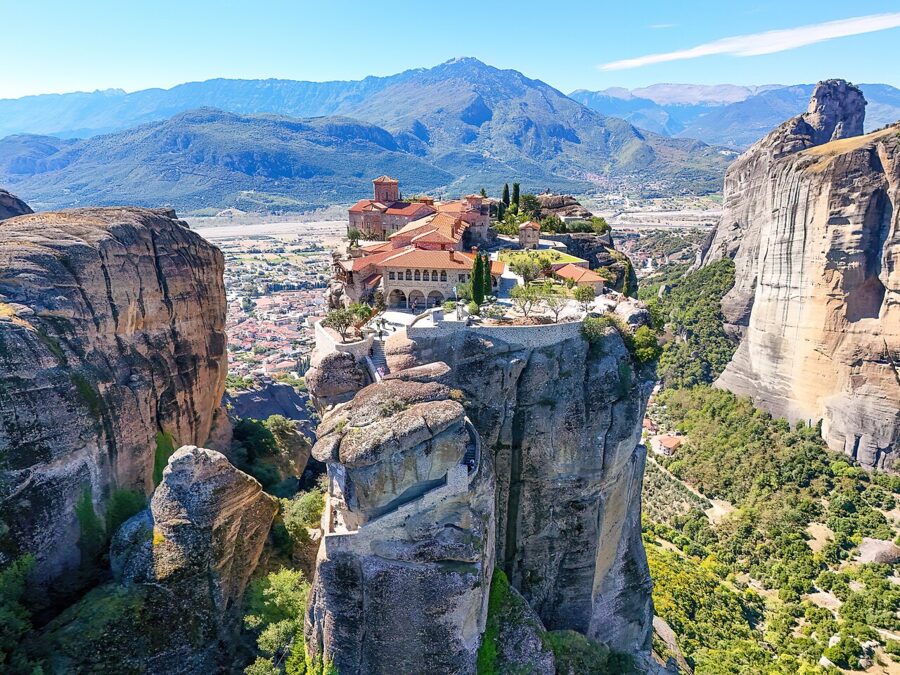
Its recent history is the hardest of the six. Looted during the occupation, it stood empty until 1964; its carved iconostasis was stolen in 1979; monks have lived here without a break only since 1980. You reach it by a path down into a ravine and then about 140 steps cut into the rock. It closes on Thursdays, and the Holy Trinity schedule opens it from 10 a.m. in winter.
Steps, nets and ladders
The difficulty was the point. Hermits reached their caves by rope ladders, and the monasteries kept the same logic: a ladder that could be pulled up, or a net on a rope wound by a windlass in a tower at the top. Visitors and supplies rose the same way, swinging against the rock. UNESCO singles out the net in which pilgrims were hauled up the 373-meter cliff below Varlaam as a symbol of a fragile way of life.
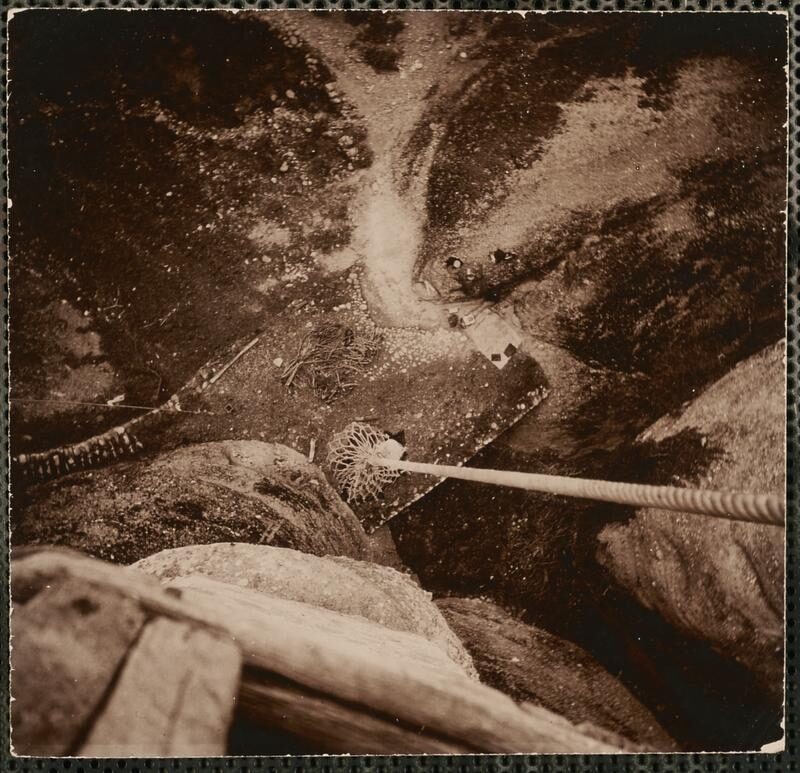
At St. Nicholas the monks also used a hanging wooden ladder of 62 rungs. The steps you will climb are mostly a 20th-century gift: according to the Metropolis, Father Iakovos Stamatis, abbot of Varlaam, had stairs cut into the rock there in 1921, at Holy Trinity in 1925 and at St. Nicholas in 1934.
Today the hauling is done by small cable cars that cross the gorges with supplies and, at Holy Trinity, the monks themselves. You will see them; you will not ride them.
Dress, fees and manners
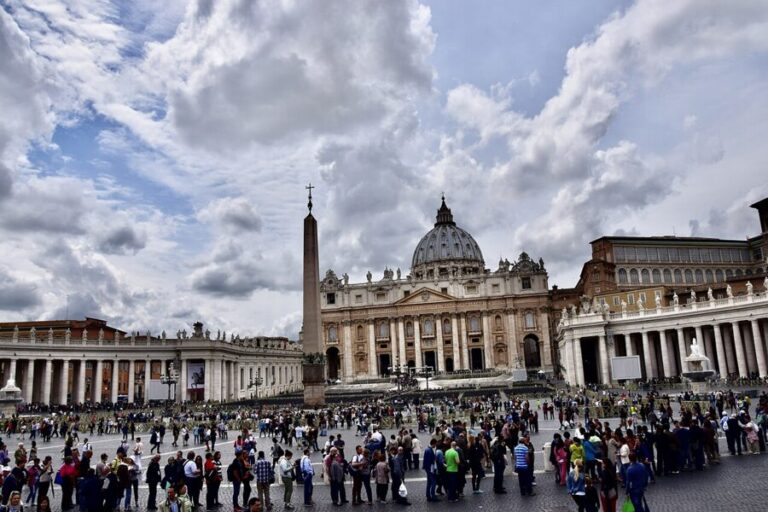
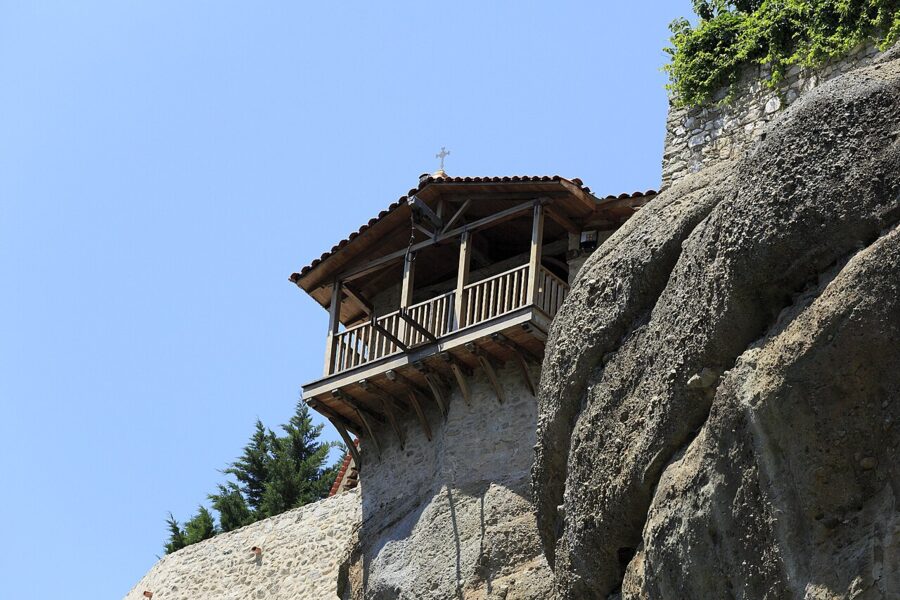
The dress rule is short and enforced at every gate. Great Meteoron’s own wording: men may not enter in Bermuda shorts, shorts or sleeveless shirts, and women may not enter in trousers or sleeveless tops. In practice that means long trousers for men, a skirt below the knee for women, and covered shoulders for everyone. It is close to the rule at St. Peter’s in the Vatican, with the difference that here trousers do not count for women.
Women in trousers can borrow a wrap skirt at the ticket desk, free of charge. The wraps are not always freshly washed, so if you plan several monasteries, pack a light skirt or sarong of your own.
Entry is €5 (about US$6) per person at each monastery as of 2026, cash only, so all six cost €30 (about US$35). Local guides say children under 12 go in free. The monasteries publish no fee online, and some older guides still quote €3.
Inside, keep your voice down and your phone in your pocket. Photography and video are not allowed in the churches, even without flash; courtyards, terraces and views are fine. If a service is under way, stand at the back or wait outside, and do not walk past ropes or closed doors: those are the parts of the house where people live.
Monastic life now
The communities are small. In 2025 three monks lived at St. Nicholas Anapafsas, and by one count the monasteries and convents of Meteora and the surrounding district held close to ninety monks and nuns between them. St. Stephen has about thirty nuns.
Lay staff run the ticket desks, and the monks are rarely in the public rooms. The gates close in the afternoon because the rest of the day belongs to services, work and silence. If you have spent a night in a temple on Koyasan or on a Templestay in Korea, expect a different arrangement: here you visit by day and sleep down in Kalambaka or Kastraki.
Getting there
Meteora is about four hours’ drive northwest of Athens, and the train is no longer the simple option it used to be.
By train
The line from Palaiofarsalos to Kalambaka was knocked out by storm damage in 2023, and as of the timetable Hellenic Train published in May 2026, the last stretch runs by bus. On its Central Greece network page, Hellenic Train lists the Palaiofarsalos to Kalambaka connection as a bus service. You take an Athens to Thessaloniki train as far as Palaiofarsalos and change.
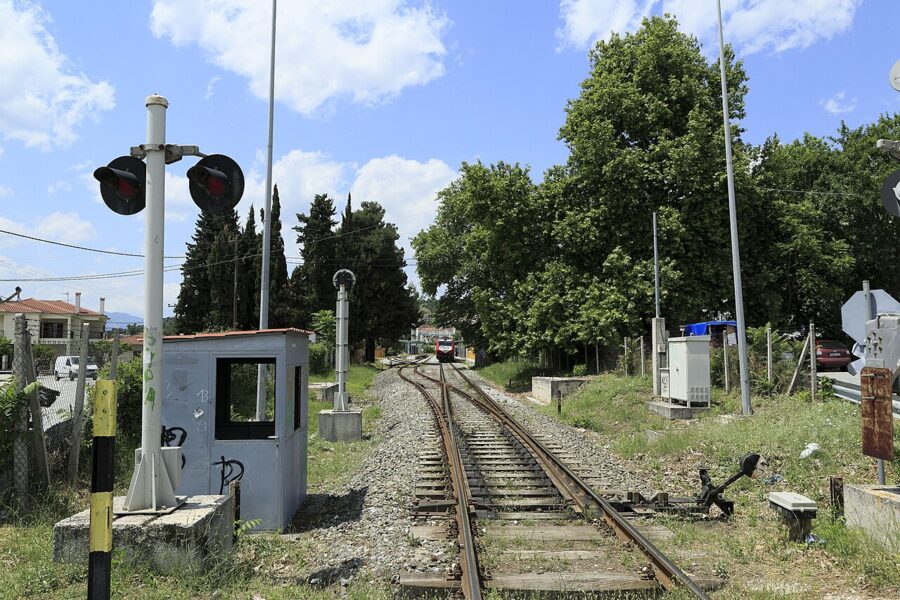
On that timetable the connecting buses leave Palaiofarsalos at 10:30 a.m. and 9:15 p.m., reaching Kalambaka two hours later by way of Karditsa and Trikala. Going back, they leave Kalambaka at 5:45 a.m. and 4:50 p.m. With two connections a day, check the timetable the week you travel.
By bus
KTEL buses run from Athens’ Liosion terminal to Trikala, where local buses cover the last stretch to Kalambaka. The operator’s online timetable is often out of date, so confirm times at the bus station.
From Kalambaka a local bus climbs past Kastraki to the monasteries a few times a day. Its timetable is posted at the station, and with so few departures you will end up walking between monasteries anyway.
By car
The road around the rocks is well signposted, with parking areas and lay-bys near every monastery. They fill by late morning in summer, another argument for the first opening hour. Taxis at Kalambaka will do a circuit of the monasteries; agree the price first.
Kalambaka and Kastraki
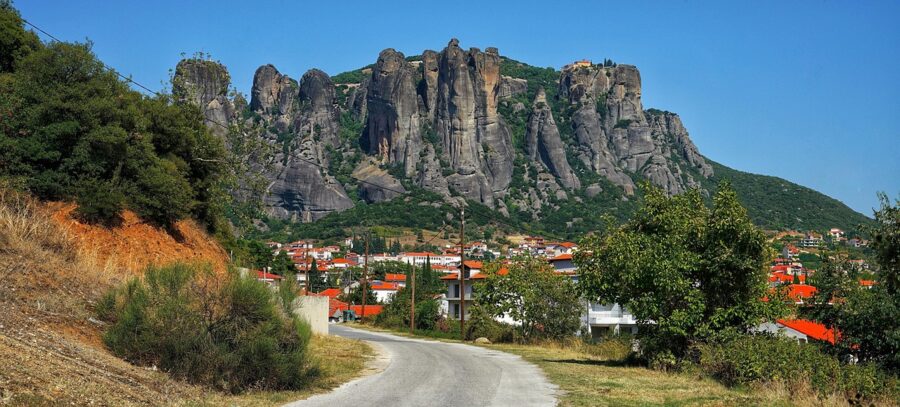
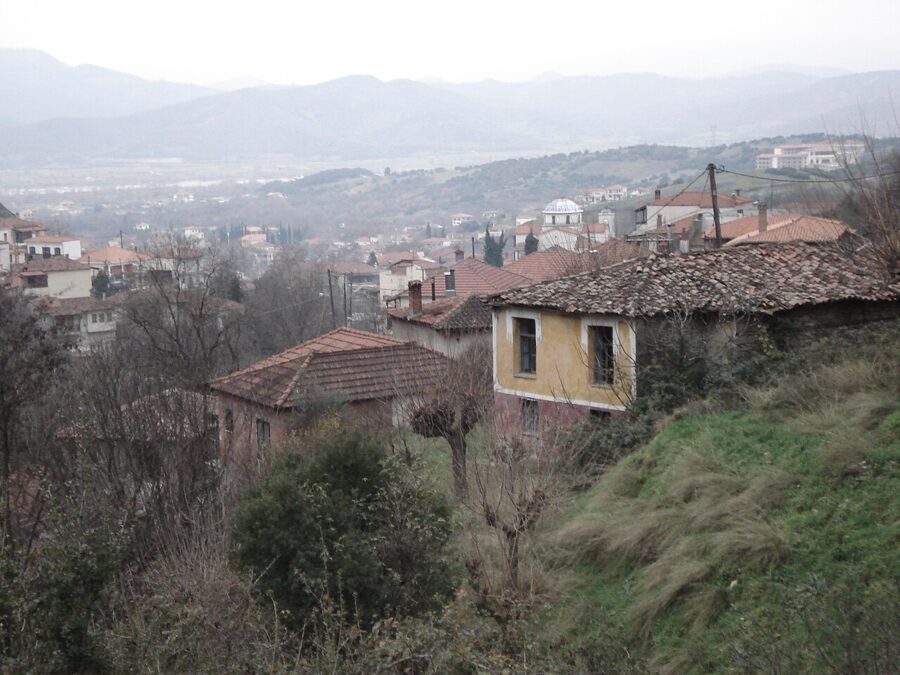
You will sleep in one of two places. Kalambaka is the town: the station, the bus terminal, shops and the widest choice of hotels, with the rocks standing over its northern streets. Kastraki is the village a couple of kilometers up the road, built right against the pillars, quieter and closer to the paths.
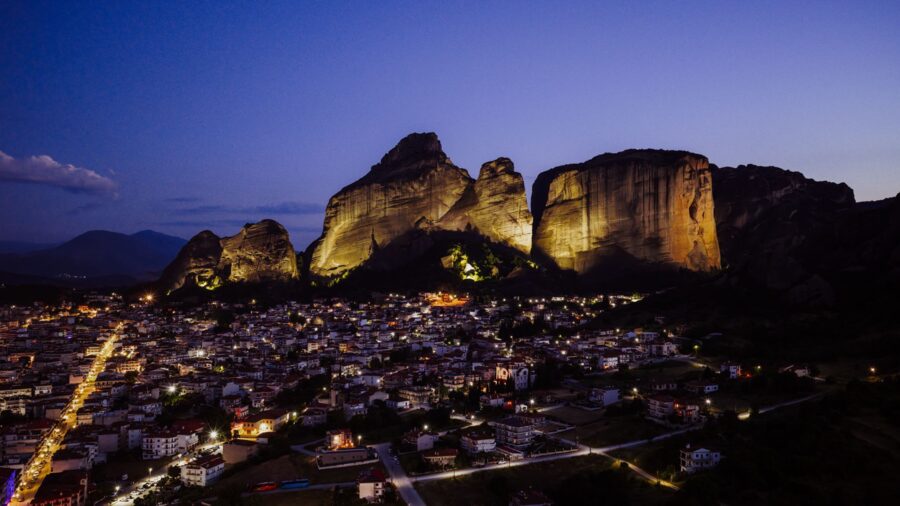
Choose Kalambaka if you arrive by public transport or want restaurants close by; choose Kastraki if you plan to hike or want to wake under the rock. There is nowhere to eat at the monasteries apart from snack sellers by the Great Meteoron parking area.
Paths, sunset and photography
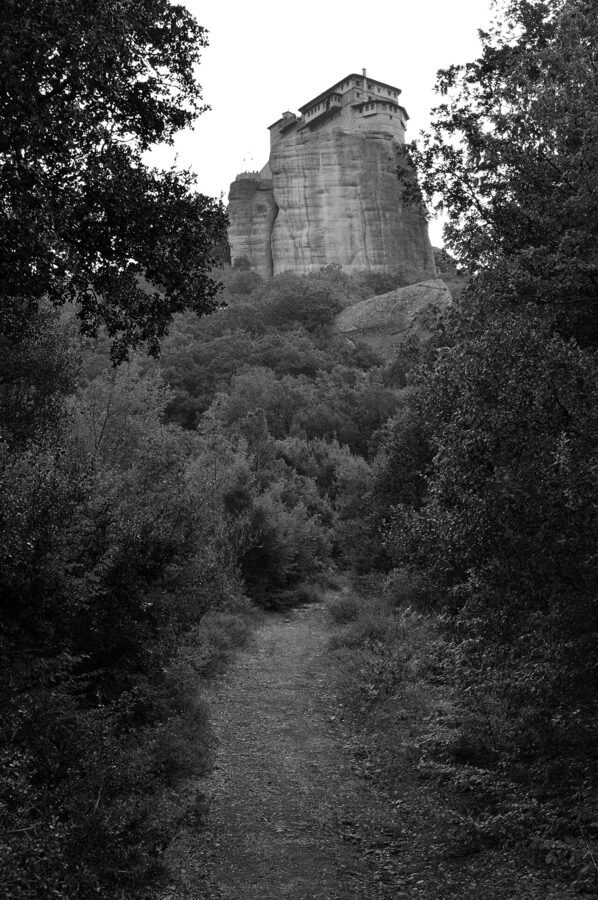
Before the road, the monks walked. Their footpaths, more than 20 kilometers of them, still link the villages to the monasteries, stone-paved in places and washed out in others. Many are unmarked, so carry an offline map that shows walking paths. The walks are free and take one to three hours.
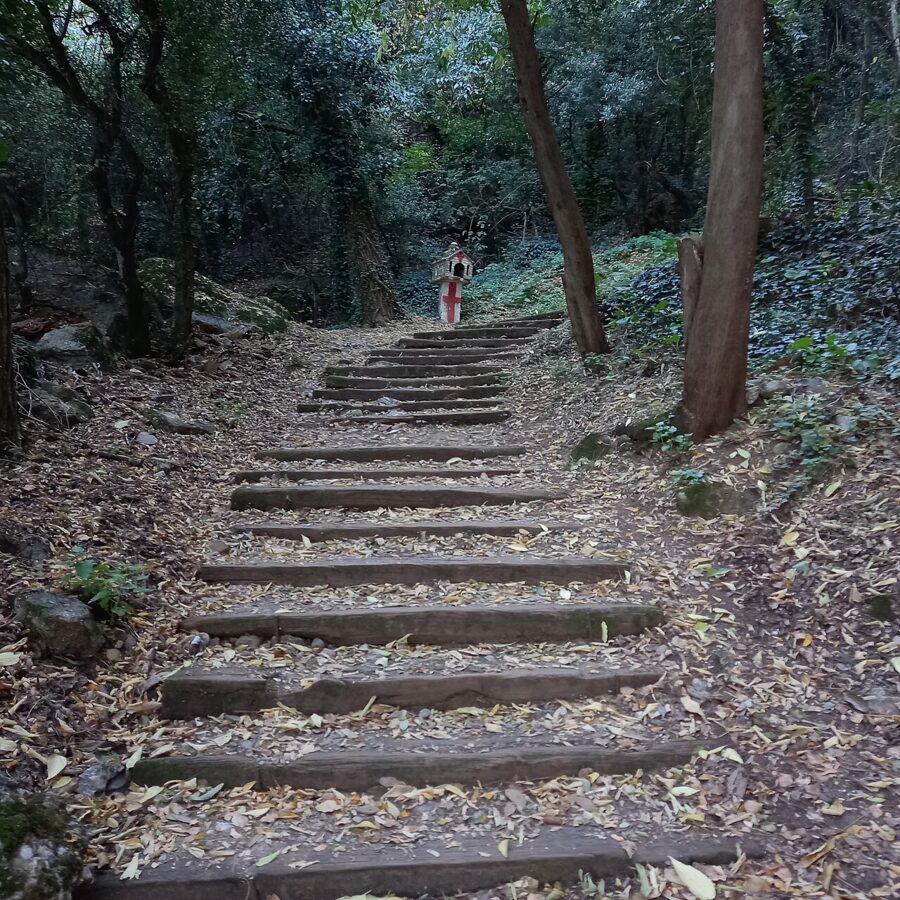
Two climbs are the classics. From Kastraki a path of about three miles (five kilometers) rises through oak, beech and pine to Great Meteoron and Varlaam, passing hermit caves. From Kalambaka a stone-paved path climbs steeply to Holy Trinity. Walk up in the cool of the morning and take the road down.
For sunset, the classic place is the Psaropetra viewpoint, a rock the road runs right up to, looking toward the Pindus. In summer it fills with dozens of cars and coaches, so go early or accept company. In spring, watch the cliffs as well as the sky: vultures and falcons live on the rocks.
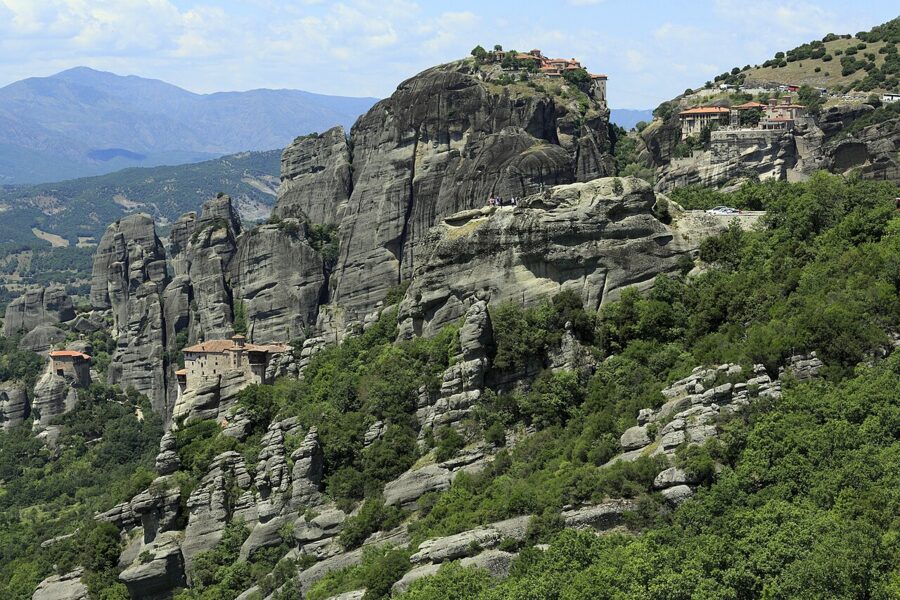
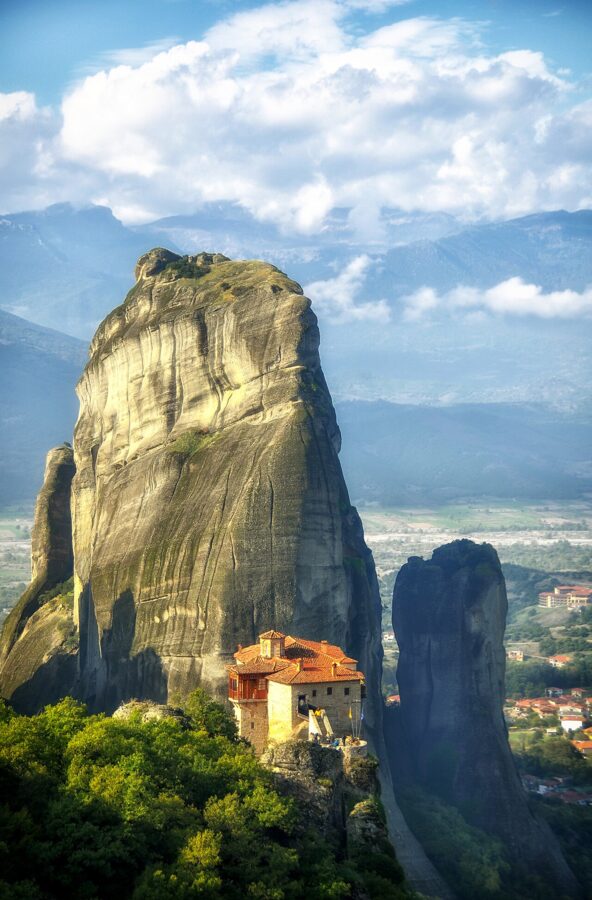
Outdoors and in the courtyards you can photograph freely; inside the churches you cannot. Ask before photographing monks or nuns, and do not stage pictures on the steps while people wait to pass. The best light comes early, when the rocks are lit from the east.
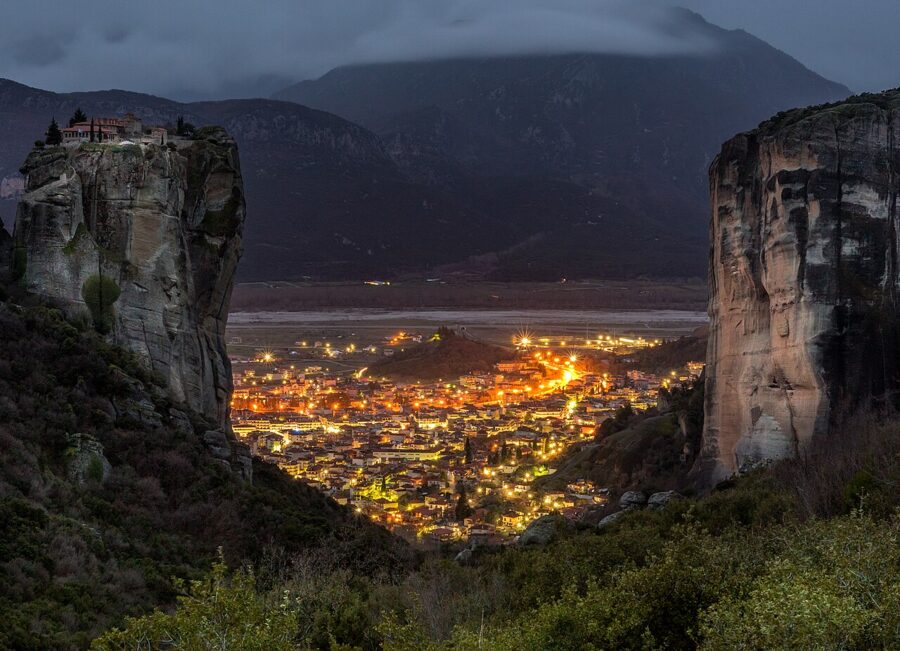
One day or two
With one day, see three monasteries well rather than six badly. Check the table for your day, be at the first gate when it opens, and pair neighbors: Great Meteoron and Varlaam in the morning, then Rousanou or St. Nicholas, and St. Stephen or Holy Trinity if your feet allow. Four is possible with a car; five or six means running.
With two days, spend the first morning on Great Meteoron and Varlaam, then St. Nicholas on the way down, and the evening at Psaropetra. On the second morning walk up from Kalambaka to Holy Trinity and St. Stephen, and add Rousanou in the afternoon. A night here also gives you the early light, which no day trip from Athens can.
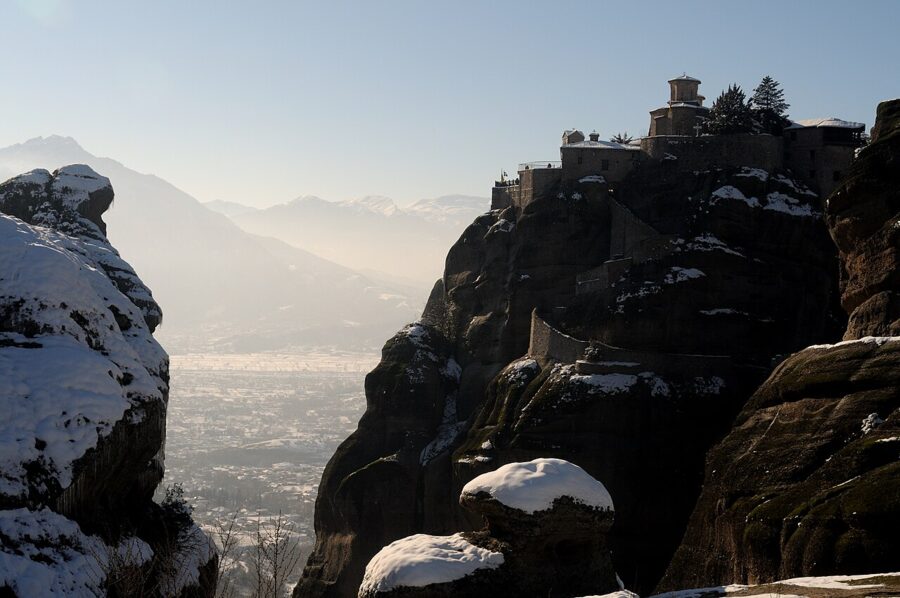
May and October are the kindest months, mild and clear, with fewer coaches. July and August are hot on the rock by late morning. Winter is quieter still, but remember what that Thursday looks like: three gates shut, and the other three closed by five.
So choose the day first. Come on a Saturday if you must see all six, on a weekday if you would rather see four in peace, and keep an hour at the end for the path down to Kastraki, where the hermits walked before any of the gates were built.