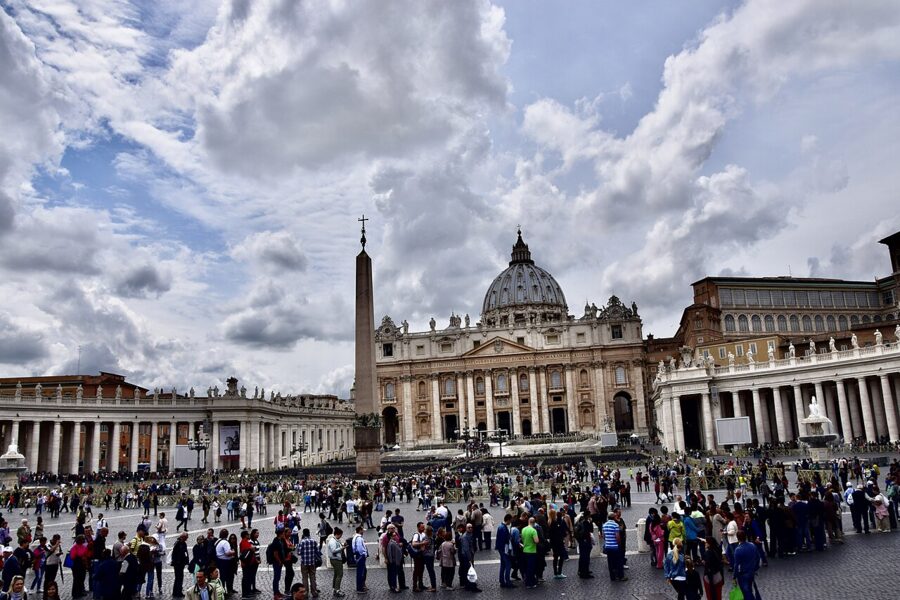
At 7 a.m. the doors of St. Peter’s Basilica open, and a priest is already at the Altar of St. Joseph for the first Mass of the day. The nave is close to empty. You can hear shoes on marble from fifty meters away, and the light comes in low and gray through the windows of the drum. By ten the same floor holds thousands of people, most of them looking up.
That early hour is the best argument I know for treating the Vatican as what it was built to be: a church over a grave, with a pope living next door. The museums, the dome and the crowds come after. Everything below is current as of November 2026, after the Jubilee year ended and the basilica changed how it lets people in.
Contents11 parts
- The Vatican in one paragraph
- Getting into St. Peter's Basilica
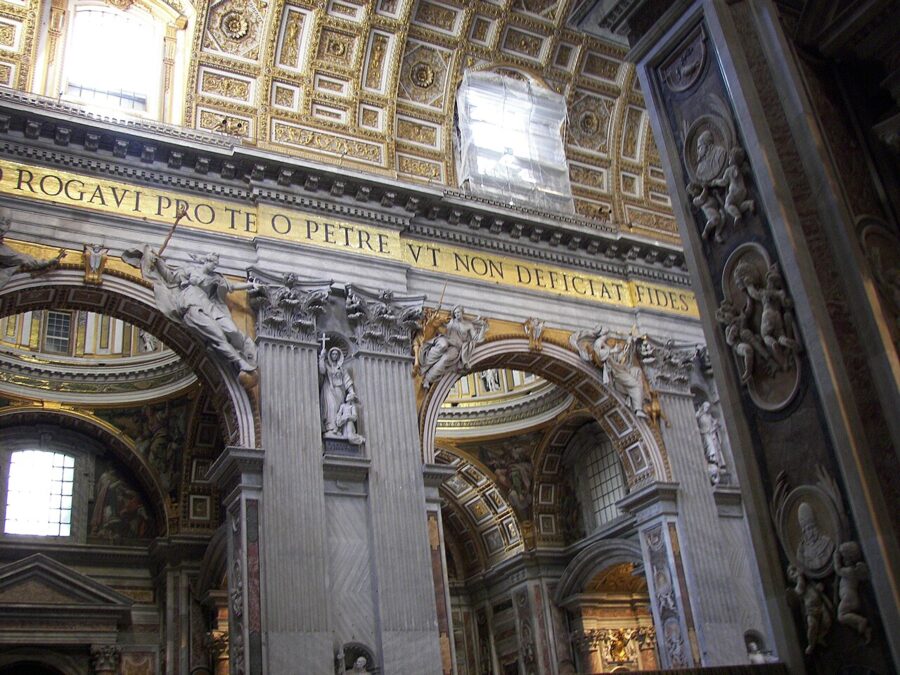
- Inside the basilica: what to see
- Mass, confession and adoration
- The dome: fee, steps and the view
- The Vatican Grottoes and the papal tombs
- The Vatican Museums and the Sistine Chapel
- The Scavi: the necropolis under the basilica
- Seeing the Pope
- St. Peter's Square
- A half-day and a full-day plan
The Vatican in one paragraph
Vatican City is the smallest state in the world, about 44 hectares inside Rome, recognized by the Lateran Pacts of 1929. Its reason for existing is far older. Catholics believe the apostle Peter was crucified near here under Nero and buried on the Vatican hill, and that every pope since is his successor as Bishop of Rome. Constantine built the first basilica over that grave, and the church you enter today replaced it between 1506 and 1626: a papal basilica and a parish, though not the Pope’s cathedral, which is St. John Lateran.
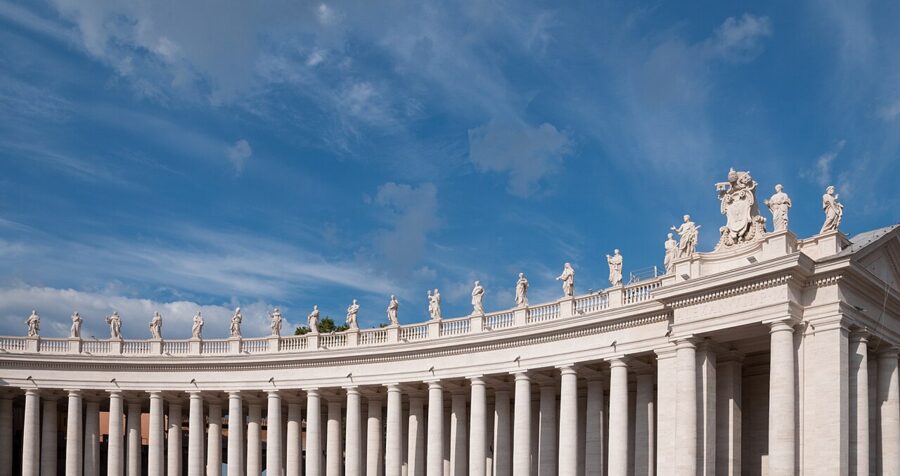
For centuries Peter’s grave and James’s at Santiago drew Western Christians on foot; the second is still the end of the Camino de Santiago. Rome has no single route like that, but the instinct is the same. People come to stand near a grave.
Getting into St. Peter’s Basilica
Free entry, or a €7 timed slot
Entry to the basilica is free and needs no booking. What changed is that the Fabbrica di San Pietro, the office that runs the building, now sells a timed entry with a digital audio guide for €7 (about US$8) as of November 2026. You get QR codes by email and walk a separate “online booking entrance” route from Via di Porta Angelica, on the right of the colonnade. You still pass security; you skip the general line.
I think the €7 is worth it from about 9 a.m. onward between spring and early autumn, and in any week with a big feast. Before nine, or on a gray January weekday, I would just walk in. The ticket is non-refundable and tied to its slot.
The security line, and when it is shortest
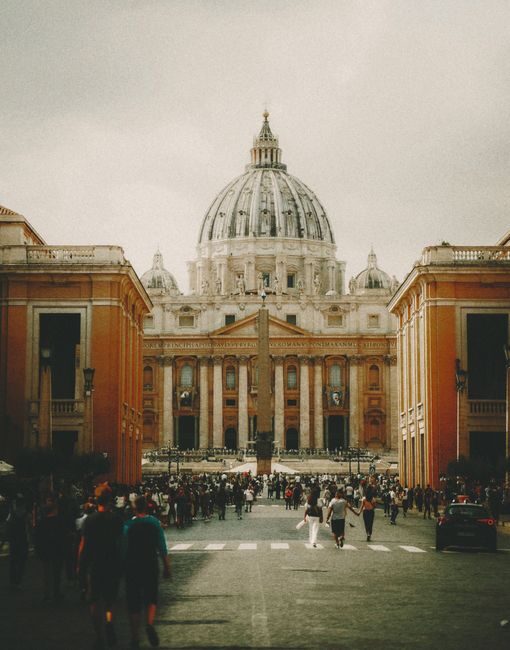
Everyone passes checkpoints run by the Italian State Police in the right-hand hemicycle of the square. The basilica names Wednesday, the usual day of the papal audience, and Sunday, the day of the noon Angelus, as its busiest. I would avoid the middle of the day between Easter and October.
The line is shortest at opening. As of November 2026 the basilica’s opening hours are 7 a.m. to 7 p.m. through March 28, 2027; summer 2026 hours ran to 8 p.m. Go at 7, or after about 5 p.m. There is no cloakroom, so leave large bags at your hotel.
The dress code
The basilica’s visitor rules are plain: men in long trousers, women in skirts below the knee or trousers, shoulders covered for everyone. The same applies on the dome and in the necropolis. The Vatican Museums also bar sleeveless and low-cut tops, shorts above the knee, miniskirts and hats. A light scarf in a day bag solves most summer problems.
The Prayer Route, for those who come to pray
If you have come to pray or attend Mass rather than to sightsee, use the “Prayer Route”. It starts on Via di Porta Angelica, is marked with yellow signs and is staffed 12 hours a day. Staff lead worshippers in through the Vatican Grottoes on a path reserved for prayer and celebrations. To sightsee afterward, you re-enter by the standard entrance.
Inside the basilica: what to see
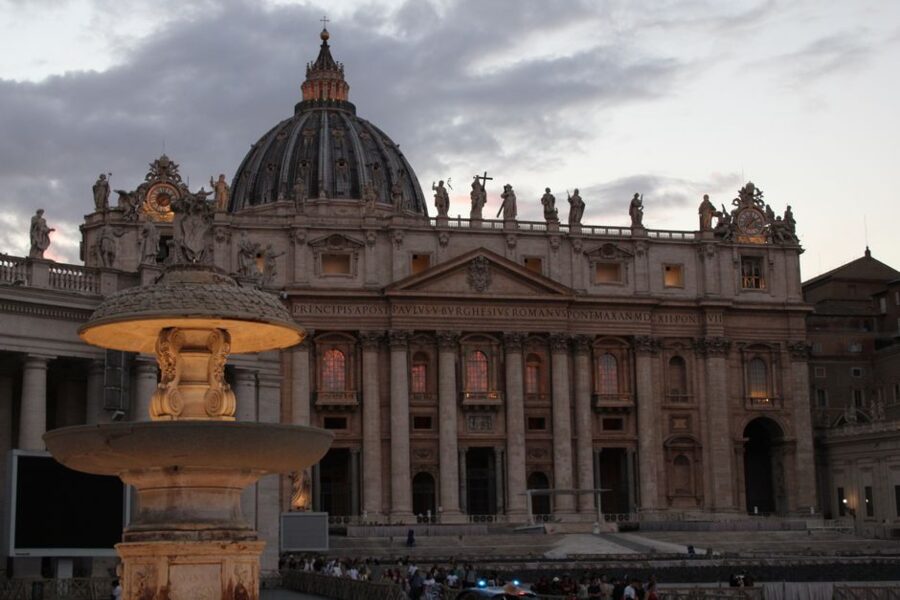
Allow one to two hours. Photography is allowed without flash, as long as you respect Masses and people at prayer. The analog audio guide, rented at the Portico Desk, comes in 11 languages.
Michelangelo’s Pietà
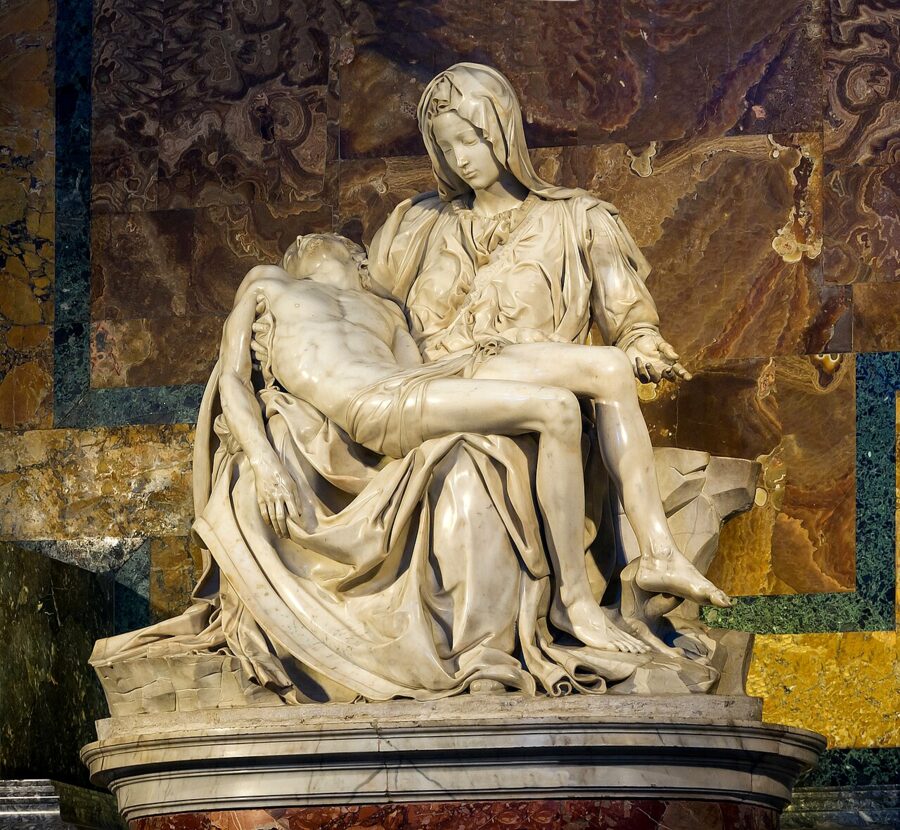
The first chapel on the right holds the Pietà, carved from one block of Carrara marble in 1498 and 1499 for a French cardinal’s tomb. The basilica gives Michelangelo’s age as 23; other sources say 24. It is the only work he signed. Mary looks younger than her son, which Catholic tradition reads as a sign of her sinlessness, and her open left hand invites whoever stands before her to look.
Most people photograph it and move on. Stay a few minutes; the crowd at the rail turns over quickly.
The bronze St. Peter
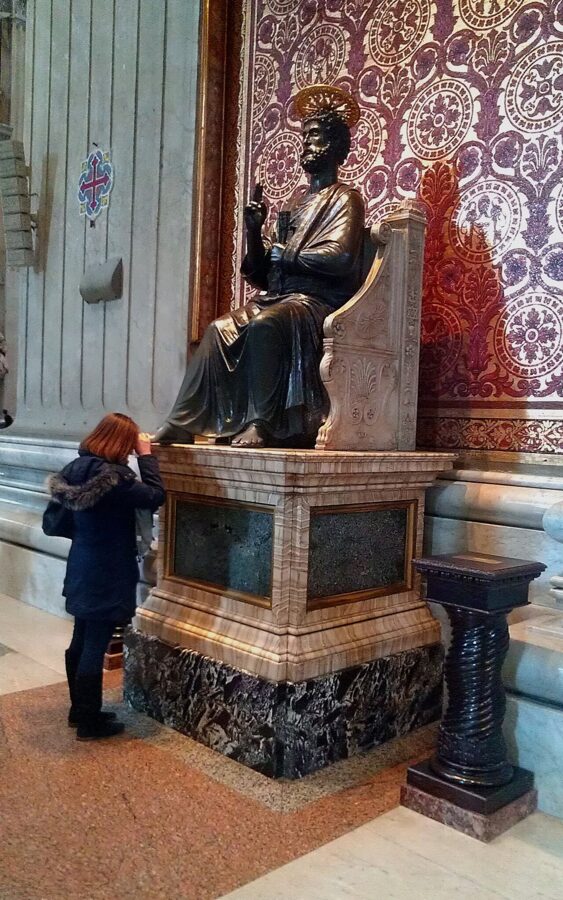
Near the crossing on the right sits the bronze St. Peter Enthroned, usually attributed to the 13th-century sculptor Arnolfo di Cambio. He holds the keys, the sign of the authority Catholics believe Christ gave him to “bind and loose”. Pilgrims touch or kiss the right foot as they pass, a custom going back to the Middle Ages.
The Baldacchino and the Confessio
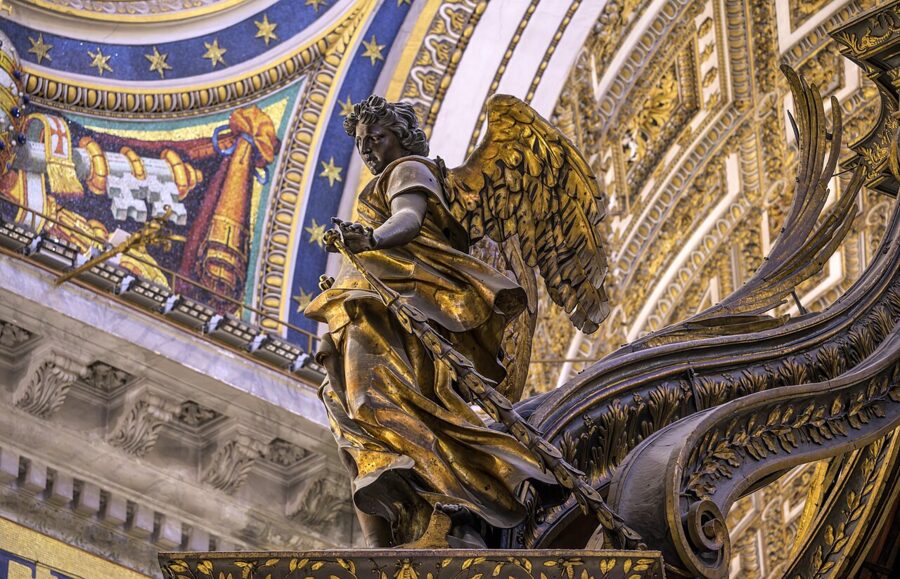
Under the dome, Bernini’s bronze canopy, made for Urban VIII, stands over the papal altar. In front of the altar, steps lead down to the Confessio and the Niche of the Pallia, the point closest to what the Church venerates as Peter’s tomb. The basilica’s history of the tomb traces altars stacked on one spot: Gregory the Great’s around 600, Callistus II’s in 1123, Clement VIII’s in 1594, and Bernini’s canopy over the last.
The Cathedra of St. Peter
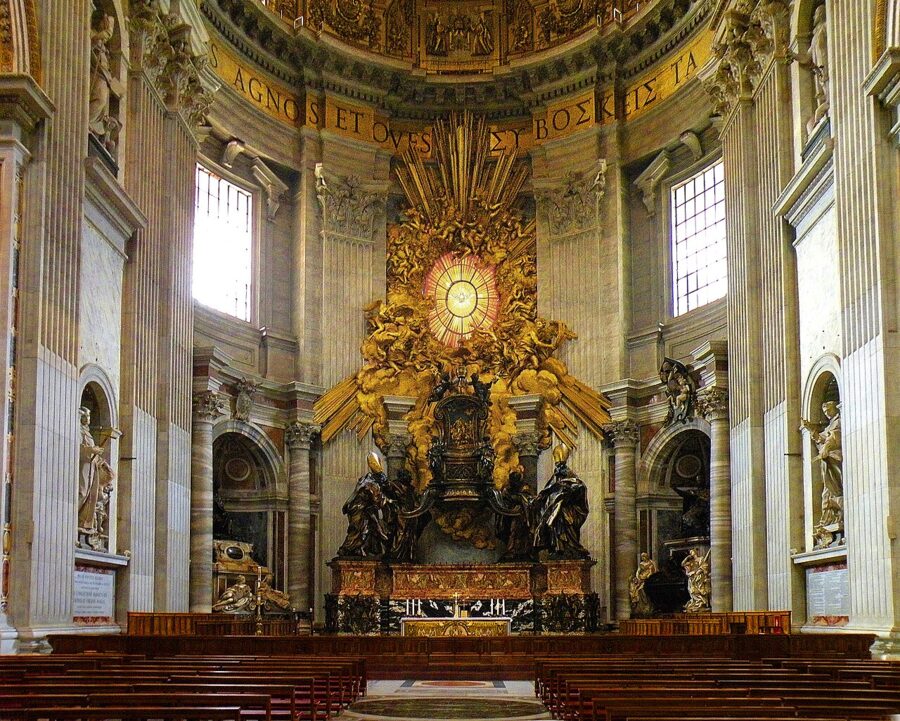
In the apse, the Cathedra is Bernini’s gilded bronze casing for a wooden chair long venerated as Peter’s, with ivory friezes from the ninth century. Ambrose, Augustine, Athanasius and John Chrysostom, four Doctors of the Church, hold it up. Above glows the alabaster window of the Holy Spirit. On the feast of the Chair of St. Peter, February 22, the monument is lit with more than a hundred candles.
St. John Paul II, and the Holy Door after the Jubilee
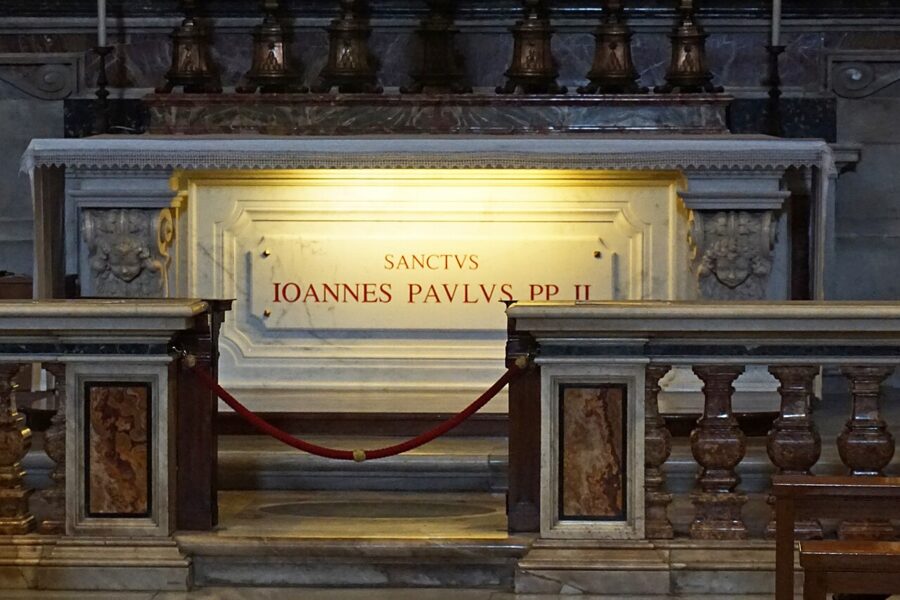
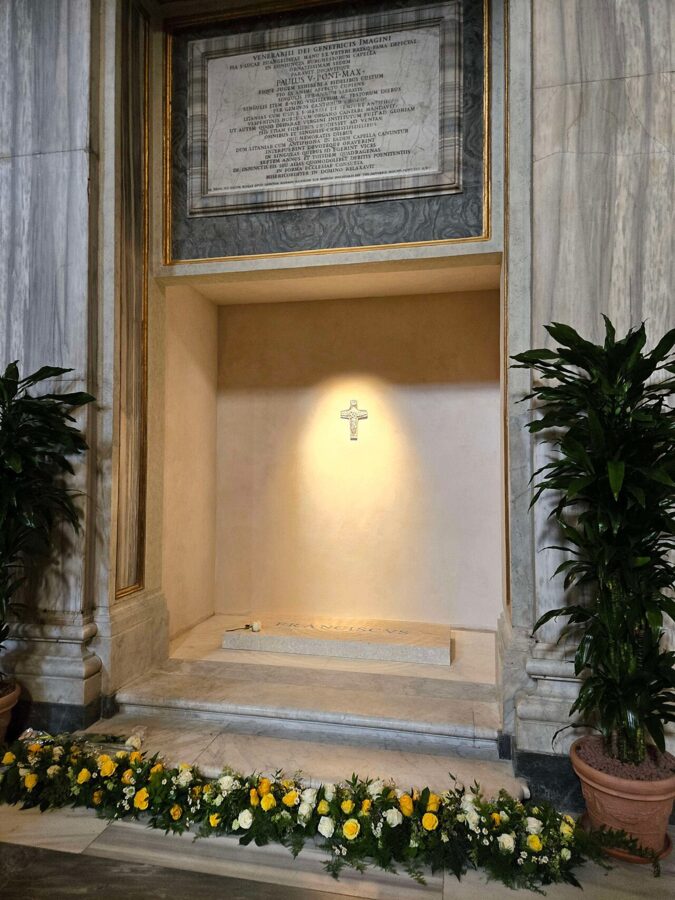
The Chapel of St. Sebastian holds the tomb of St. John Paul II. Not every recent pope is here: Pope Francis, who died in April 2025, was buried at St. Mary Major across Rome.
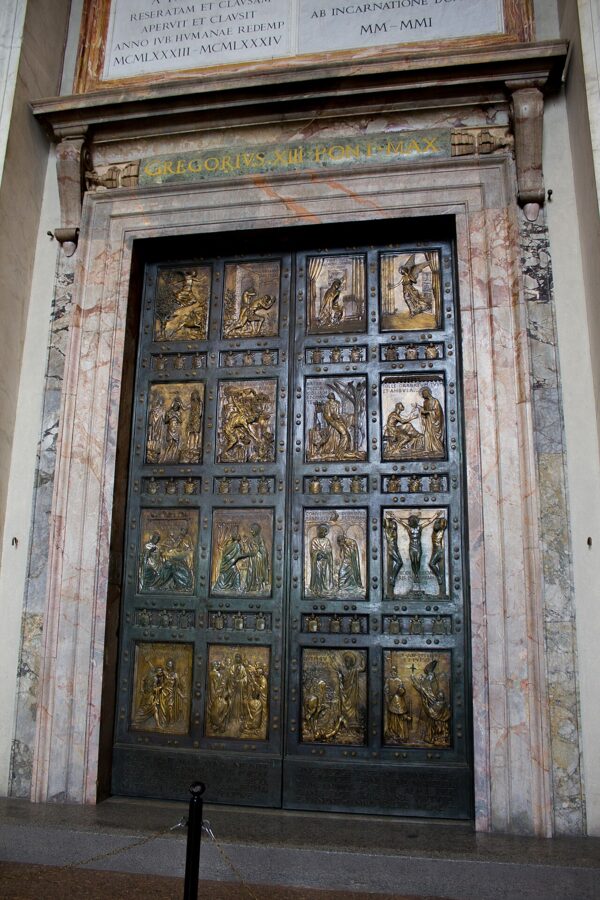
The Holy Door, the northernmost door of the portico, is walled up again. Pope Leo XIV closed it on January 6, 2026, ending the Jubilee of Hope, which Vatican News reported drew more than 33 million pilgrims; the masonry seal went in ten days later. Ordinary Jubilees come every 25 years, so the next is due in 2050.
Mass, confession and adoration
Mass here needs no ticket unless the Pope is celebrating. The official Mass schedule as of November 2026:
| Weekdays | Sundays and holy days |
|---|---|
| 7 a.m. and 7:30 a.m., Altar of St. Joseph | 7 a.m. and 8 a.m., Altar of St. Joseph |
| 8:30 a.m., Chapel of the Blessed Sacrament | 9 a.m., Altar of the Cathedra |
| 9 a.m. and 10 a.m., Altar of St. Joseph | 9:45 a.m., Lauds of the Chapter, Choir Chapel |
| 11 a.m. and noon, Altar of the Cathedra | 10:30 a.m., Chapter Mass, Altar of the Cathedra |
| 5 p.m. and 6 p.m., Altar of the Cathedra | 12:30 p.m., 4 p.m., 5 p.m. and 6 p.m., Altar of the Cathedra; 5 p.m. Vespers, Choir Chapel |
Confessions are heard Monday to Saturday from 7 a.m. to 12:30 p.m. and 4 to 7 p.m., and on Sundays from 7 a.m. to 1 p.m. and 4 to 7 p.m. After the 8:30 a.m. weekday Mass, the Blessed Sacrament is exposed in its chapel for adoration until Benediction at the end of the day. The chapel is kept for prayer, so step in only if you mean to pray.
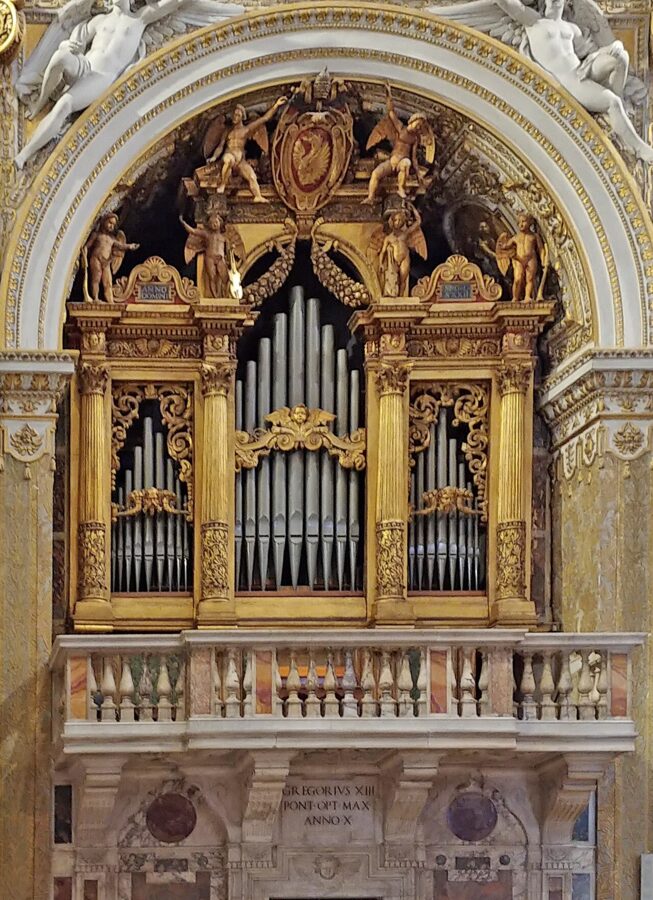
If you have time for one service, make it Sunday Vespers at 5 p.m. in the Choir Chapel, prayed by the canons of the basilica’s Chapter. Few people on a tour know it exists.
The dome: fee, steps and the view
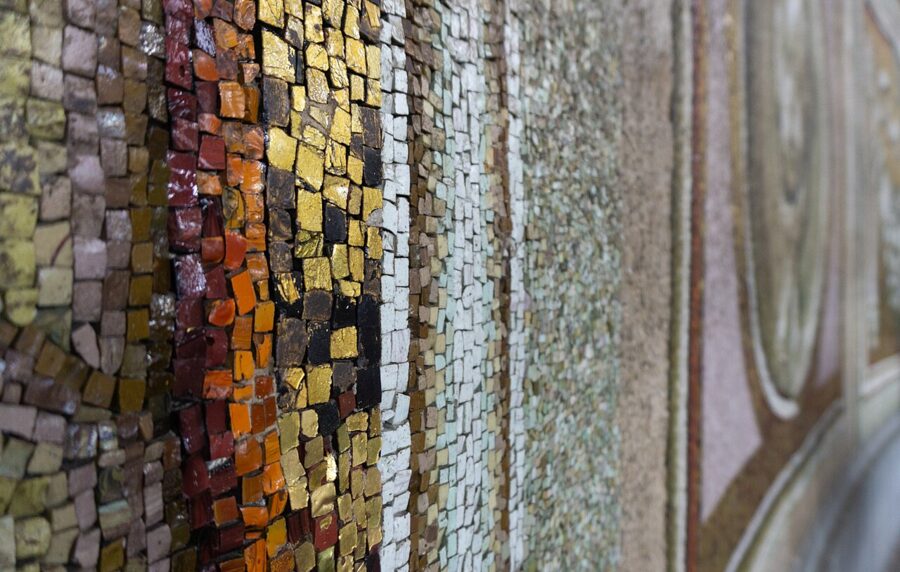
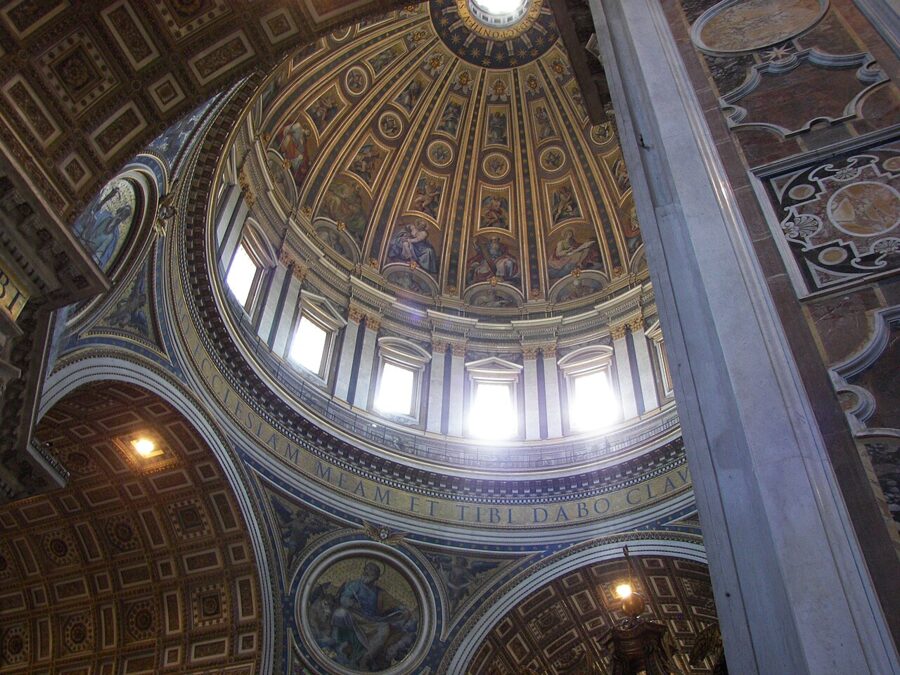
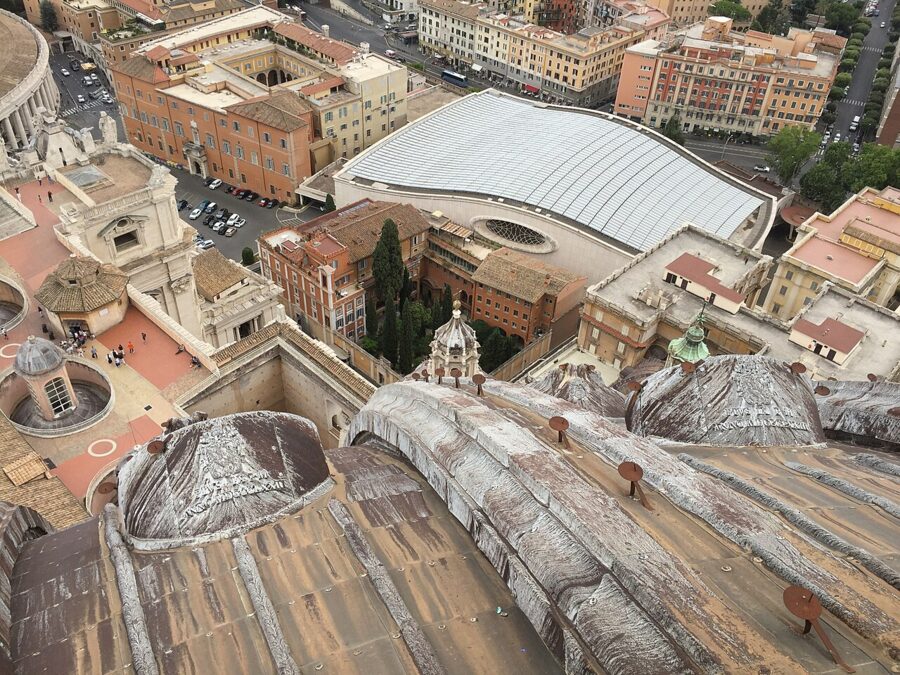
Michelangelo built the dome up to its drum. Giacomo della Porta and Domenico Fontana raised the rest in 22 months, from 1588 to 1590, with 800 laborers. The cross on top stands more than 133 meters up, and about 3,000 square meters of mosaic line the inside.
There are 551 steps to the top. A lift to the terrace level leaves 320, and those are the hard part, with narrow spaces and steep inclines between the dome’s two shells. The basilica advises against the climb for anyone with heart or breathing problems, vertigo, claustrophobia or limited mobility, and for pregnant women.
As of November 2026, dome tickets bought online cost €17 (about US$20) with stairs and €22 (about US$26) with the lift, both including timed basilica entry and the audio guide. Your email assigns the Sobieski route (basilica first) or the Lambertini route (dome first). Tickets are also sold on site while slots last. Winter hours, since October 26, are 7:30 a.m. to 5 p.m.; summer 2026 hours were 7 a.m. to 6 p.m.
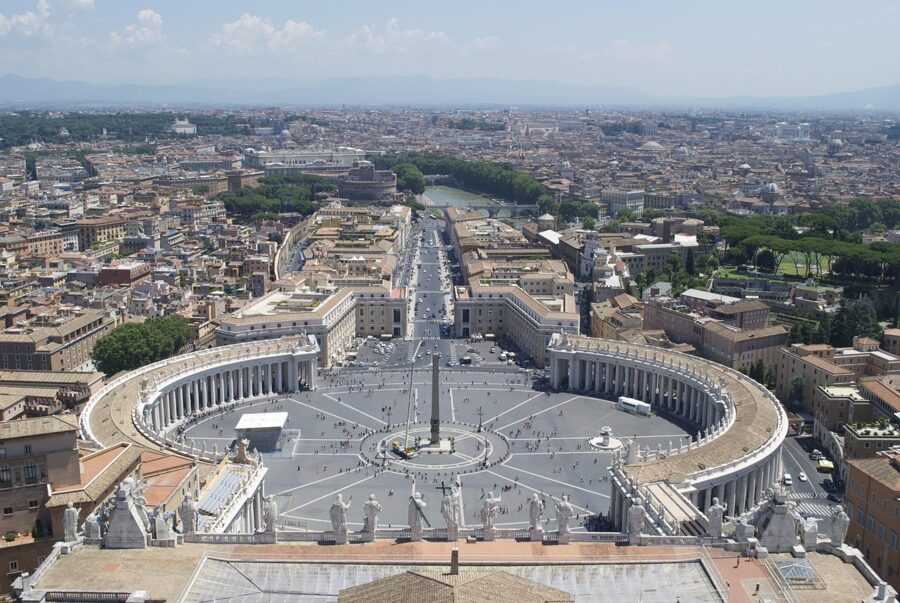
I would climb it first thing, before the groups reach the stairs. Only small bags are allowed. Plan on about an hour.
The Vatican Grottoes and the papal tombs
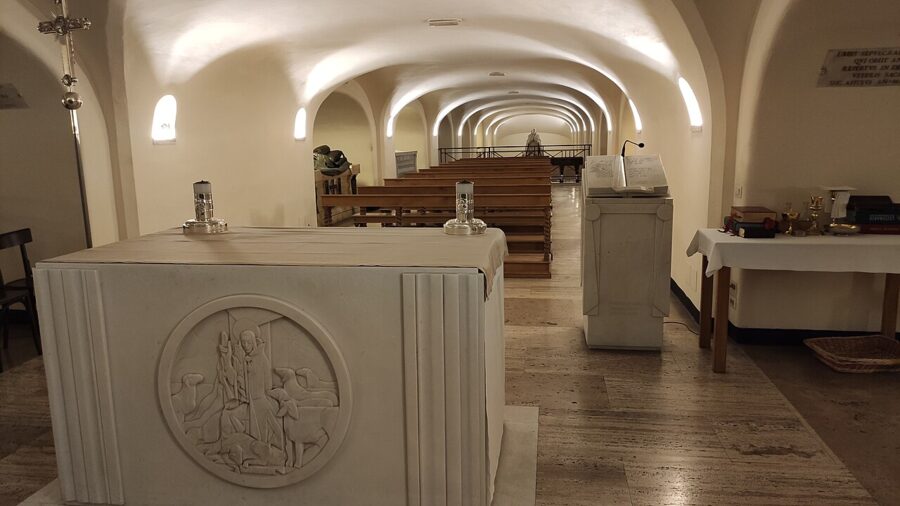
Below the floor lie the Vatican Grottoes, vaults built in 1590 and 1591 to carry the Renaissance floor. They became a memorial to the old basilica, then a burial place of popes; the basilica counts about 91 popes buried in the church and grottoes together. Entry is free.
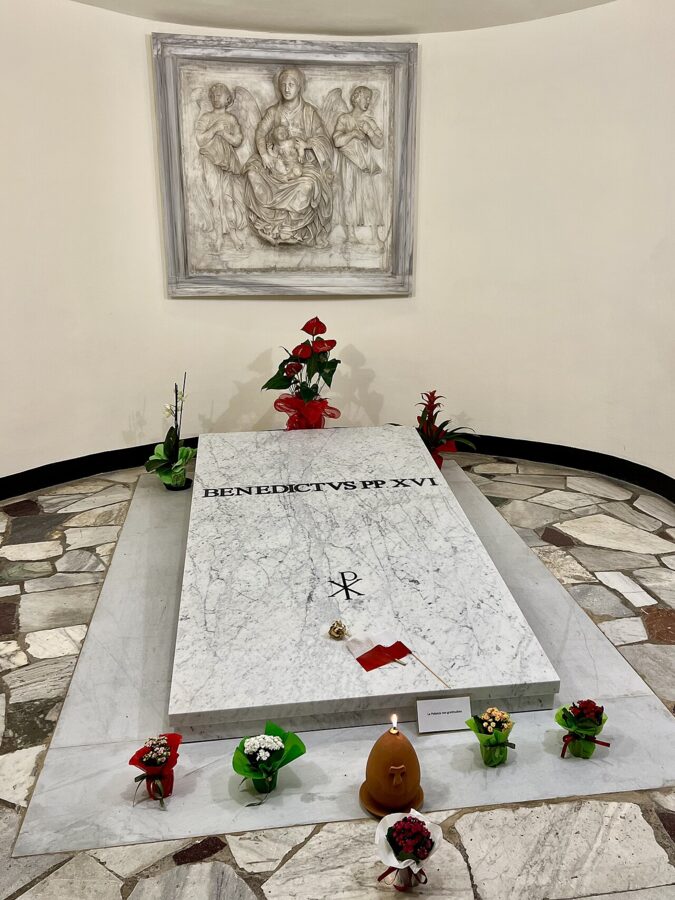
Here lie Pius XII, who ordered the excavations that found the necropolis, and Benedict XVI, buried in January 2023 in the tomb John Paul II occupied before his body was moved upstairs. National chapels for Ireland, Poland, Lithuania and Mexico ring the area near Peter’s tomb. People pray here; keep your voice low.
The Vatican Museums and the Sistine Chapel
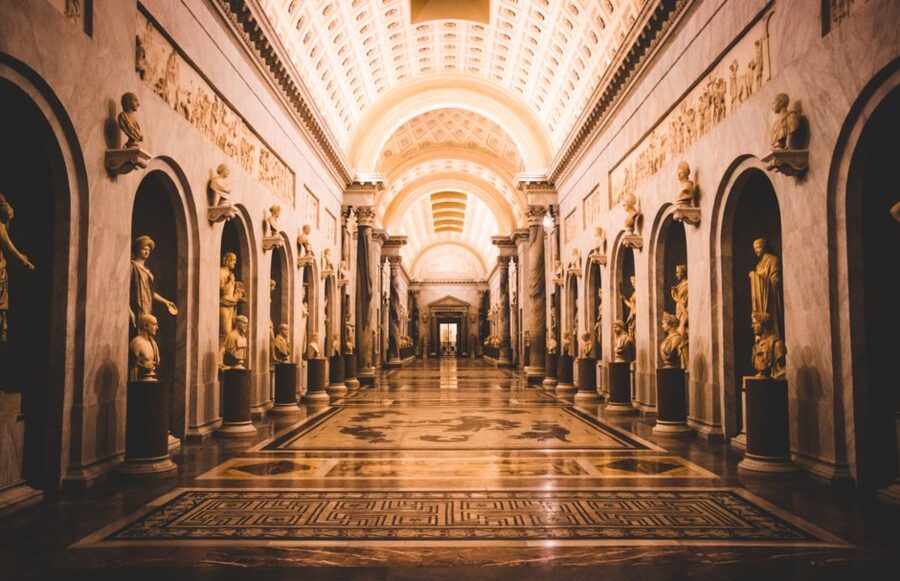
The museums are a separate visit, with their own entrance on the far side of the Vatican walls from the square. The Sistine Chapel is inside. Getting there is easiest on metro line A to Ottaviano or Cipro; bus 49 stops in front of the museums.
Tickets and prices as of 2026
Buy only from the museums’ own ticket site, which their prices page names as tickets.museivaticani.va; look-alike domains charge far more. Prices as of November 2026:
| Ticket | At the door | Booked online |
|---|---|---|
| Full entry | €20 (about US$23) | €20 + €5 booking fee |
| Reduced and students | €10 (about US$12) | €10 + €5 |
| Pilgrimage groups, with a parish letter | €10 | €10 + €5 |
| Seminaries, religious colleges, schools | €5 | €5 + €2 |
| Children under 7 | Free | Free entry |
| Everyone, last Sunday of the month | Free | Not bookable |
Pay the €5: the door line on a spring morning can eat the time you came for. Tickets are valid only on their day and cannot be refunded. The pilgrimage rate needs a letter on parish or diocesan headed paper, stamped, signed by the priest or superior and listing every name.
The official app, “Musei Vaticani Official”, is an audio guide with more than 400 stops in twelve languages, including Korean, for €8 (about US$9). Download it before you arrive: there is no Wi-Fi inside.
Hours, early entry and the Friday-night question
As of November 2026 the official timetable is Monday to Saturday, 8 a.m. to 8 p.m., last entry 6 p.m. The museums close on ordinary Sundays and on feasts including January 1 and 6, June 29, August 14 and 15, November 1, and December 8, 25 and 26. The Sistine Chapel is also listed as closed from 6 to 8 p.m. on December 4 and 18.
Older guides describe Friday-night openings. The current timetable lists no separate Friday session; the 8 p.m. close applies every opening day. The museums’ own pages list no early-entry product, though tour companies sell pre-opening visits, so check the official site before paying a third party. The 8 a.m. slot is early enough for most people.
The last Sunday of the month
On the last Sunday of each month entry is free from 9 a.m. to 2 p.m., last entry 12:30 p.m., unless it falls on Easter, June 29, or December 25, 26 or 31. It cannot be booked, so expect a long line and full galleries. A paid weekday is a far better visit.
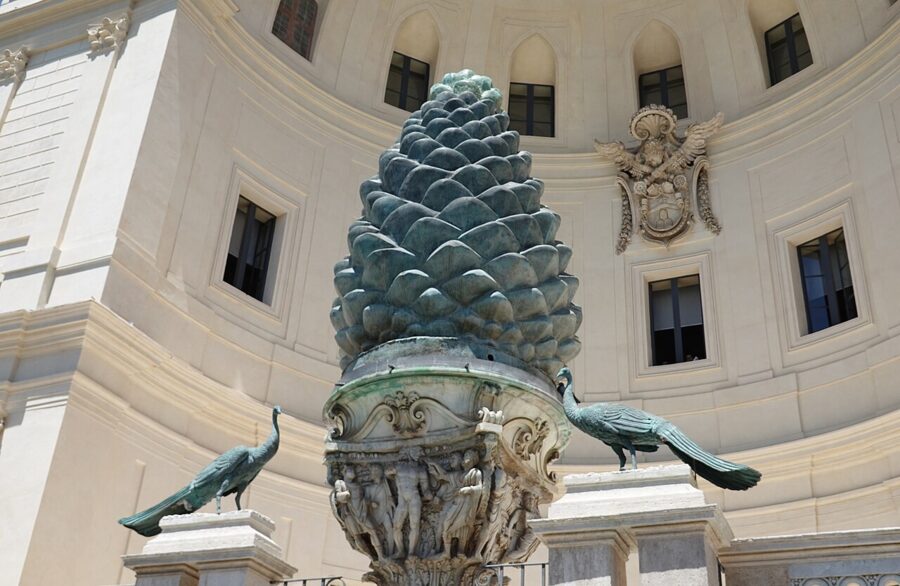
On the way to the chapel
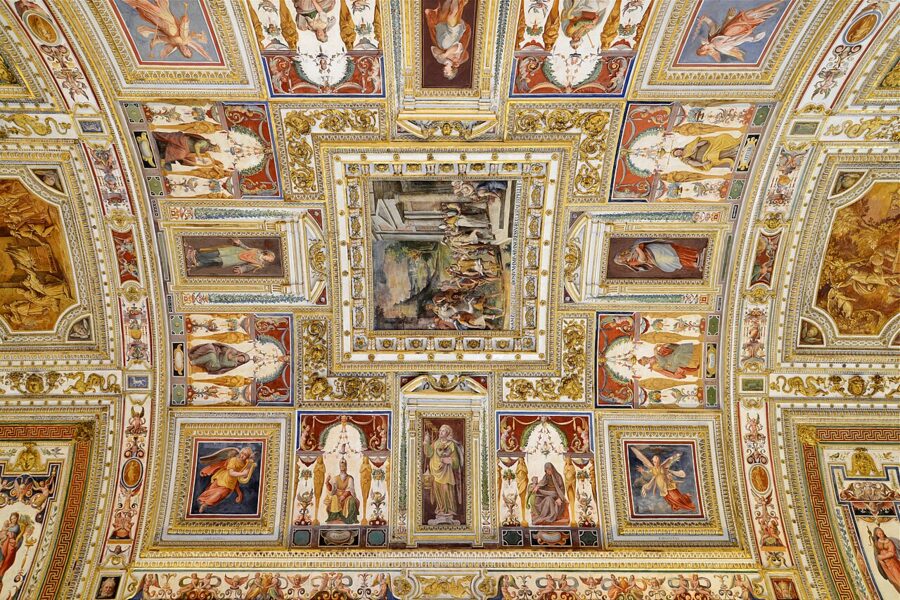
The usual route runs past classical sculpture in the Pio Clementino, along the Gallery of Maps, through the Raphael Rooms and down into the Sistine Chapel. The cloakroom is free and takes rucksacks and large umbrellas. Collect them before you leave, because you cannot carry them on to the basilica.
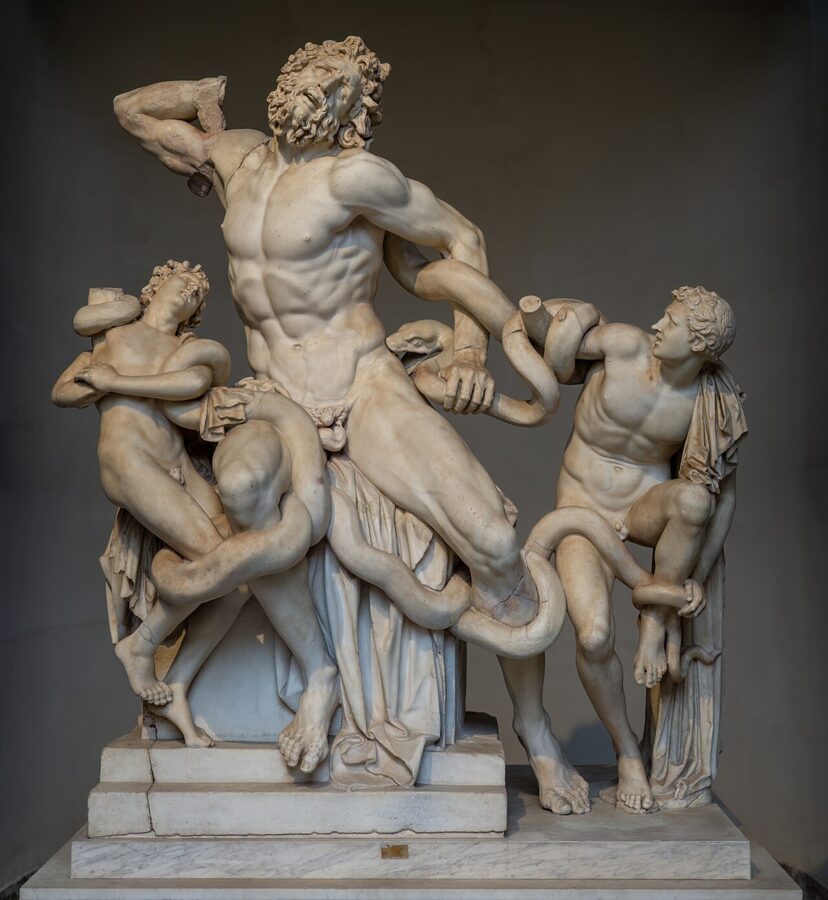
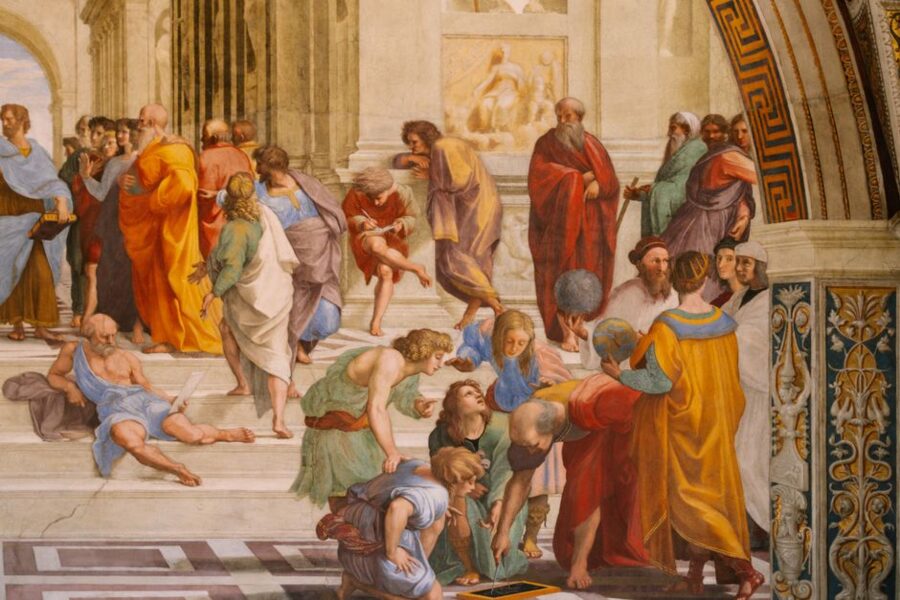
The Sistine Chapel: silence and no photographs
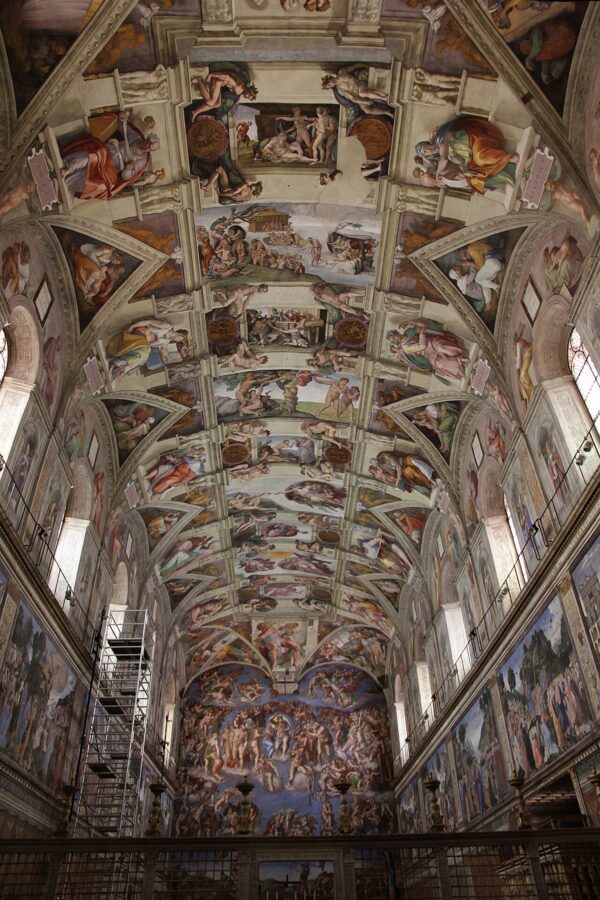
The museums’ visitor rules are firm about the chapel. Out of respect for a consecrated place, visitors keep absolute silence. No photographs or video of any kind are allowed, guards may make you delete what you shot, and phones are not to be used at all. Elsewhere in the museums personal photos are fine, without flash or selfie sticks.
With hundreds of people in the room, the silence comes in waves: a guard calls for it, the room hushes, the murmur creeps back. Keep your own part of it.
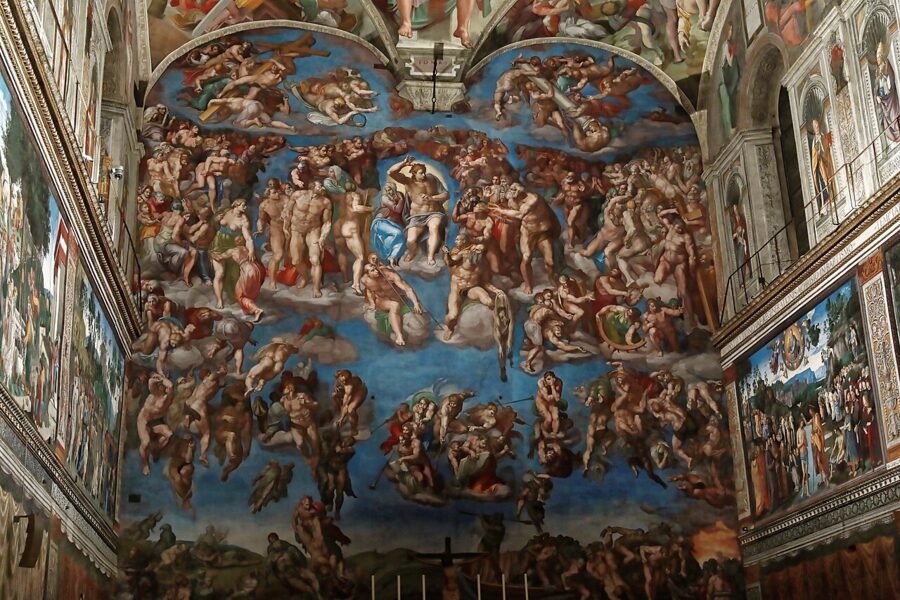
The altar wall looks different this year. Scaffolding went up in front of the Last Judgement on February 1, 2026 for an extraordinary maintenance that removed a whitish film from the paint, while the chapel stayed open. The work is finished and the colors are vivid again. Michelangelo unveiled the fresco in autumn 1541, after almost five years on the scaffold.
The Scavi: the necropolis under the basilica
For anyone who comes to St. Peter’s for Peter, this is the visit that matters most. The Scavi, Italian for “excavations”, are the Vatican Necropolis: a Roman street of tombs three to eleven meters below the nave, uncovered in digs ordered by Pius XII between 1939 and 1949.
What you see
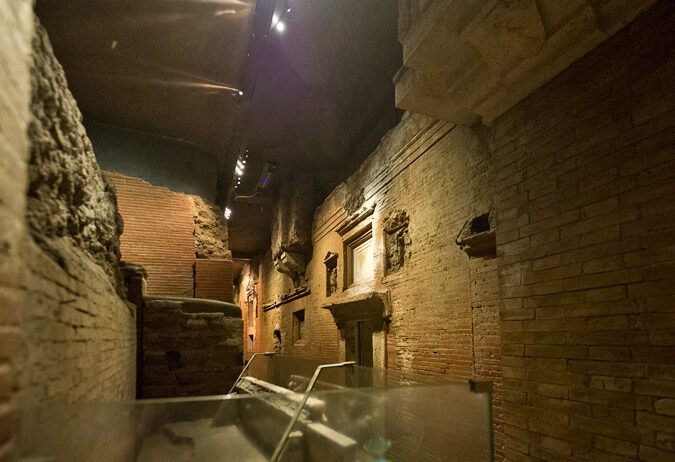
The guide leads you along an ancient earthen road past 22 tomb buildings that held around a thousand burials, many of them children. To level his floor, Constantine moved more than 40,000 cubic meters of earth and buried the tombs. That is why they survived.
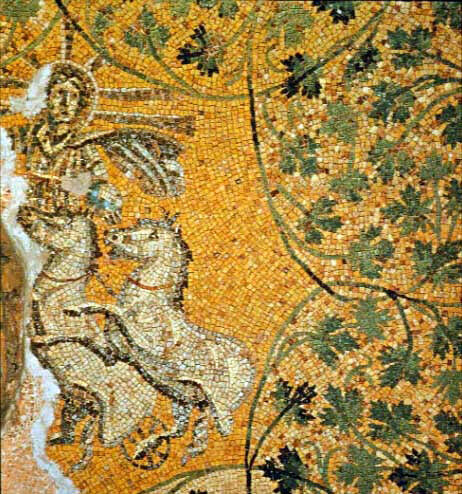
The tour ends near the tomb the Church identifies as Peter’s. At the end of the second century a priest named Gaius wrote that he could show the “trophies” of the apostles on the Vatican; that small shrine survives inside the later altars. On plaster nearby, excavators found Christian graffiti, including a fragment read as “Pétros enì”, Peter is here, or as “Peter in peace”. Catholics believe this is his grave, and the pilgrims who scratched the names of Christ and Peter here believed it before Constantine.
How to apply to the Excavations Office
Visits are run by the Excavations Office of the Fabbrica di San Pietro and booked only through its online request form. As of November 2026:
- Price: €20 (about US$23), or €14 (about US$16) for ages 10 to 17, guide included. Credit card only, through a payment link sent after confirmation. Non-refundable.
- Age and groups: no one under 10; about 12 people per language group, one hour, about 250 visitors a day.
- Days: Monday to Friday from 9 a.m., last visit 4:15 p.m.; Saturday mornings, last visit 12:15 or 12:30 p.m. (the office’s own pages differ). Closed Sundays and Vatican holidays.
The date you request is only a preference; the office assigns the slot by email, so check it before paying. No booking window is published. I would send the request as soon as your Rome dates are fixed.
On the day, report to the Excavations Office 10 minutes early, through the entrance on Via Paolo VI by the left-hand colonnade. No photographs, large bags or food; shoulders and knees covered. Steps and uneven ancient paving make it unsuitable for wheelchairs, and it is hard going for anyone with claustrophobia. Latecomers can lose the visit.
Seeing the Pope
The Wednesday General Audience
Most Wednesdays at 10 a.m. the Pope holds a General Audience in St. Peter’s Square or the Paul VI Hall: a catechesis, a teaching on the faith, closing with his blessing. Tickets are always free, as the Holy See’s audience page says. Anyone charging you is selling something else.
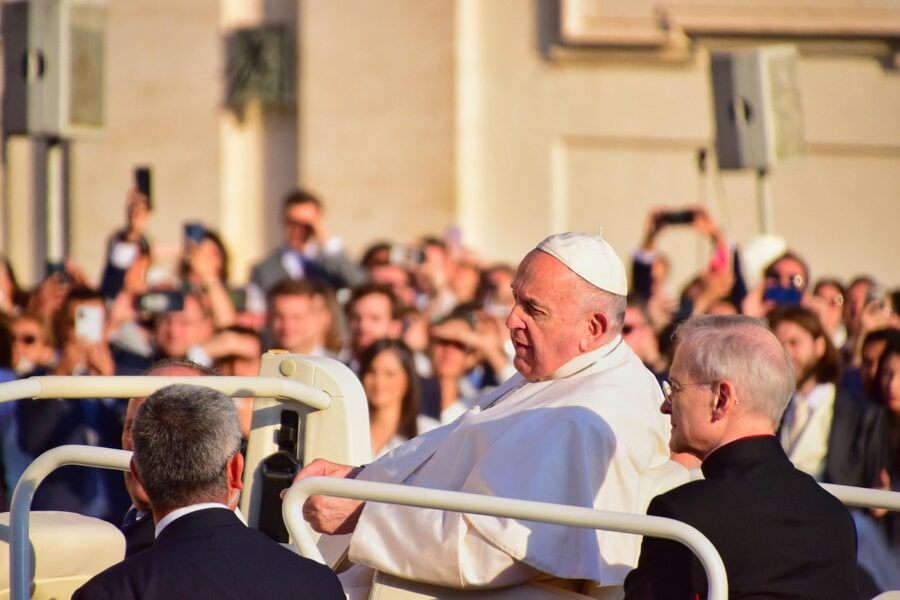
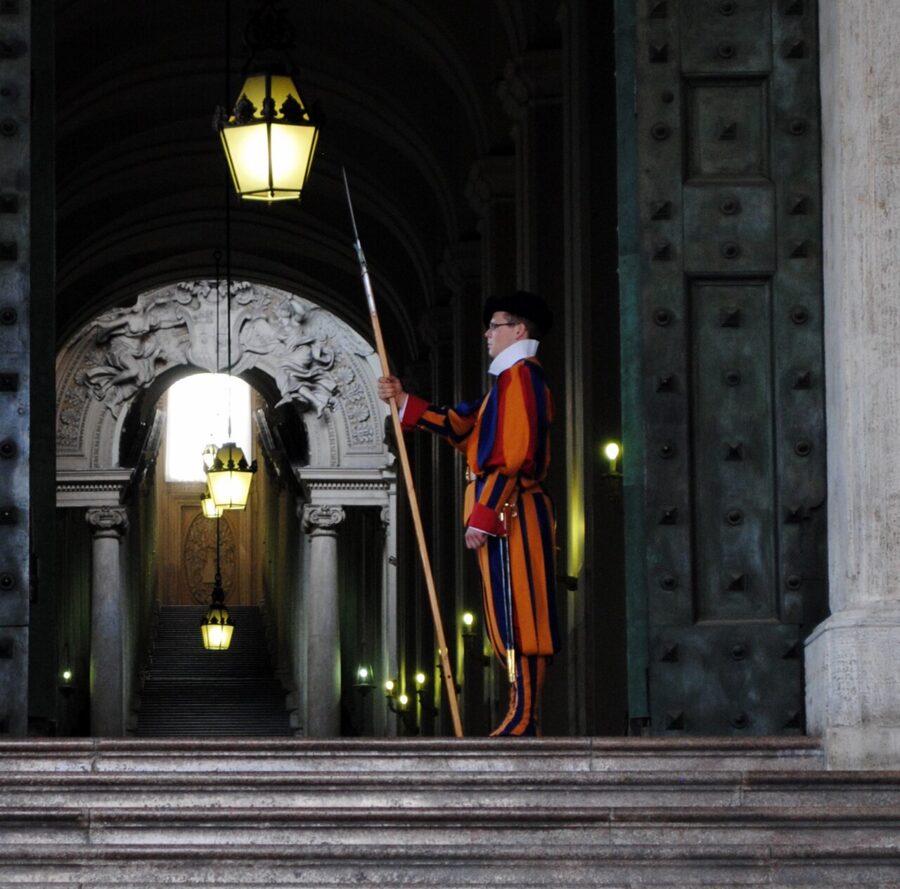
Request tickets from the Prefecture of the Papal Household through its online request system. They are collected from the Swiss Guards at the Bronze Door, at the times given in your confirmation.
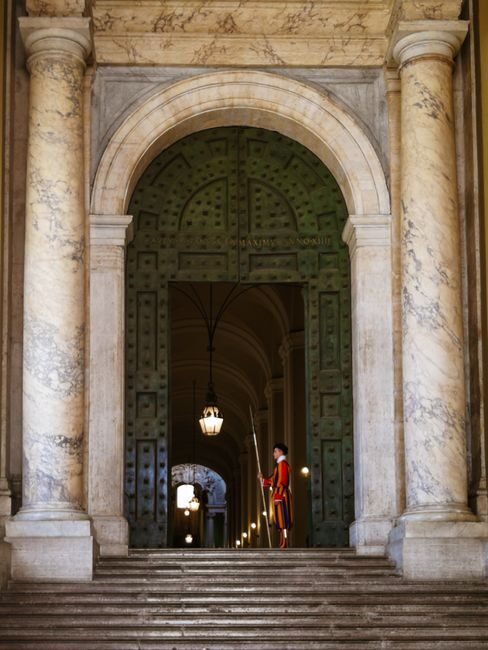
A ticket does not guarantee a seat. Arrive at least an hour early, more in summer, and expect airport-style security. In July 2026 the Pope spent his summer weeks at Castel Gandolfo, so check the Holy See’s calendar for your week.
The Sunday Angelus
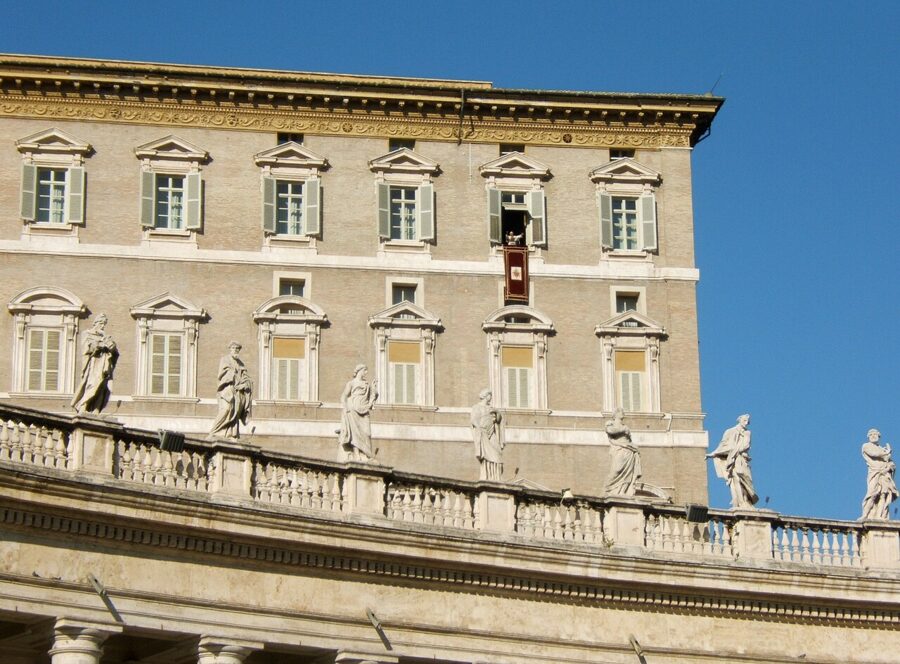
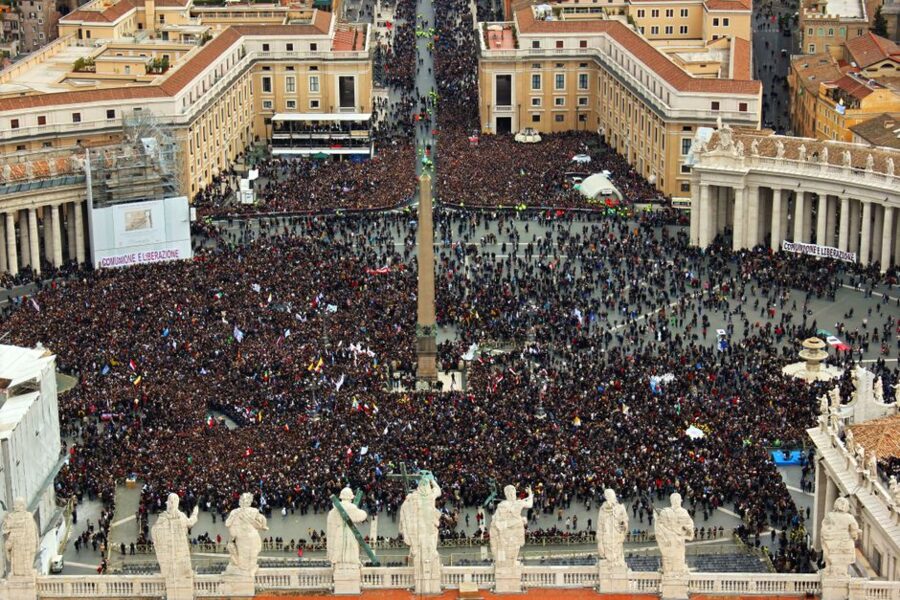
At noon on Sundays the Pope appears at the window of the Apostolic Palace, reflects on the day’s Gospel, prays the Angelus and blesses the crowd. No ticket is needed, and it lasts around a quarter of an hour. Stand to the right of the obelisk, facing the basilica, for the clearest view.
Papal Masses also need a free ticket through the same Prefecture system; bishops and priests who wish to concelebrate apply to the Office for Liturgical Celebrations.
St. Peter’s Square
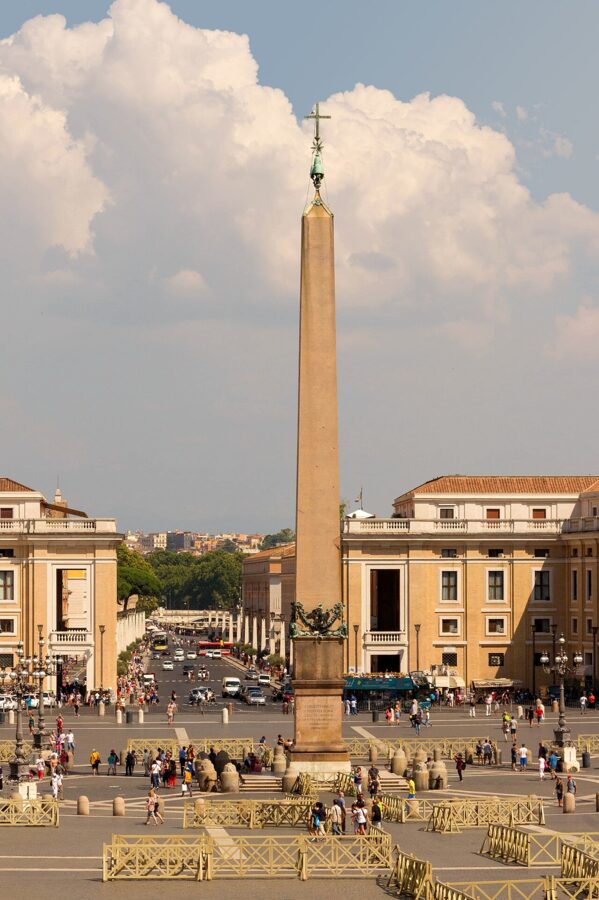
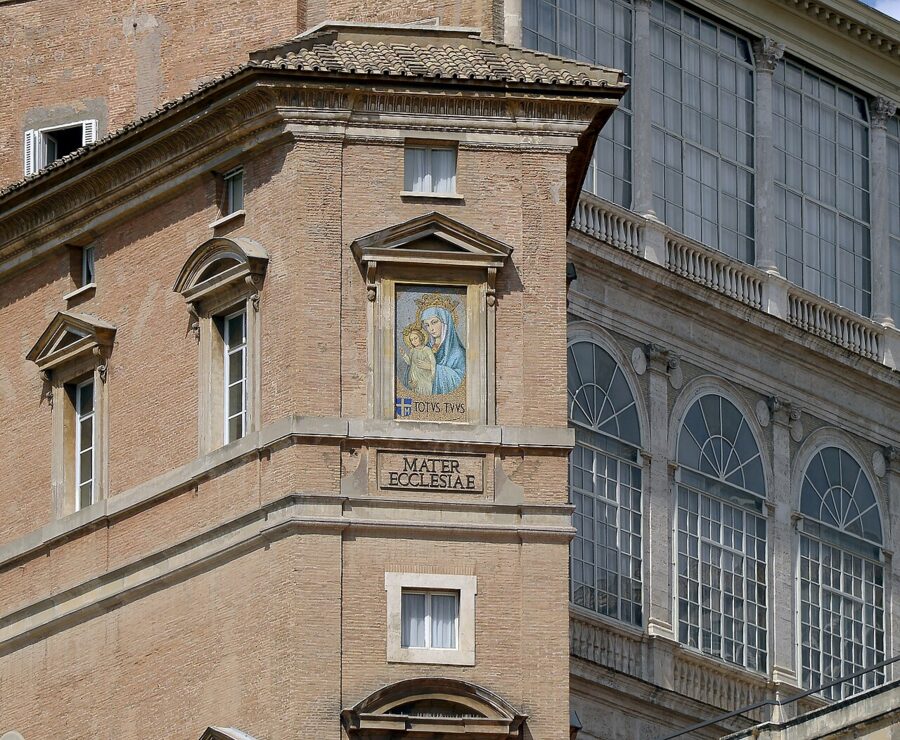
Bernini designed the square for Alexander VII and finished it in 1667. It measures 196 by 149 meters, and the colonnades are meant as arms embracing Rome and the world. A large mosaic of Mary, Mother of the Church, copied from a 15th-century icon inside the basilica, looks down on it. At the center stands the obelisk, topped by a cross; the square itself is open and free.
A half-day and a full-day plan
Half a day: the basilica, as a church
- 6:45 a.m. Arrive at the right-hand colonnade, or at the Prayer Route if you come to pray.
- 7 a.m. Mass at the Altar of St. Joseph, or sit in the empty nave.
- 7:45 a.m. The Pietà, John Paul II’s tomb, the bronze St. Peter, the Confessio, the Cathedra.
- 8:30 a.m. The dome (open from 7:30 a.m. in winter). Allow an hour.
- 9:45 a.m. The grottoes, then out into the square.
On a Sunday, swap the dome for the noon Angelus.
A full day: museums, necropolis, basilica
- 8 a.m. Vatican Museums, first slot, booked online.
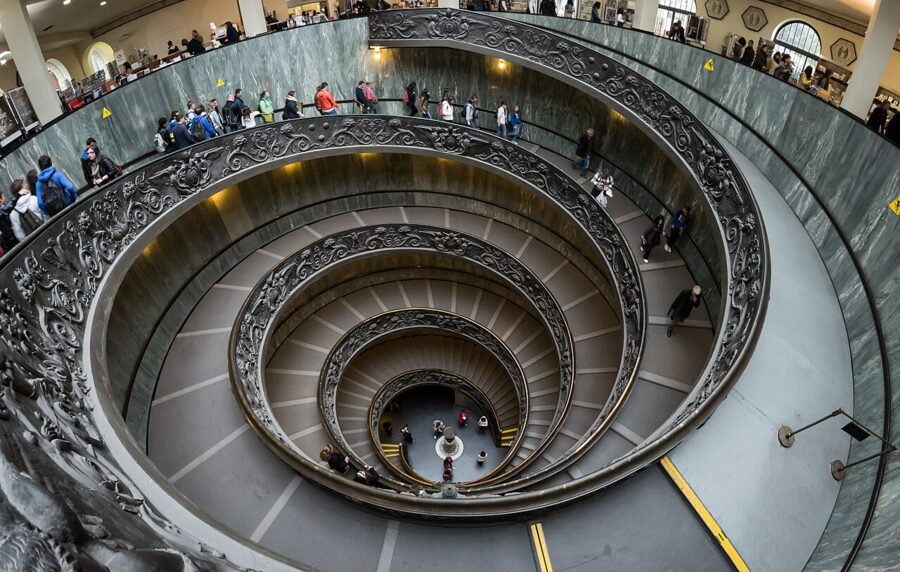
- 11:30 a.m. Out by the spiral staircase; collect bags from the cloakroom.
- 12:30 p.m. Lunch outside the walls.
- Early afternoon. The Scavi, at the time the Excavations Office gave you.
- 3:30 p.m. The basilica and grottoes; the winter dome closes at 5 p.m.
- 5 p.m. or 6 p.m. Mass at the Altar of the Cathedra.
Keep a Wednesday audience for a morning of its own.
When the 6 p.m. Mass ends at the Altar of the Cathedra, the nave is nearly as quiet as it was at 7 that morning. The crowds have gone back across the square, and the church is a church again. Carry a scarf, and leave yourself an extra hour.