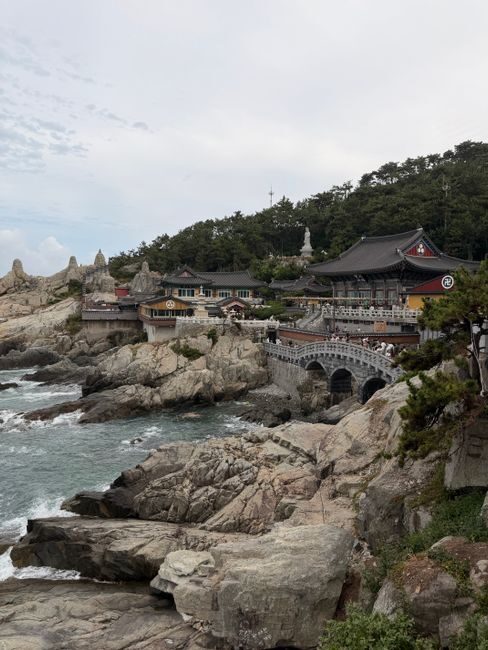
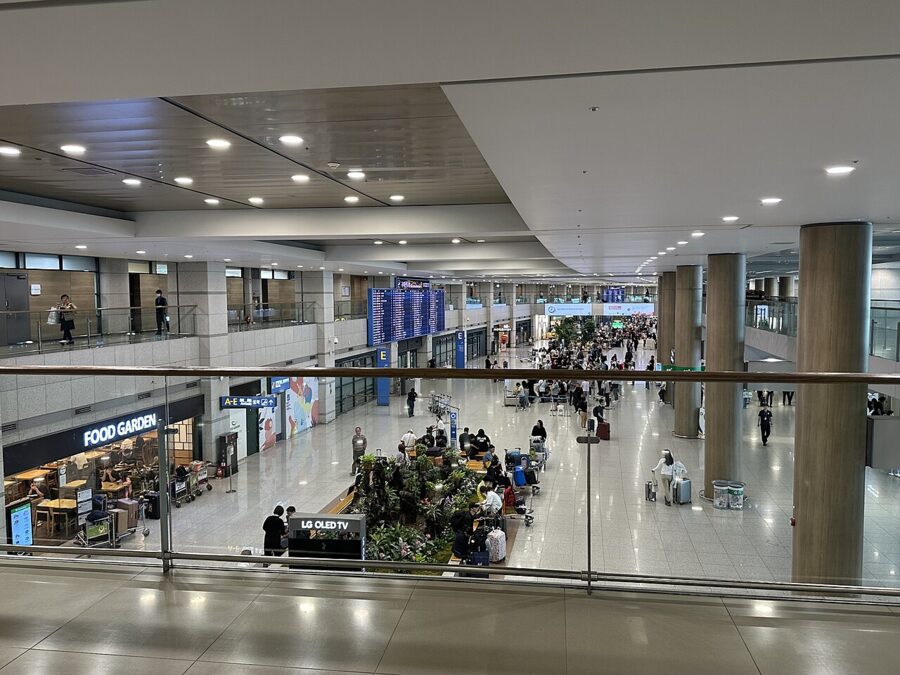
Incheon Airport sits on Yeongjong Island, and about twenty minutes by road from the Terminal 1 arrivals hall the island runs out at Eurwangni, a beach that faces due west over the Yellow Sea. In late November the sun goes into that water at about 5:20 p.m. If your flight lands at noon, a photographer and a taxi are all that stand between you and a portrait most people flying through Korea never think to take.
Most arrivals head straight for Seoul, where most of Korea’s travel portraits get made. Incheon is the quieter choice: a glass-and-canal new town in Songdo, Korea’s best-known Chinatown, a port quarter of 1900s banks and churches, an island promenade at Wolmido and west-facing beaches on the airport’s own island.
I would choose it for a long layover, for a first day when jet lag has you awake at dawn anyway, or for a last day when you want your bags and your flight close by. Each leaves a few free hours near the airport, and a few hours is enough.
Contents6 parts
Why Incheon, and who it suits
The plain advantage is distance. Every place below is under an hour from the terminal by car, and on a layover that is the difference between a session and a sprint.
Couples come for the range in a single afternoon: Songdo looks like a future that has already arrived, while the old port looks like 1900 kept under glass. Families like the open lawns of Songdo Central Park and Incheon Grand Park, where nobody minds a toddler running out of frame. Solo travelers get pictures of themselves in a city almost nobody else photographs.
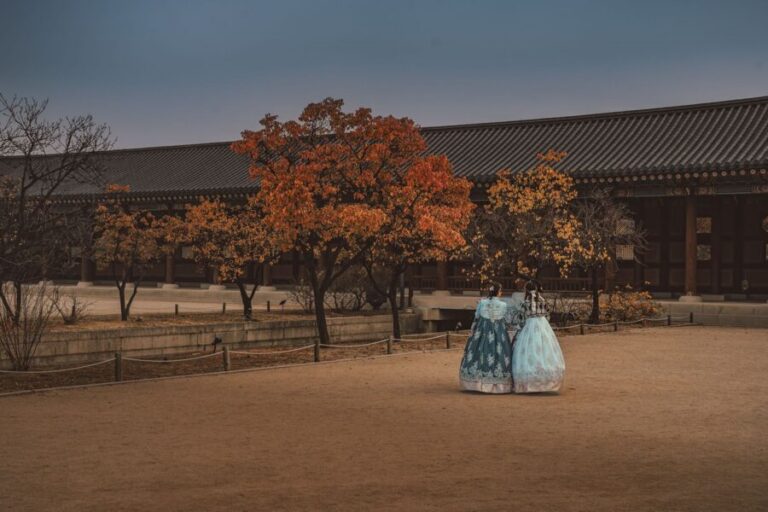
Skip Incheon if the picture you want is you in hanbok in front of a royal gate. That is Seoul’s subject, and hiring a photographer for a session in Seoul is the better plan. If your trip ends in the south, look at a private photo session in Busan instead.
Finding and booking a photographer
The usual rules for booking any photographer in Korea hold here: agree the length, the number of edited photos, whether you get the unedited files and who pays for travel, in writing, before you send money. What is different in Incheon is where the photographers are.
Search the big English-language travel platforms for an Incheon photoshoot and most of what comes back is a hanbok session at Gyeongbokgung in Seoul. The local market lives on Korean platforms such as Moca, Soomgo and Kmong, where photographers list a “snap” (스냅, an outdoor session) by the hour. Many are based in Seoul and travel out; Koreans call this a chuljang (출장) shoot, and the listing should say whether Incheon costs extra.
A browser translation is enough to read a listing. Message before you book, in plain English, and judge the reply: a photographer who answers clearly in writing will direct you clearly in person. Moca offers an escrow option for payment, worth using with someone you have never met.
What a session costs (as of November 2026)
These are the ranges photographers listed for Incheon couple and outdoor sessions on Moca in November 2026, at about ₩1,340 to the dollar.
| Session | Typical length | Listed price |
|---|---|---|
| Short couple or “daily” snap | 40 to 90 minutes | ₩150,000–250,000 (about US$110–190) |
| Longer outdoor session | 2 hours | ₩270,000–490,000 (about US$200–370) |
| Pre-wedding or wedding-style snap | 2 to 4 hours | ₩350,000–900,000 (about US$260–670) |
| All-day booking | 8 hours | about ₩1,000,000 (about US$750) |
Read what sits under the price. Those listings delivered anywhere from 10 to 70 edited photos, and some include every unedited JPEG while others sell the originals separately or not at all. Ask whether the price assumes the photographer may post your pictures, since some charge more for privacy, and ask what happens if it rains.
Where to shoot
Songdo Central Park and the G-Tower
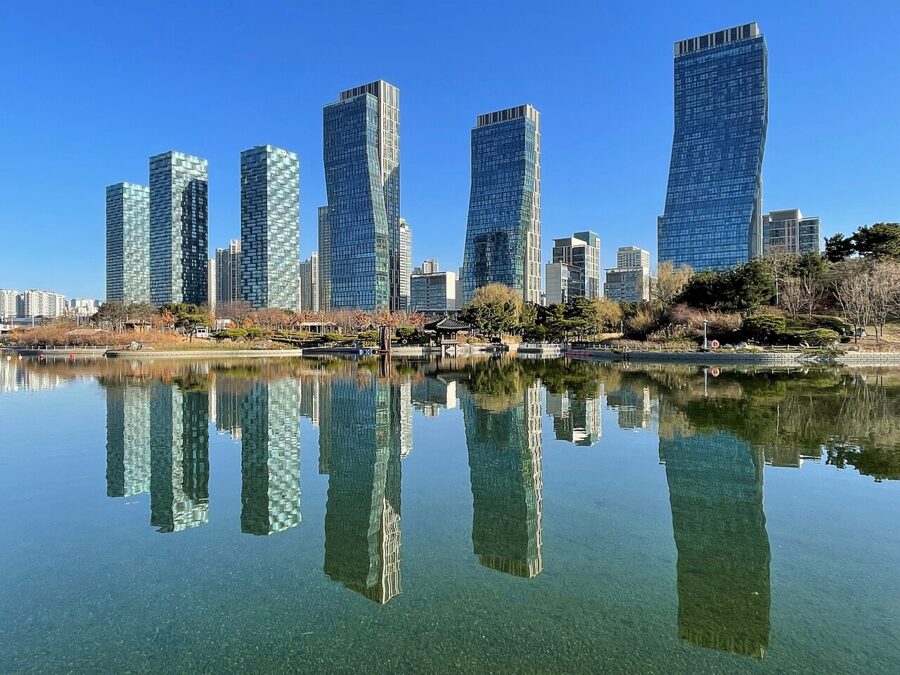
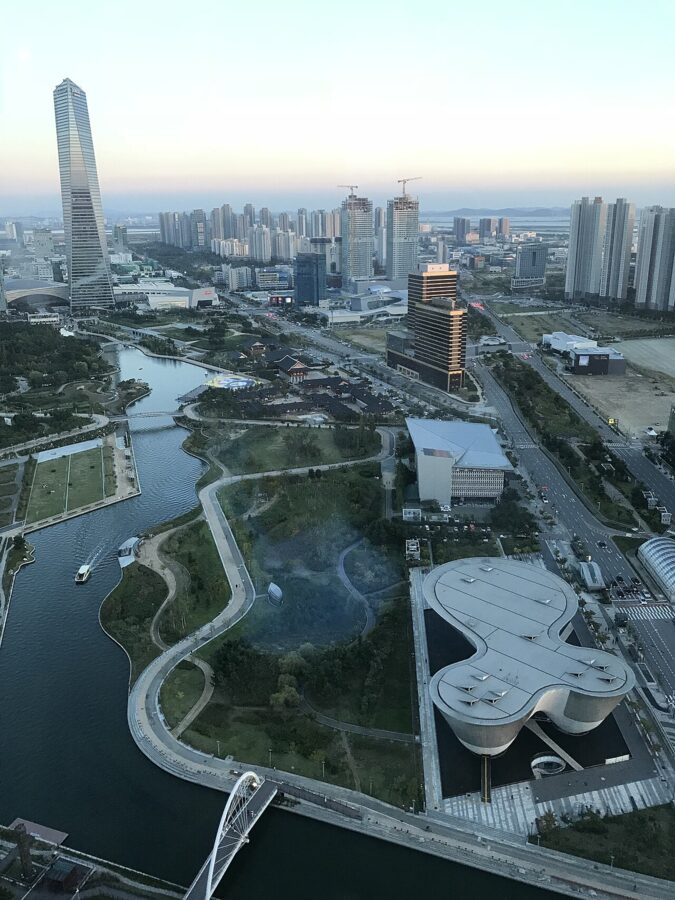
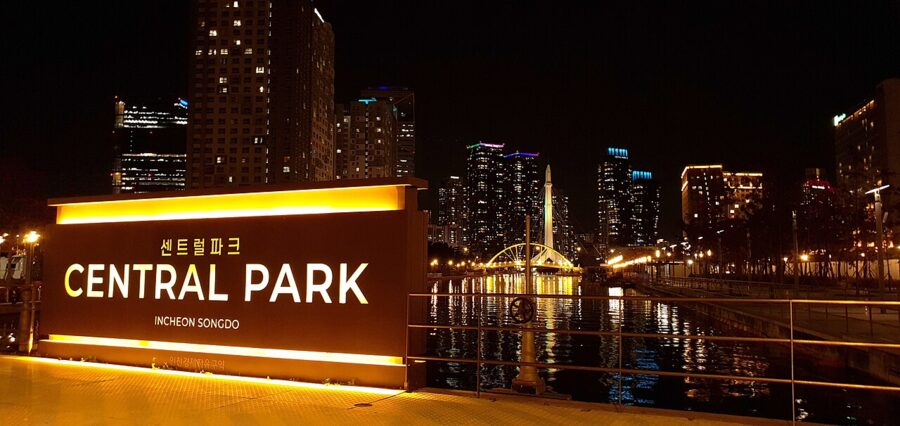
Songdo is the new city on reclaimed land south of the old port, and Central Park is its middle. The park is laid around a canal of seawater 1.8 km long and up to 110 m wide, the first of its kind in Korea according to the city’s own description, with water taxis and a ring of towers reflected in it.
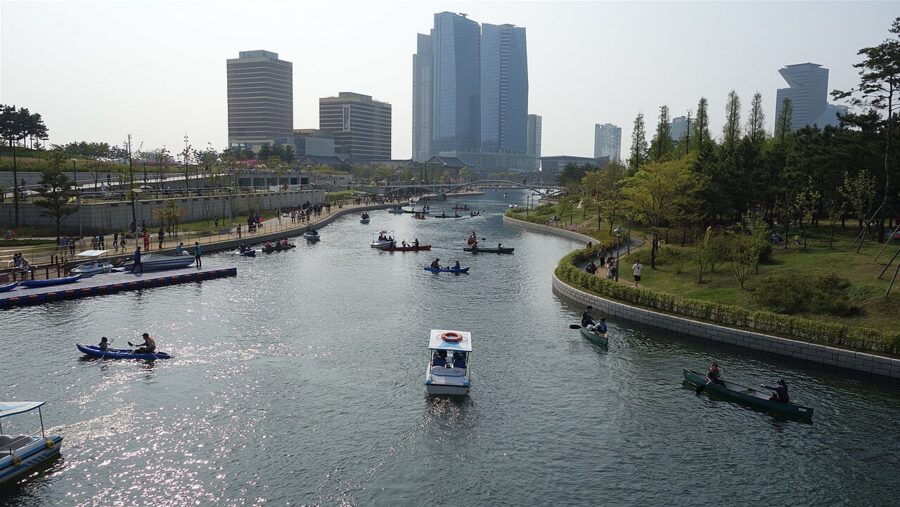
This is the easiest place in Incheon to shoot and the hardest to make look like anywhere in particular. Good photographers here use the water: reflections at dawn, the bridges at blue hour, the towers lit after dark. Midday on a clear day is flat and glary.
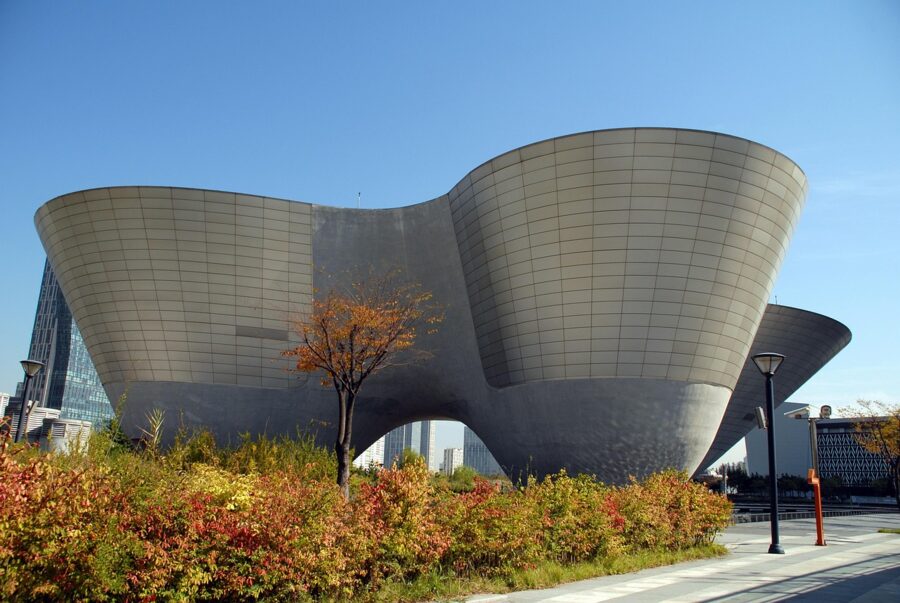
For a view over all of it, the 33rd-floor observatory of the G-Tower is free. As of September 2026 it opens 10 a.m. to 9 p.m. Tuesday to Friday and 1 to 9 p.m. at weekends and on holidays, with last entry at 8:30 p.m. It closes on Mondays and over the main national holidays.
Chinatown, the border stairs and Songwol-dong
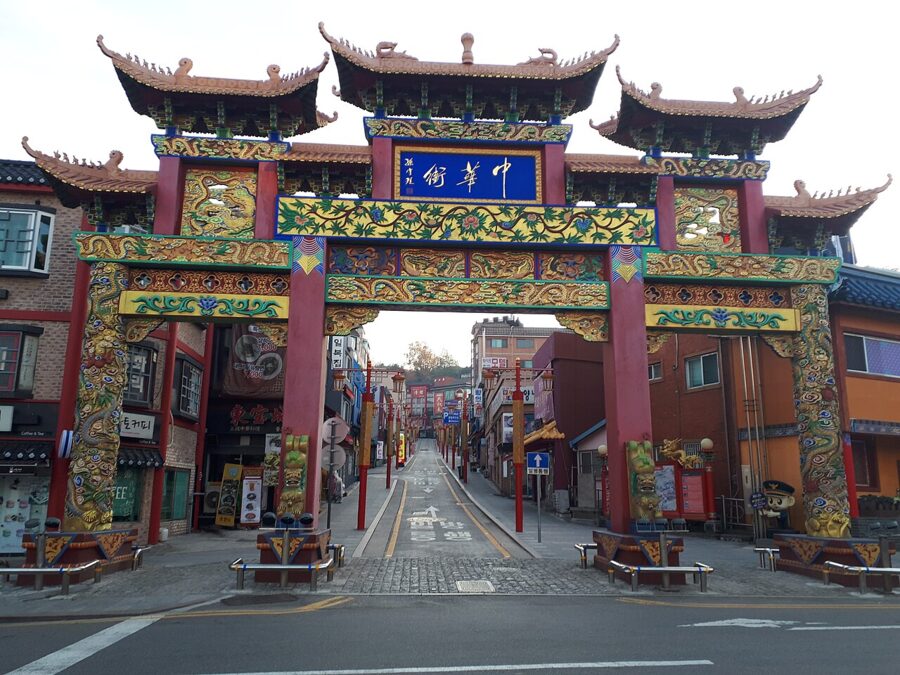
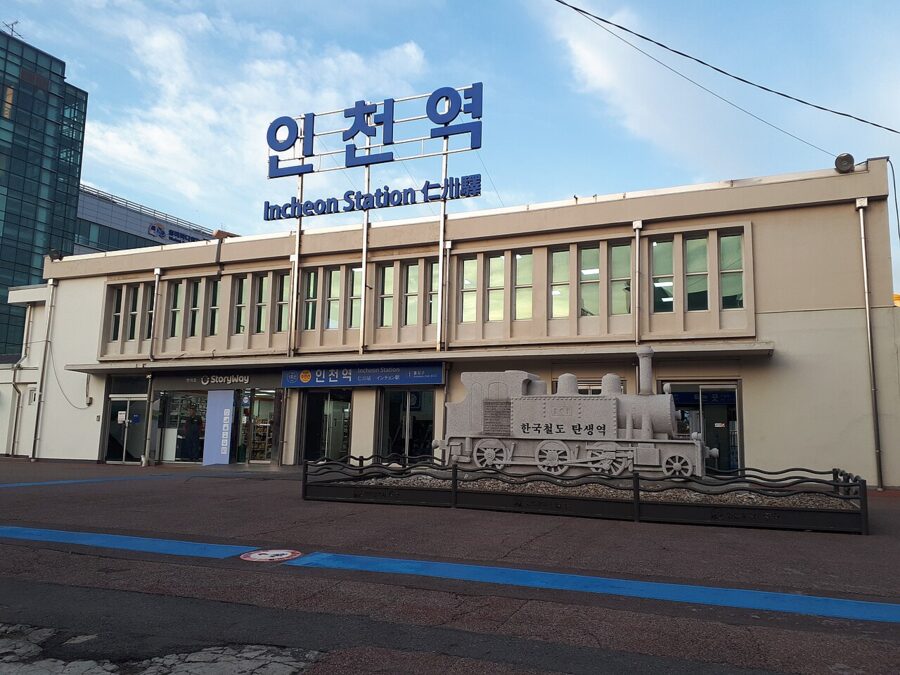
Chinese merchants settled beside the port in 1884, the year after it opened to foreign trade. Today the quarter is mostly restaurants, with a snack street that starts as soon as you leave Incheon Station and an 11 m paifang at the entrance. The city’s tourism office credits it with Korea’s first jjajangmyeon, the black-bean noodles every Korean knows.
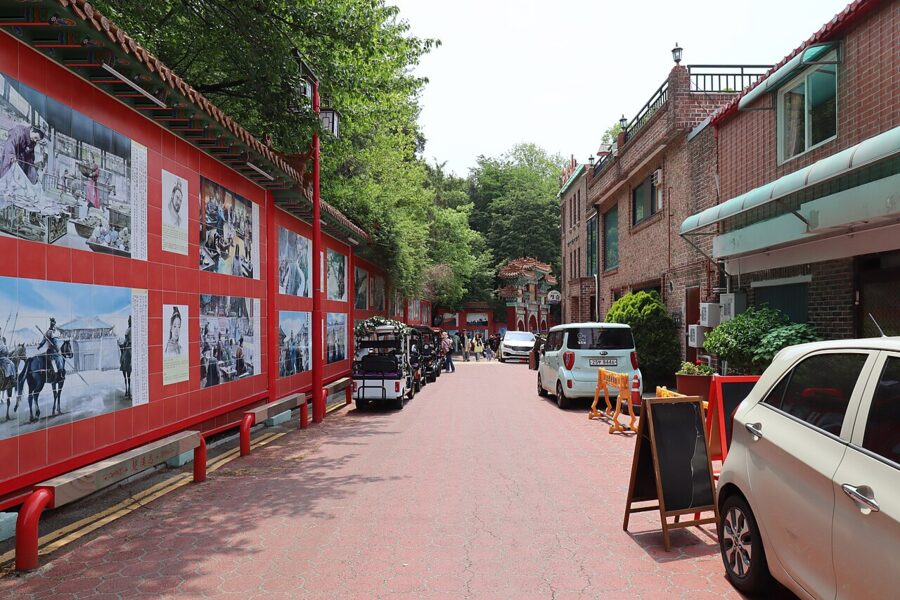
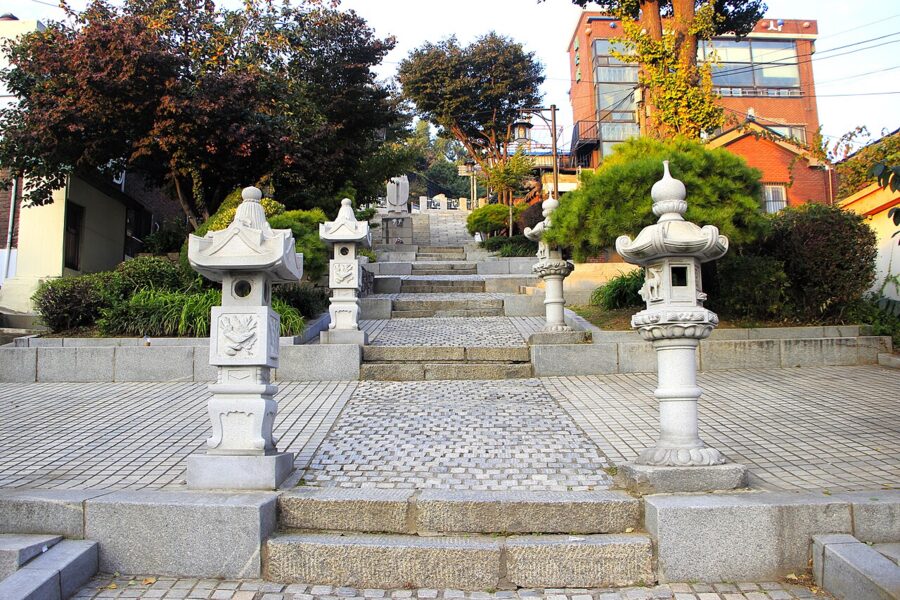
The best frame in the quarter is a flight of stone steps. The stairs between the old Chinese and Japanese settlements climb toward Jayu Park with stone lanterns on either side, Chinese-style buildings on one hand and Japanese-style ones on the other.
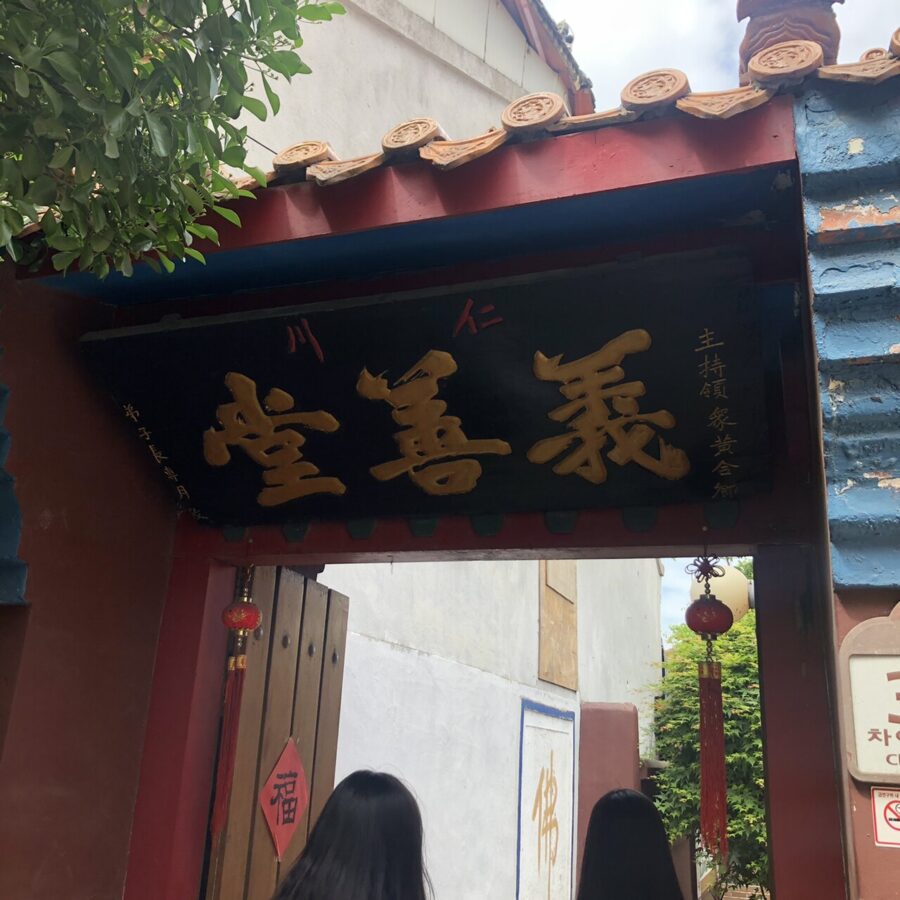
Close by is Uiseondang, a small Chinese shrine that is still in use. Treat it as a place of worship: ask before photographing inside, keep your voice down, and take the session back to the street if anyone is praying.
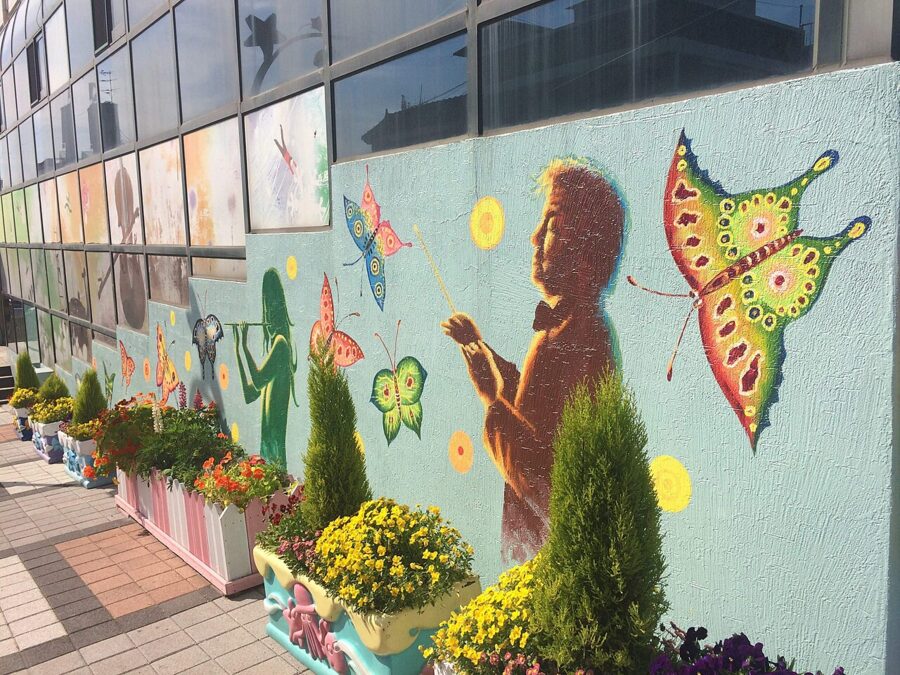
A few minutes away, Songwol-dong Fairy Tale Village covers an aging neighborhood in murals and statues of storybook characters. It photographs well with children. It is also a street where people live, so keep moving, keep doorways clear and leave residents out of your frames.
The old port quarter and its churches
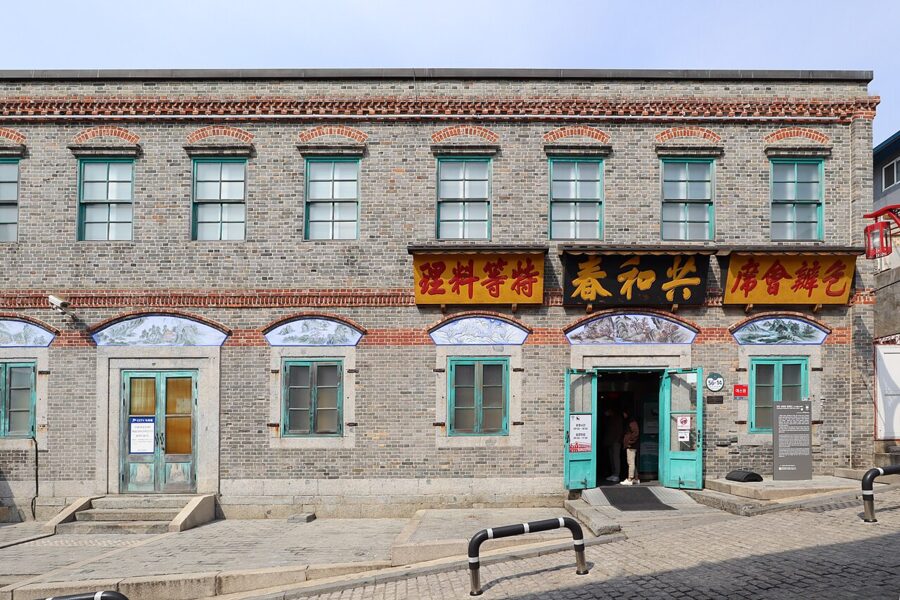
Beside Chinatown, the streets of the open port quarter keep the banks, hotels and clubs foreigners built after 1883. The former branch of Japan’s 18th Bank, built in 1890, is now an exhibition hall on modern architecture. The Daebul Hotel, opened in 1888 as the first Western-style hotel in Korea, has been rebuilt as a small museum.
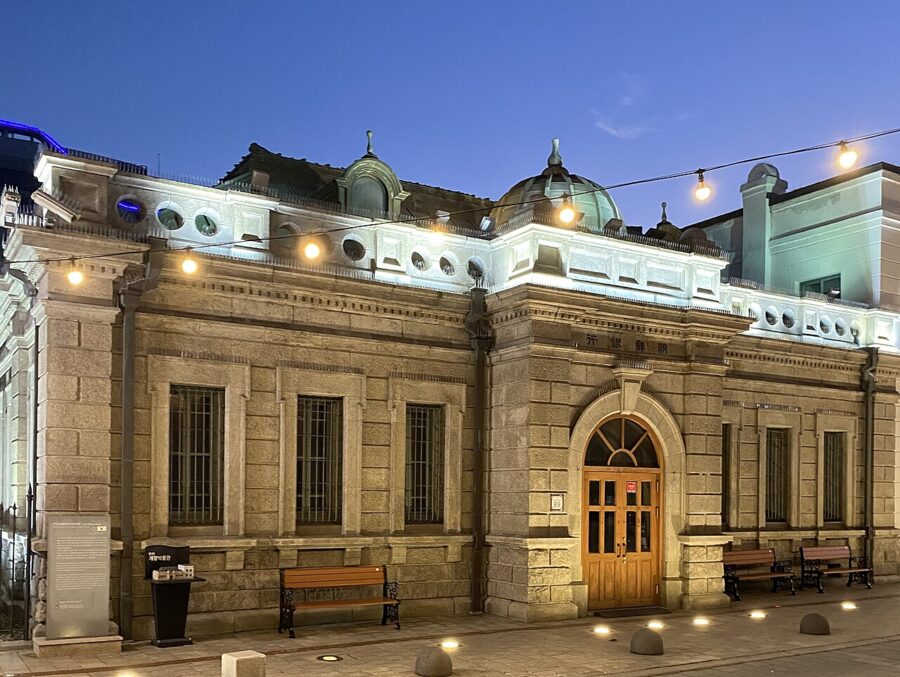
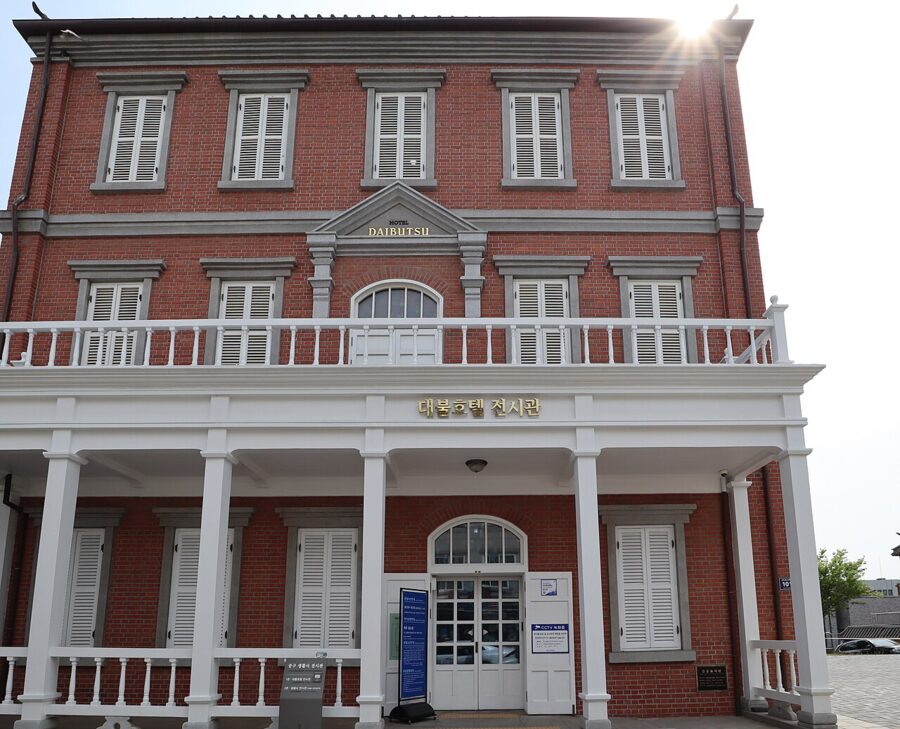
Above them, the white Jemulpo Club was built in 1901 as a social club for foreign residents, and Jayu Park, laid out in 1888 on the hill behind, was Korea’s first Western-style park. From the top you can see the harbor.
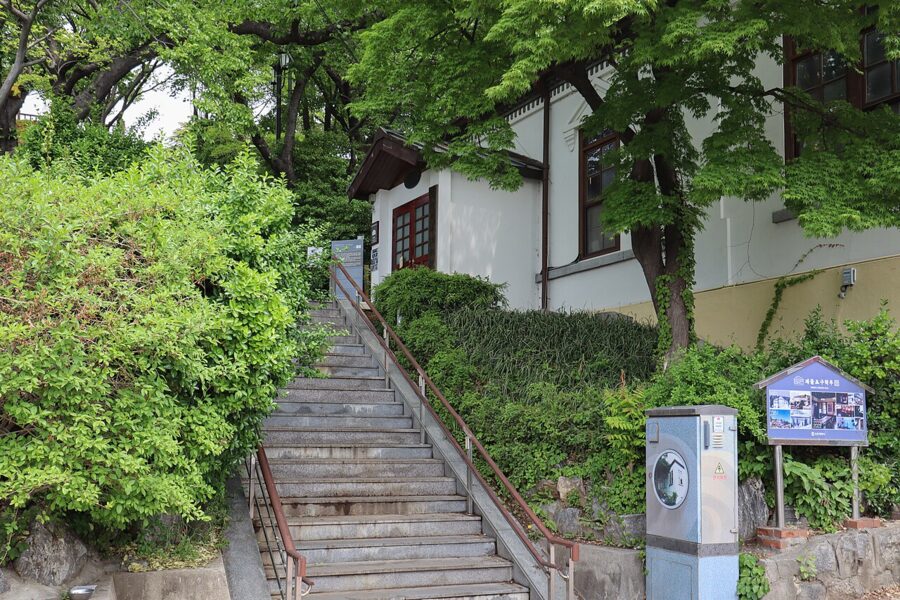
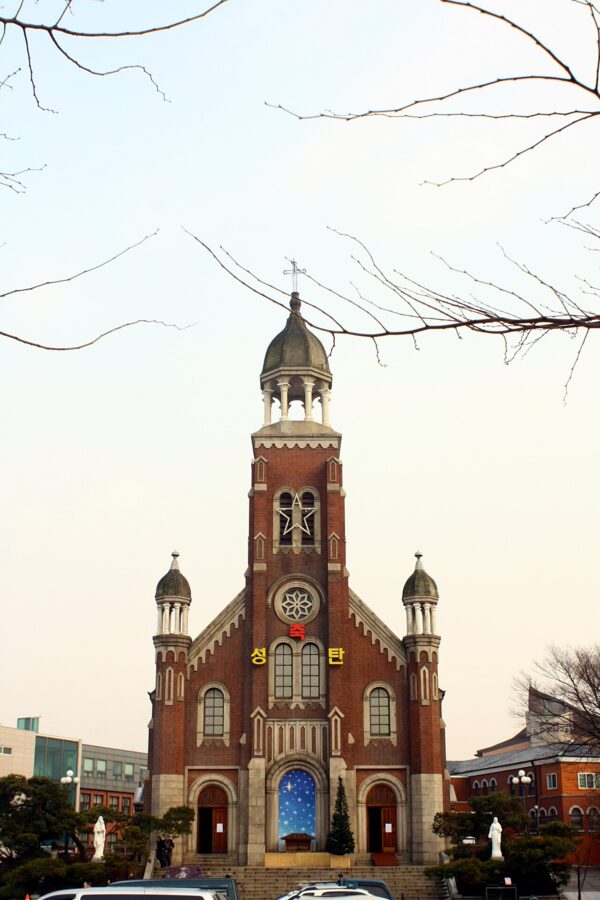
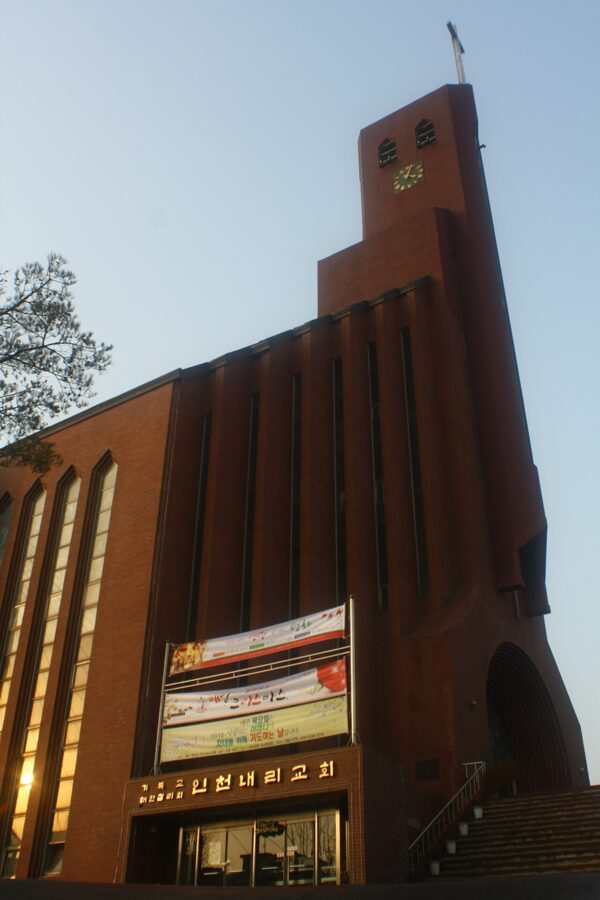
Two churches stand within a short walk. Dapdong Cathedral, a red-brick church dedicated to St. Paul, is the cathedral of the Catholic Diocese of Incheon and has been a national Historic Site since 1981. Naeri Methodist Church is a few streets away. Both are working parishes: shoot outside, never during a Mass or a service, and ask at the parish office before you set up in the grounds.
Wolmido
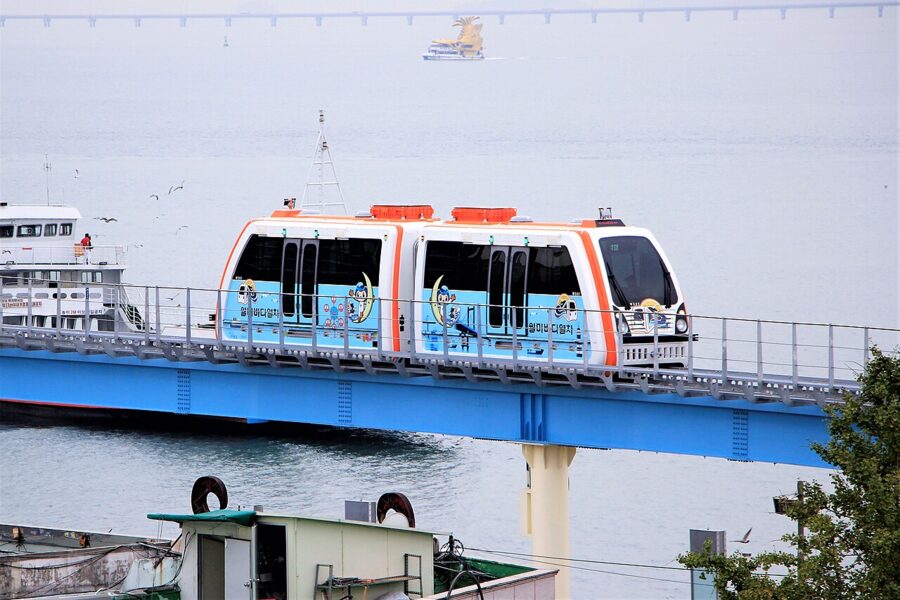
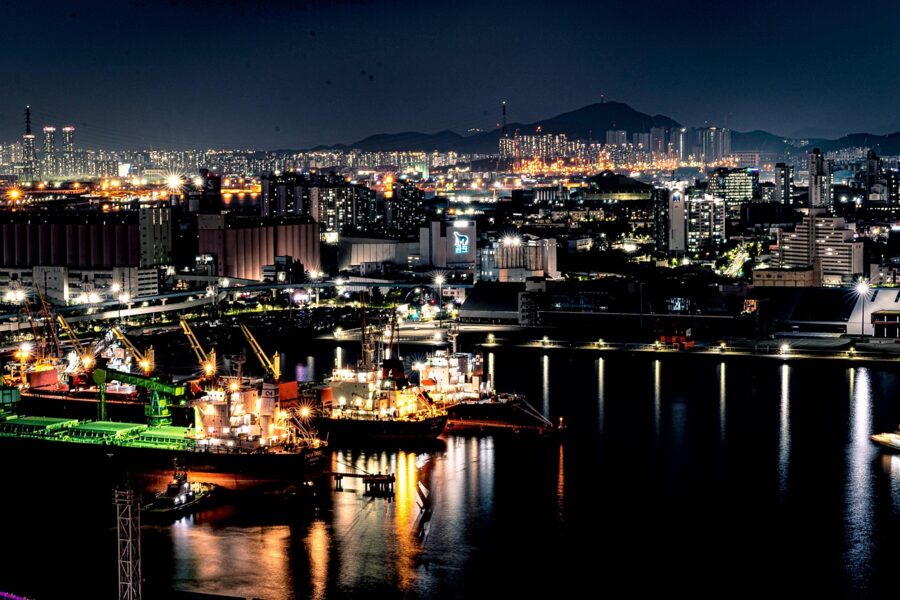
Wolmido is a small island joined to the mainland by road, with fairground rides, seafood grills and a promenade facing the water. The Wolmi Sea Train runs a 6.1 km loop around it on a raised track from a station next to Incheon Station, taking about 42 minutes. A January 2026 report on the line gives the adult fare as ₩11,000 on weekdays and ₩14,000 at weekends (about US$8 and US$10).
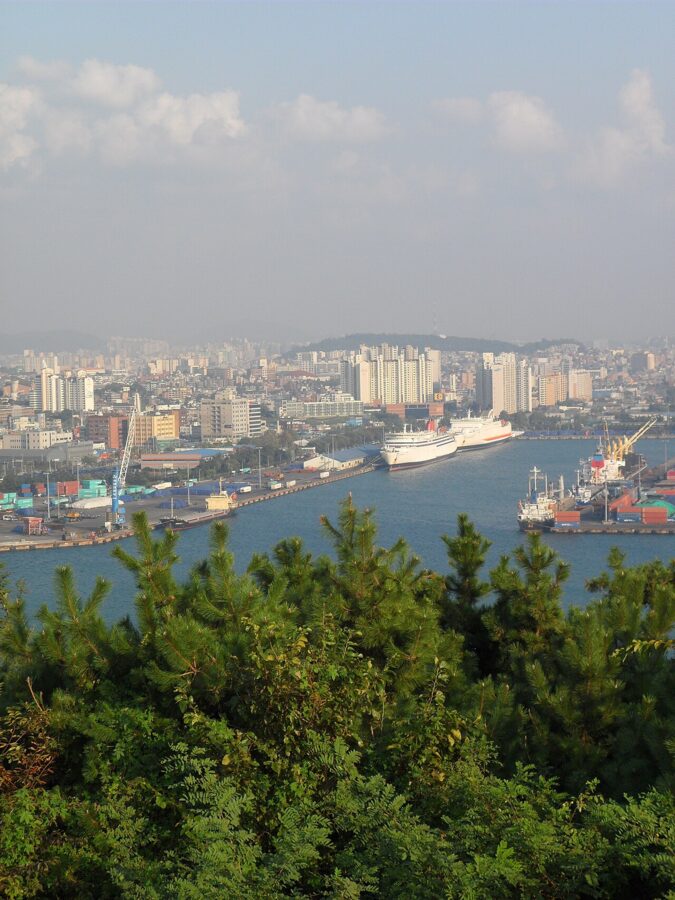
For portraits I would skip the rides and walk up Mount Wolmi, the wooded hill in Wolmi Park, for the view across the working harbor. Then come down to the promenade for the evening.
Incheon Grand Park
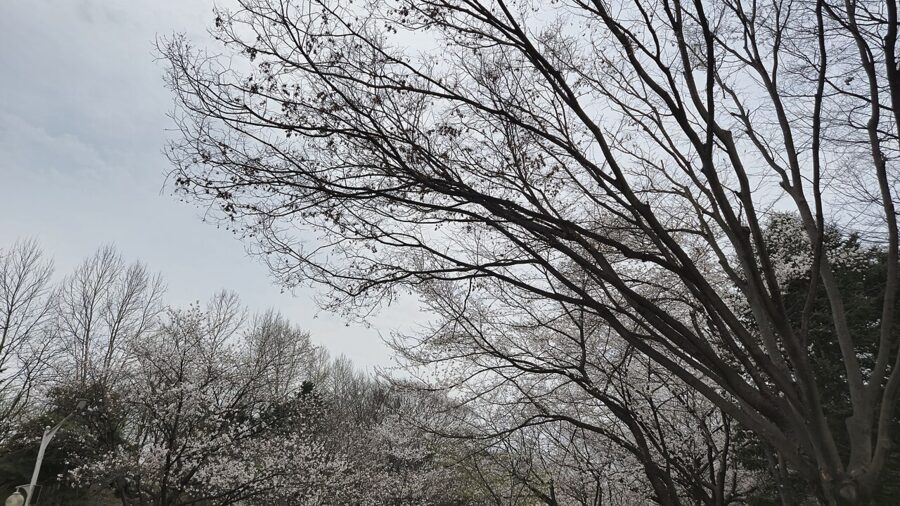
The Grand Park is 2.7 square kilometers of woodland, lake and arboretum on the city’s eastern edge. It opens from 5 a.m. to 11 p.m. in summer and 5 a.m. to 10 p.m. in winter, with Incheon Grand Park Station on Incheon Subway Line 2 at its south gate. Its car-free avenues turn up in many Korean wedding portfolios.
One rule catches people out. The park office asks that photo and video shoots be applied for in advance with a park use permit form, sent by email and confirmed by phone. A local photographer will know the current practice; a visiting one may not, so ask.
Yeongjong Island: Eurwangni and the airport coast
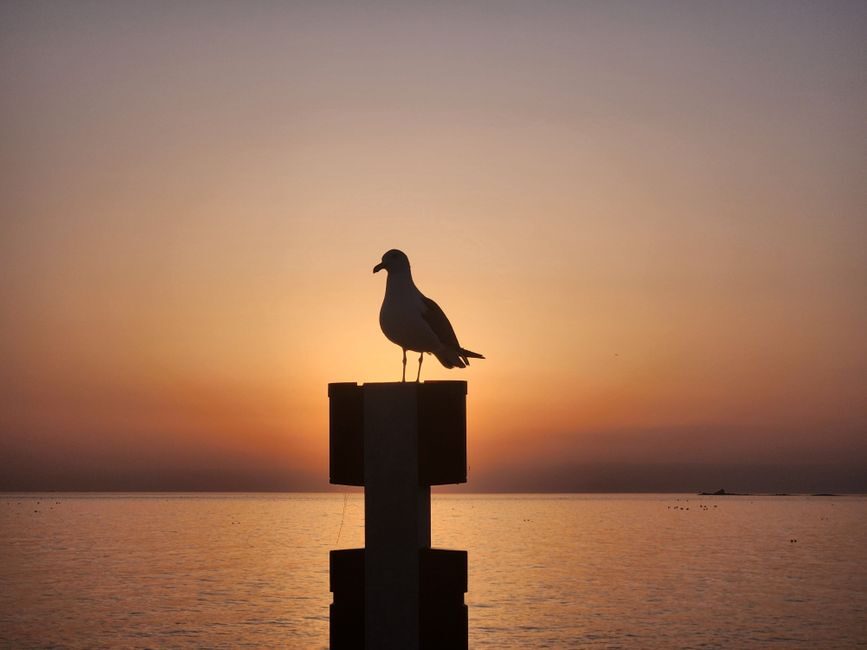
Eurwangni is about 14 km from Terminal 1, a sandy cove on the island’s western shore. Its value is the light: the beach faces west, so the sun sets straight out over the sea with nothing in the way. Wangsan, the neighboring beach, faces the same sea.
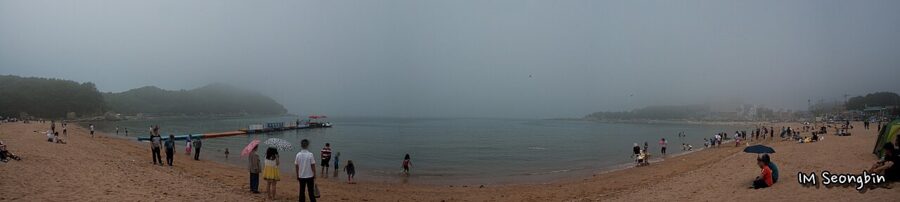
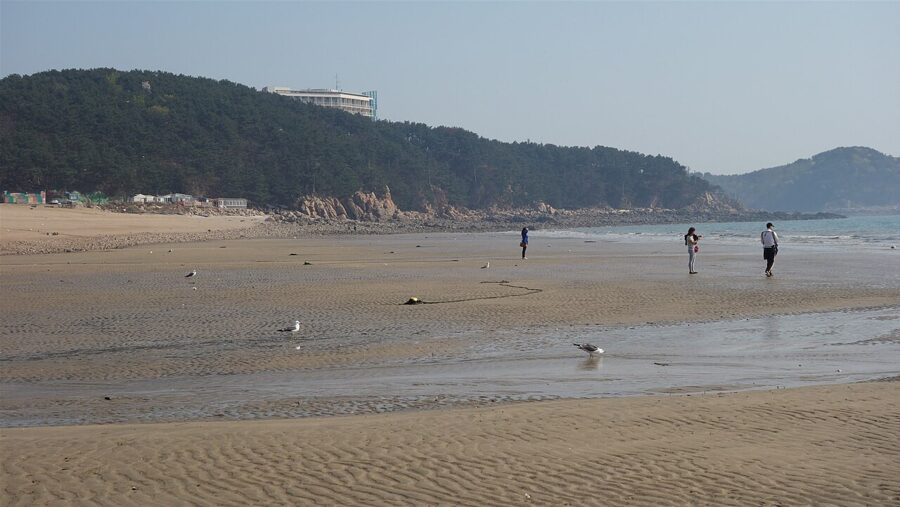
Leave the drone at home. The 9.3 km zone around the airport is controlled airspace, and an August 2026 airport safety campaign named Eurwangni, Wangsan, Hanagae and Seonnyeo Bawi beaches as inside it. Flying without approval from the regional aviation office can bring a fine of up to ₩5,000,000 (about US$3,700).
Layover logistics
The table gives road distances and driving times from Terminal 1 in free-flowing traffic. Rush hours and summer weekends add a lot, so leave a buffer on the way back to your flight.
| From Terminal 1 to | By road | Driving time, no traffic |
|---|---|---|
| Eurwangni beach | about 14 km | about 20–25 minutes |
| Songdo Central Park | about 28 km | about 30 minutes |
| Chinatown and the old port | about 32 km | about 35 minutes |
| Wolmido | about 34 km | about 40 minutes |
| Incheon Grand Park | about 39 km | about 40 minutes |
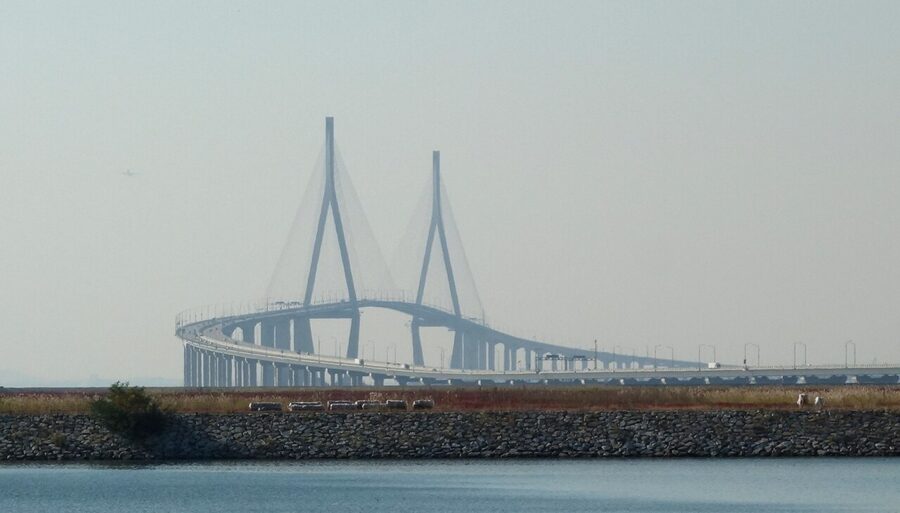
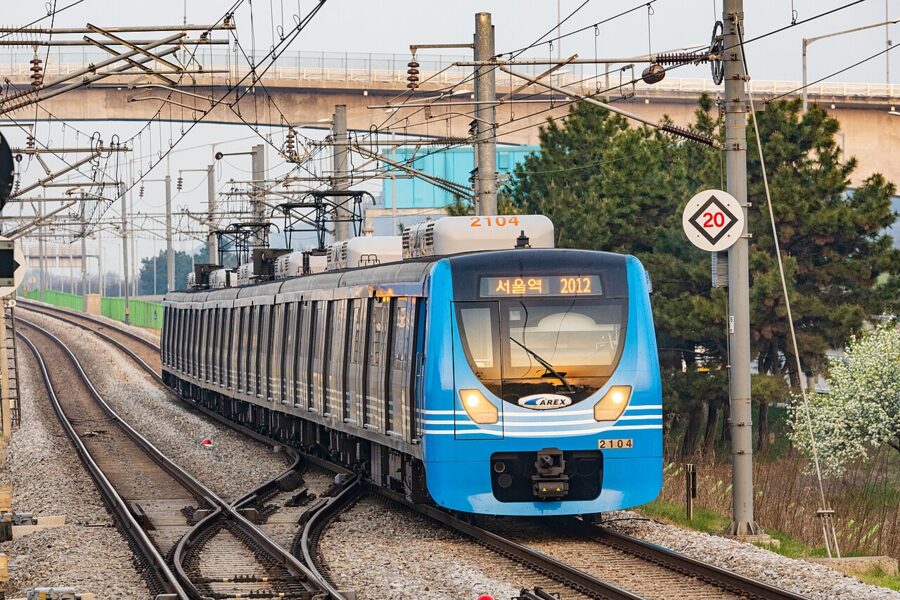
The AREX airport railroad is cheaper and slower for everything on this list. Its all-stop trains run from the airport through Unseo, Yeongjong and Cheongna to Geomam, where you change to Incheon Line 2 for the Grand Park, and on to Gyeyang, where Incheon Line 1 runs to Songdo. For Chinatown and the old port, a taxi saves a long chain of changes.
Incheon Airport’s transit tours
The airport runs its own transit tours for passengers changing planes, and their rules are a good guide to leaving the airport on any layover. Your layover must be 24 hours or less, and you need your passport and the boarding passes for both flights. You register at least 30 minutes before the start at the first-floor desk: near Gates 1 and 2 (desks 19 and 20) in Terminal 1, or across from Exit 4 (desks 5 and 6) in Terminal 2.
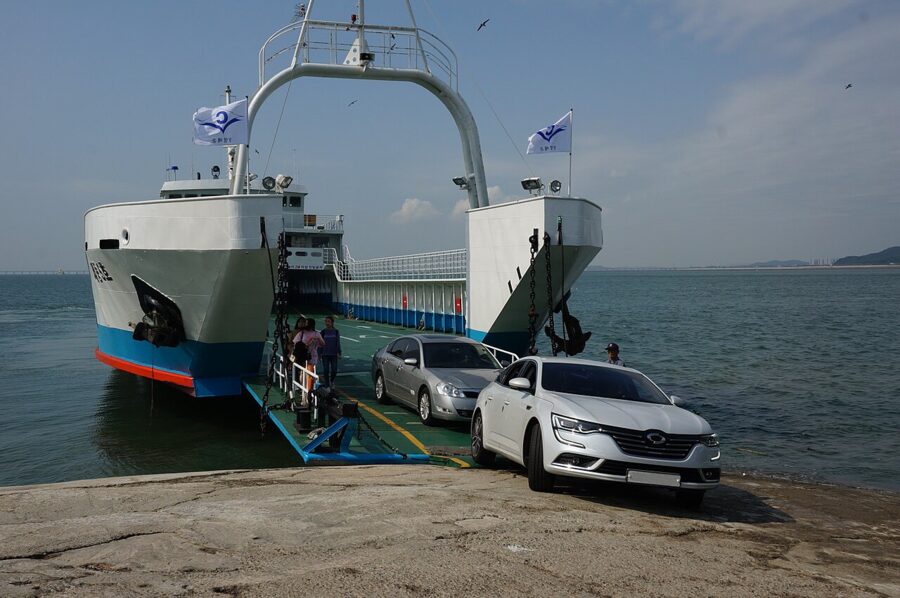
Visa-free nationals still need a K-ETA unless their country is on the temporary exemption list, and the Ministry of Justice does not allow two entries into Korea on a single visit. The course list in November 2026 includes a ferry from the Gu-eup terminal on Yeongjong to Wolmido, a 15-minute crossing with seagulls around the boat, then a walk in Wolmi Park, from 9 a.m. to 1 p.m. on Tuesdays, Saturdays and Sundays.
That is a group tour, not a portrait session. But it shows what four hours on the ground can hold, and a private photographer can make the same crossing with you at your own pace.
Seasons and light
Incheon faces west across open sea, which is the whole reason to come for the light. Sunsets are long and low over the water at Eurwangni and Wolmido, while Songdo’s towers hold the color on their glass after the sun has gone.
| Date | Sunset in Incheon (approx.) |
|---|---|
| January 1 | 5:25 p.m. |
| March 20 | 6:45 p.m. |
| June 21 | 7:55 p.m. |
| September 22 | 6:30 p.m. |
| Late November | 5:20 p.m. |
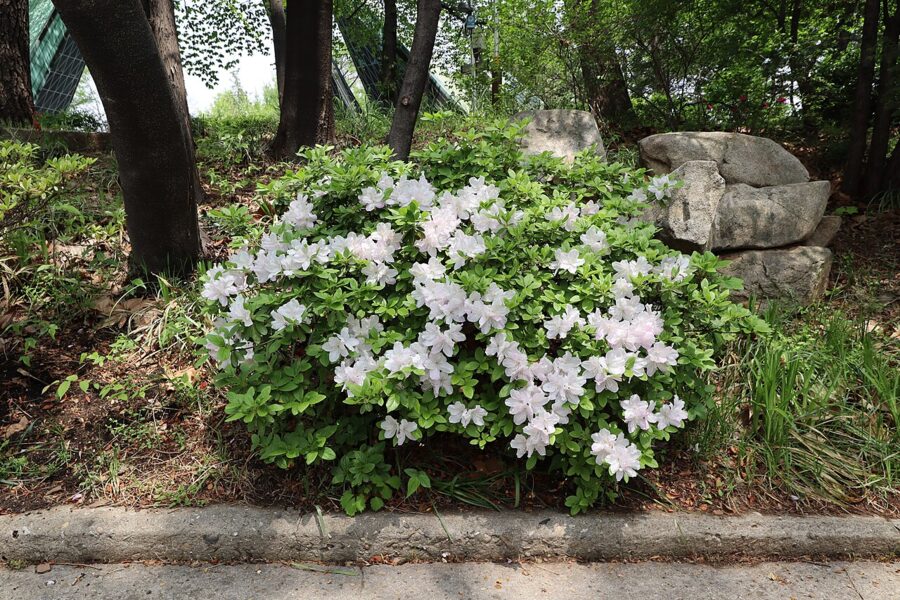
April brings cherry blossoms to the Grand Park and azaleas to Jayu Park, but also the hazy, dusty days of the Korean spring. Early summer is green and humid, and the rainy season usually arrives in late June. My choice would be October and early November, when the air clears and the beaches empty. Winter is sharp and windy on the coast, so keep sessions short.
Plan the day around the places. Chinatown and Fairy Tale Village are best early, before the crowds. The old port is good in the soft hours of the afternoon. Save the waterfront, Eurwangni or Songdo, for the end.
How to judge a portfolio
Ask for one full gallery from a single session, not the highlights reel. Anyone can choose twelve good frames from three years of work; a complete set shows what your own delivery will look like, including the awkward middle of the shoot.
Look for the same location in different light. A photographer who has shot Songdo at dawn, noon and night knows where the light falls at each hour. Look at skin tones across a gallery, too: if faces shift from orange to gray between frames, the editing is careless.
Watch how people stand. Relaxed couples across a portfolio usually mean a photographer who directs well; stiff, identical poses across different clients mean a formula. Heavy filters date fast, and clean color will still look right in ten years.
For Incheon especially, ask where in the city they have shot before. A photographer who names the border stairs or the bridge view from Songdo has worked here, and a vague answer usually means they would be learning the city on your time.
On a late November evening the sun still goes down over Eurwangni at about 5:20, whether or not anyone from the arrivals hall is standing on the sand for it. Book the photographer, bring a warm layer for the beach, and leave an hour more than you planned for the drive back.